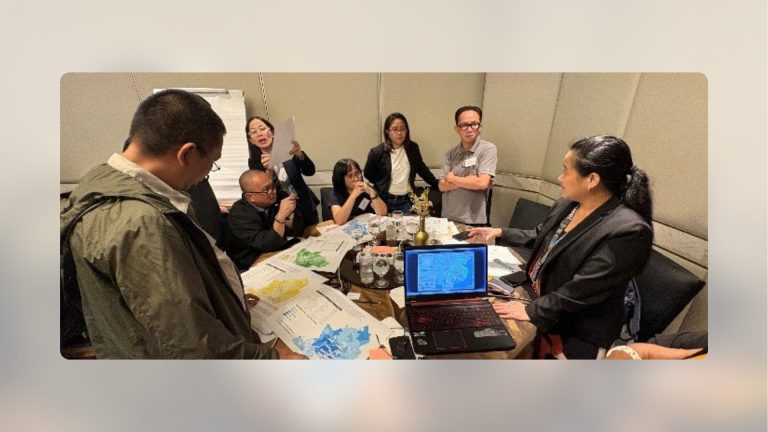




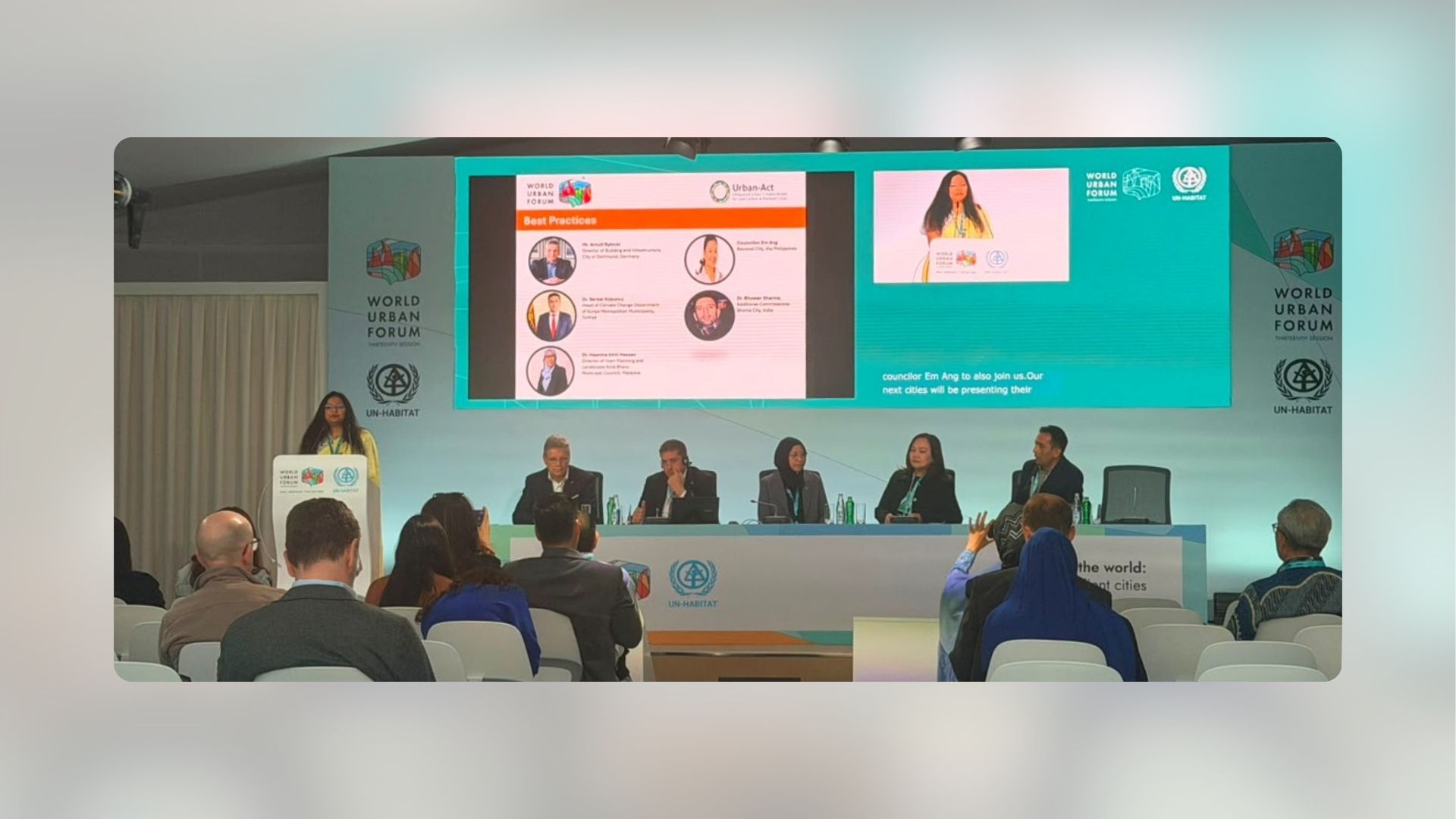
May 24, 2026 | Baku – UCLG ASPAC, together with partners (GIZ UNESCAP, UCLG Mewa, and Ministry of Public Works of Indonesia), convened cities and local governments to demonstrate how city-to-city pairing is transforming climate commitments into practical local action at the World Urban Forum (WUF13) in Baku, Azerbaijan, May 24, 2026.
Following Baku and under the Urban-Act framework, UCLG ASPAC also organised a knowledge exchange session “Decentralised Cooperation to Accelerate Local Climate Solutions” at the UCLG World Congress 2026 in Tangier, Morocco,allowingcity leaders and local government representatives to share practical experiences on how city-to-city cooperation has been delivering tangible climate solutions.
City-to-City Pairing in World Urban Forum 13
The session highlighted that while cities are at the forefront of delivering the Sustainable Development Goals (SDGs), particularly SDG 11 (Sustainable Cities and Communities) and SDG 13 (Climate Action), many continue to face challenges in translating policies into implementation due to limited technical capacity, financing, institutional coordination, and access to practical knowledge.
Dr. Bernadia Irawati Tjandradewi, Secretary General of UCLG ASPAC, in her virtual keynote message, emphasised that city pairing is more than a cooperation model—it is a practical delivery mechanism that enables cities to co-create solutions, exchange real-world experiences, and jointly implement climate-responsive initiatives.
Representatives from the Ministry of Public Works of Indonesia, UN ESCAP, the National Institute of Urban Affairs (India), and FAO echoed the importance of multilevel governance, integrated planning, and peer learning in accelerating sustainable urban development. Speakers agreed that city pairing offers a practical approach to strengthening local capacities while connecting cities with technical expertise, investment opportunities, and climate finance.
The session also featured inspiring case studies from cities across Germany, Türkiye, Malaysia, India, and the Philippines.
- City of Dortmund showcased its sponge city approach for urban flood resilience, highlighting its transformation through initiatives that integrate green infrastructure with underground water retention systems to reduce flood risks while creating more resilient public spaces. The city also shared its international cooperation with Pittsburgh on hydrogen technologies, renewable energy, and sustainable urban development, illustrating how cross-city partnerships can accelerate innovation.
- Konya Metropolitan City presented innovative technologies that convert plastic and construction waste into sustainable infrastructure materials. One technology transforms plastic waste into graphene-enhanced asphalt, reducing construction temperatures, lowering carbon emissions, and extending road durability. Another focuses on recovering construction and demolition waste, enabling materials such as aggregates, metals, plastics, and glass to be recycled and reintroduced into the local economy while supporting carbon reduction and creating opportunities for green financing.
- Kota Bharu City shared its circular economy model for solid waste management, which integrates landfill mining and material recovery to maximise resource recovery. By combining public-private partnerships, recycling technologies, and plans for biogas generation, the city is extending landfill lifespan, reducing environmental impacts, and creating more inclusive opportunities through the integration of informal waste workers into the formal waste management system.
- Shimla City, one of the Urban-Act pilot cities, presented its integrated Construction and Demolition (C&D) Waste Management Project, developed in response to increasing landslide risks and environmental degradation. With technical support from the Urban-Act, the city is developing a comprehensive waste management system that includes GIS mapping, stakeholder coordination, scientific waste processing, and the innovative reuse of reclaimed sites for solar energy generation.
- Bacolod City, an Urban-Act pilot city, introduced its proposed Greenway Network Development, designed to create safer, greener, and more climate-resilient urban mobility. The project integrates pedestrian walkways, bicycle lanes, rain gardens, pocket parks, renewable energy-powered street lighting, electric vehicle infrastructure, and smart urban technologies. Through its city pairing with Shenzhen, China, Bacolod aims to strengthen technical expertise and accelerate the implementation of sustainable transport solutions.
Throughout the discussions, a clear message emerged: cities learn best from other cities facing similar challenges. City pairing provides a platform for mutual learning, joint problem-solving, and long-term collaboration that extends beyond knowledge exchange to deliver tangible, on-the-ground results.
Decentralised Cooperation Drives Local Climate Solutions at the UCLG World Congress 2026
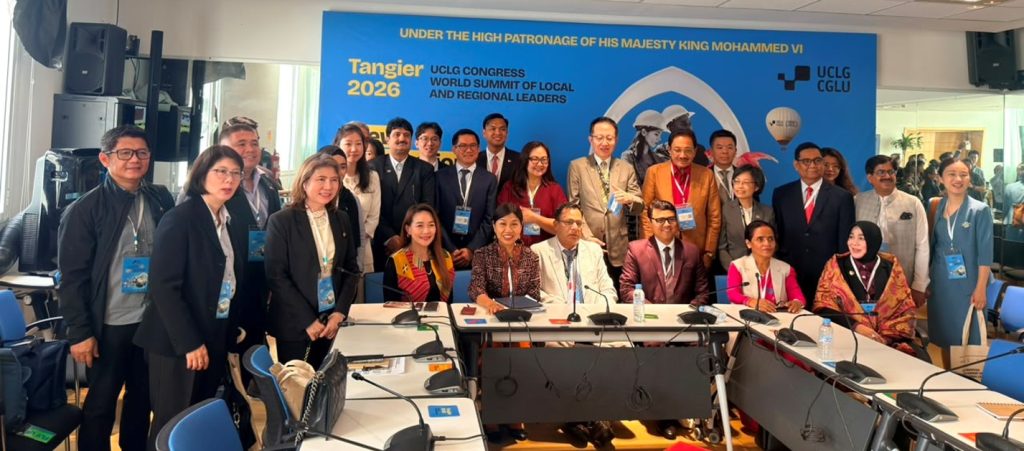
June 23, 2026 | Tangier – UCLG ASPAC organised the knowledge exchange session as part of the Local4Action Dialogue, bringing together local leaders from Asia-Pacific and other regions to share knowledge, showcase successful initiatives, and discuss how decentralised cooperation can strengthen local capacities, mobilise climate finance, and scale innovative climate actions.
Dr. Bernadia Irawati Tjandradewi, Secretary General of UCLG ASPAC, reaffirmed that local governments are at the forefront of responding to the climate crisis. She highlighted UCLG ASPAC’s commitment to strengthening partnerships among cities through peer learning, technical cooperation, and the Urban-Act Project, which promotes city pairing and practical collaboration to accelerate climate action across the Asia-Pacific region. By connecting cities with similar challenges and complementary expertise, UCLG ASPAC continues to facilitate the transfer of knowledge and scalable solutions that contribute to achieving the Sustainable Development Goals (SDGs) and the Paris Agreement.
The session featured inspiring case studies demonstrating how decentralised cooperation translates global commitments into concrete local action.
Turning Waste into Opportunity in Echague City, the Philippines
Mayor Faustino “Inno” Dy V, National President of the League of Municipalities of the Philippines (LMP), presented Echague’s “Basura Palit-Bigas” (Waste-for-Rice) Programme, an innovative initiative that links waste management with food security and community resilience. Faced with increasing municipal waste generation and limited recycling participation, Echague introduced a community-based incentive system where recyclable materials such as plastics, aluminium, and paper are exchanged for rice. The programme not only diverts waste from landfills but also provides direct support to vulnerable households, including indigent families, elderly citizens, and solo parents. Mayor Inno emphasised that inter-local government cooperation has been instrumental in refining the programme. Through exchanges with neighbouring municipalities and international partners, Echague has learned from successful recycling initiatives while sharing its own experience of integrating environmental sustainability with food security. The initiative demonstrates how peer learning enables local governments to adopt tested solutions more quickly, strengthen institutional capacity, and avoid costly trial-and-error approaches.
Bacolod City: Building Climate Resilience through Partnerships
Representing the Urban Act pilot city, Bacolod City, Councillor Ms. Em Ang shared how decentralised cooperation has become a strategic approach for addressing climate challenges through international partnerships, technical cooperation, and innovative financing. Recognising that local governments often face limited technical expertise and financial resources, Bacolod has actively engaged in city diplomacy to access global knowledge, strengthen institutional capacity, and develop locally adapted climate solutions. The city highlighted three key pillars of its cooperation strategy: knowledge exchange, pilot climate projects, and access to climate finance. Among Bacolod’s flagship initiatives are the Urban-Act Stakeholder Programme, implemented in collaboration with Clean Air Asia, and Oplan Kontra Baha, a comprehensive flood mitigation and river restoration initiative designed to enhance urban resilience. The city also continues to expand circular economy initiatives, renewable energy applications, and community-based waste management programmes through international partnerships. Councillor Em Ang stressed that global city networks such as UCLG serve as vital bridges that connect municipalities with international expertise, financing opportunities, and peer support, enabling local governments to transform local initiatives into scalable climate solutions.
Advancing Climate Action through Decentralised Cooperation
The session concluded with a broader regional dialogue involving representatives from UCLG regional sections, including UCLG Eurasia, UCLG Latin America, UCLG Middle East and West Asia, UCLG Africa, and Mercociudades, highlighting how decentralised cooperation has become an effective mechanism for accelerating local climate action worldwide. Participants agreed that city-to-city partnerships provide practical pathways for knowledge transfer, capacity development, and collaborative innovation that complement national and international climate efforts. The discussions reaffirmed that addressing the climate crisis requires strong local leadership supported by robust international cooperation. As UCLG ASPAC advances the Urban-Act initiative and expands partnerships across the Asia-Pacific region, the Organisation remains committed to empowering cities and local governments to develop bankable climate projects, strengthen institutional capacities, and accelerate the localisation of the SDGs through collaborative, city-led solutions that deliver lasting impact.