




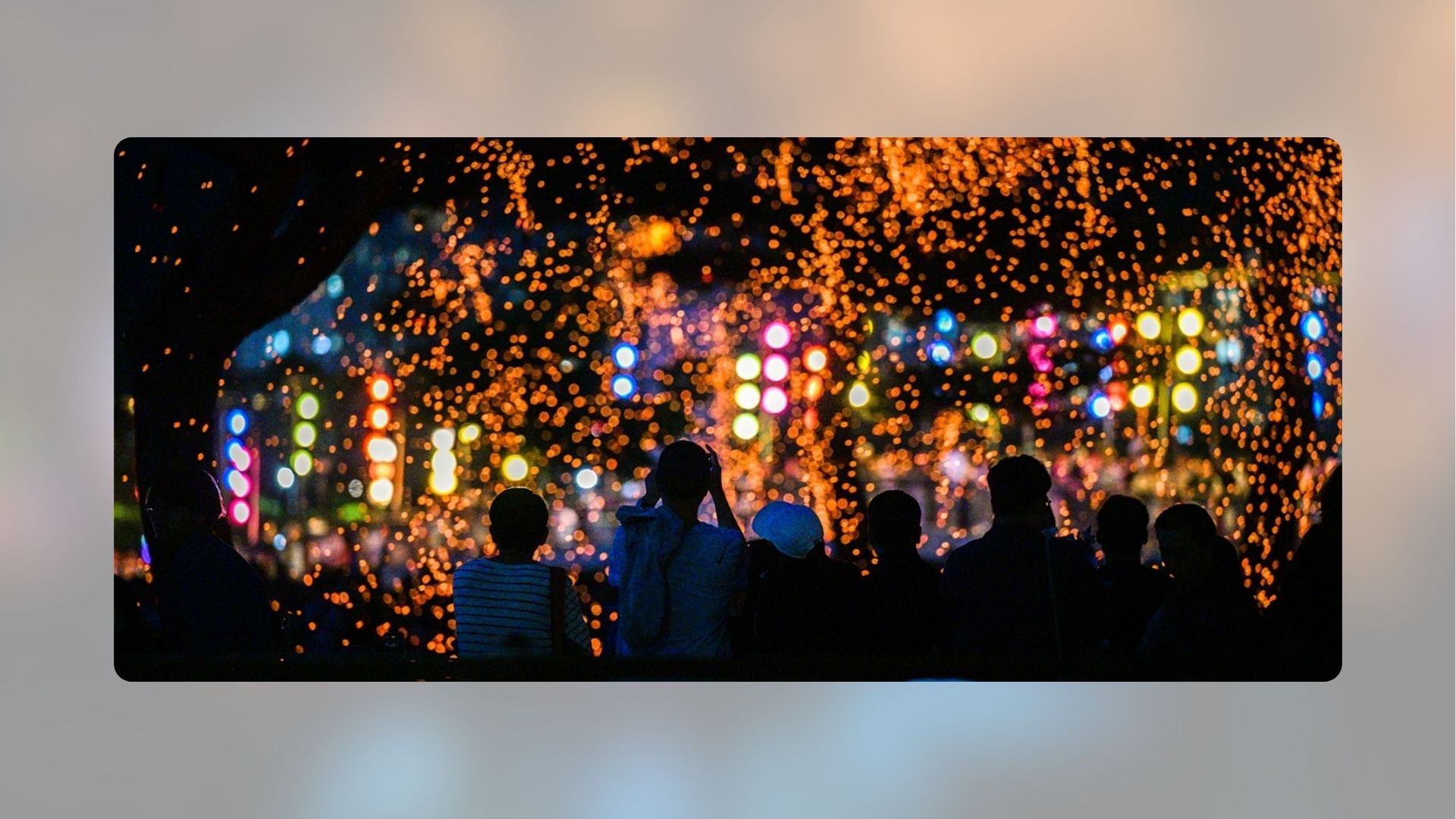
The 2026 Sejong Nakhwa Festival was held on May 16, 2026, around Sejong Lake Park and Sejong Central Park. Co-hosted by Sejong Special Self-Governing City, the Sejong City Culture and Tourism Foundation, and the Buddhist Nakhwa-beop Preservation Association, the festival welcomed more than 100,000 citizens and visitors, who gathered to enjoy the traditional fire art that illuminated Sejong’s spring night.
At the heart of the festival was “Sejong Buddhist Nakhwa-beop,” an intangible heritage of Sejong City. Nakhwa is a traditional ritual in which nakhwa rods are set alight, creating a crackling sound as embers scatter through the air like flower petals. Originally practised to ward off misfortune and pray for blessings, nakhwa was reimagined through the festival as a nighttime cultural event that allowed residents to engage with traditional heritage in an urban lakeside setting where nature and the city coexist.
This year’s festival focused on dispersing visitor flow so that audiences could enjoy the beauty of nakhwa in a more relaxed and accessible way. Nakhwa displays were presented across different parts of the park, from performance areas and waterfront spaces to open lawns, allowing visitors to move through the festival grounds rather than gather in one place. Along the route, visitors were able to encounter scenes of glowing sparks at different points throughout the park. This arrangement reflected careful consideration of both the viewing experience and public safety at a large-scale nighttime event.
The nighttime landscape throughout the festival grounds further enhanced the atmosphere. Traditional lanterns were installed along the main routes connecting Sejong Lake Park and Sejong Central Park, guiding visitors toward the festival areas. Around the Pine Forest Garden in Central Park, photo zones were also set up, allowing visitors to capture moments where nakhwa, nature, and the city’s nightscape came together. Visitors who brought festival promotional materials were offered free same-day admission to the National Sejong Arboretum, creating an opportunity to experience the Nakhwa Festival together with Sejong’s ecological and cultural assets.
Given the festival’s scale and nighttime setting, safety management was a central aspect of the event operations. In preparation, Sejong City worked with relevant agencies to carry out preventive water-spraying measures in areas where the nakhwa displays were to be installed. During the festival, safety personnel were deployed to support fire prevention and crowd management. The city also encouraged visitors to use public transportation or walk to the venue, while providing temporary parking areas for those using personal bicycles.
The festival recorded more than 100,000 visitors in total, with the peak crowd at any one time estimated by police at around 20,000. This marked a significant increase from the previous year’s peak crowd of 14,000, demonstrating the growing presence of the Sejong Nakhwa Festival as a representative nighttime cultural tourism programme rooted in local intangible heritage.
The Sejong Nakhwa Festival demonstrated how traditional culture, public space, safe urban management, and ecological and tourism resources can be woven into a single urban experience. In a rapidly changing urban environment, local cultural heritage can serve as a valuable resource that strengthens citizens’ emotional connection and the city’s identity. The event highlighted Sejong’s appeal as a city where tradition and modernity coexist, while also confirming the potential of cultural tourism content grounded in intangible heritage.