




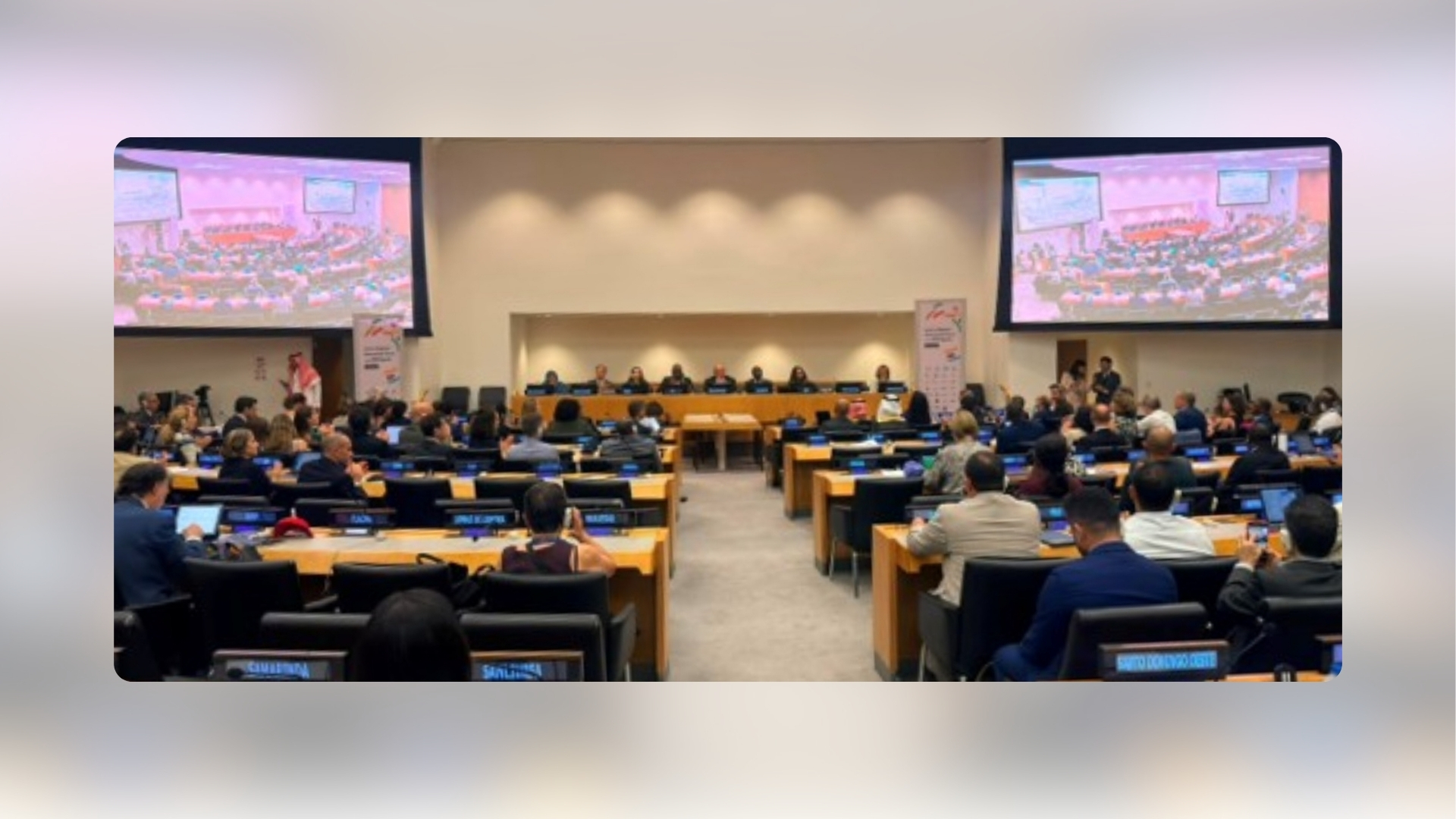
July 14-16, 2026 | New York – UCLG ASPAC participated in the 2026 High-Level Political Forum (HLPF), particularly in sessions focused on local and regional governments, SDGs localisation, and regional cooperation. UCLG ASPAC Secretary General also shared the Organisation’s perspective on the post-2030 development agenda.
The 2026 Local and Regional Governments (LRG) Forum
July 14, 2026 | UCLG ASPAC took part in the 2026 Local and Regional (LRG) Forum, organised by the Global Taskforce. Officially opened by UN Deputy Secretary-General Amina J Mohammed, the Forum emphasised that, as the world enters the final years leading up to 2030, implementation must move beyond commitments to concrete local action and delivery at the local level.
The Forum also highlighted that localisation has evolved from being viewed merely as an implementation approach to becoming a fundamental pillar of sustainable development, as reflected in the following developments:
- Increasing participation of local governments in Voluntary National Reviews (VNRs) and Voluntary Local Reviews (VLRs).
- Stronger recognition of local governments through the Pact for the Future.
- Expanding engagement between the UN system and local governments.
The Forum underscored the estimated US$4 trillion annual SDGs financing gap in developing countries, stressing that financing must reach the local level to accelerate implementation. At the same time, it showcased examples of cities and local governments delivering transformative solutions:
- New York City is integrating climate justice, affordable housing, clean energy, and cost-of-living measures into its development agenda.
- Geneva is promoting sustainable food systems, gender equality, accessibility, children’s rights, and urban greening.
- Heidelberg demonstrates how empowered municipalities can finance district heating, sustainable mobility, and the energy transition through municipal utilities.
- Bishkek is developing Central Asia’s first waste-to-energy facility through public-private partnerships.
- Norwegian municipalities have achieved more than 95% zero-emission city buses through green public procurement.
- Montpellier is advancing decentralised cooperation, water governance, and resilient public services.
UCLG ASPAC Engagement
The Local and Regional Government (LRG) Day
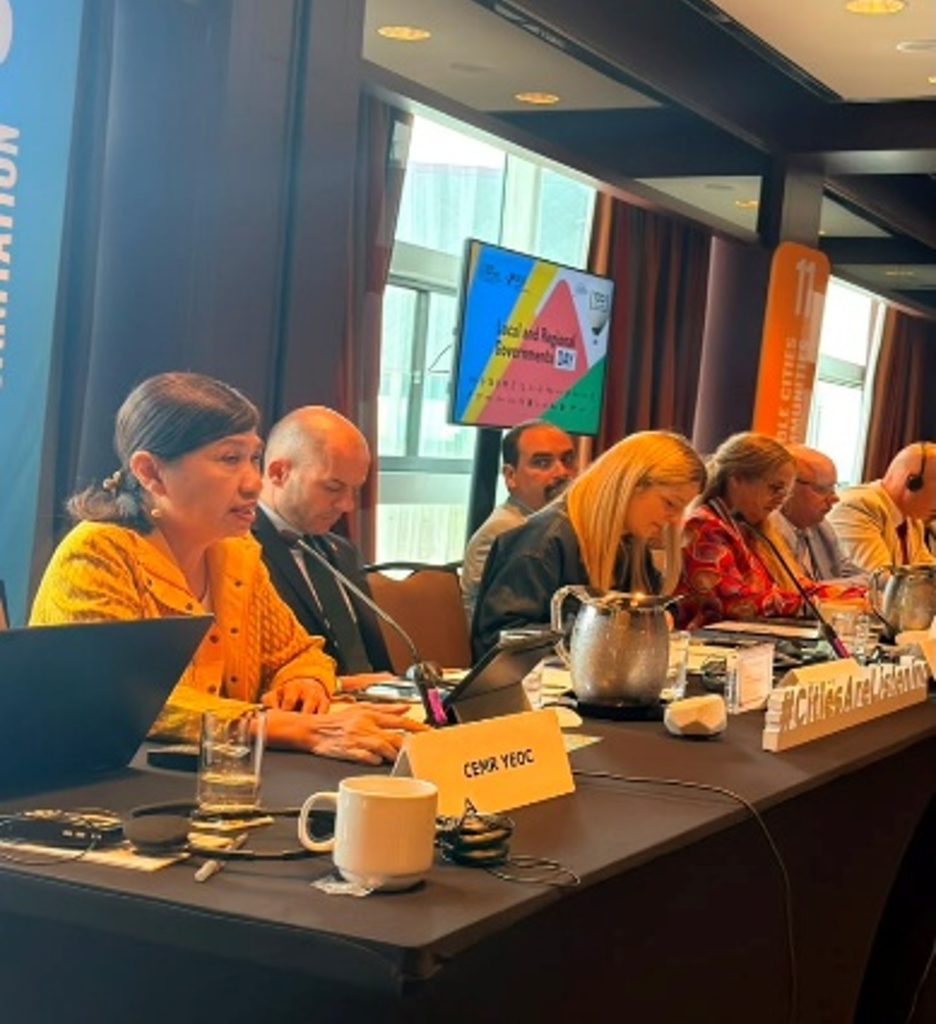
July 15, 2026 | UCLG ASPAC, represented by Secretary General Dr. Bernadia Irawati Tjandradewi, delivered the Asia-Pacific intervention during LRG Day, organised by UCLG World and Global Taskforce.
The session reflected on the evolution of SDGs localisation over the past decade. It revisited the first Global Observatory on Local Democracy and Decentralisation (GOLD) report in 2017, which described localisation as the only pathway through which global commitments can translate into tangible improvements in people’s daily lives. Since then, a decade of evidence has demonstrated the growing contribution of local and regional governments to sustainable development. The report documents more than 4,600 local practices implemented by over 1,600 local and regional governments across all SDGs. It also highlights the rapid growth of local reporting mechanisms:
- Voluntary Local Reviews (VLRs): from around 12 in 2018 to 584 by 2026;
- Voluntary Subnational Reviews (VSRs): from 6 in 2020 to 51 by 2026.
These reporting mechanisms have become important tools for planning, strengthening accountability, and enhancing coordination between national and local governments.
Through the Asia-Pacific intervention, Dr. Tjandradewi underscored that SDG localisation in the region has expanded significantly, although implementation continues to lag behind commitments. She highlighted several key achievements, including more than 40 VLRs across the region—some of which were supported by UCLG ASPAC—stronged SDGs awareness among local governments, the growing adoption of Climate Action Plans, and enhanced regional cooperation through peer learning.
She also presented the Asia-Pacific Synergy Report, a major regional contribution that addresses the Triple Planetary Crisis by promoting integrated action across climate change, biodiversity loss, and pollution. The report features more than 140 local case studies demonstrating how cities are implementing synergistic solutions to advance sustainable development.
The Local2030 Coalition Session on Governance, Local Ownership, and Partnerships
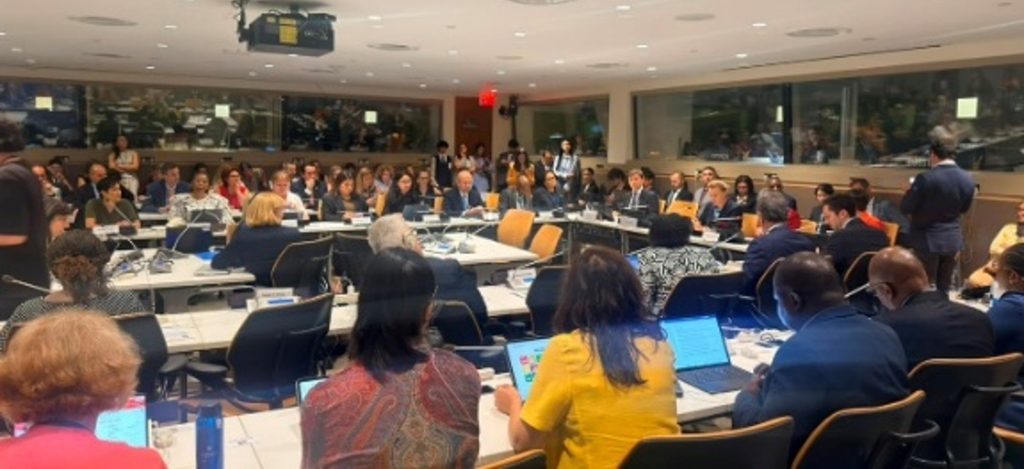
July 15, 2026 | UCLG ASPAC participated in a session organised by the Local2030 Coalition, UN-HABITAT, and Global Taskforce. During the session, UCLG ASPAC endorsed Mayor Danielle “Niña” Bernos, the National Secretary-General of the League of Municipalities of the Philippines (LMP) and the mayor of La Paz, Abra, to present the case study. She emphasised that achieving the SDGs requires systemic transformation driven by collaborative governance, local ownership, and inclusive partnerships, rather than relying solely on new technologies or isolated projects.
The session underscored that the greatest innovation lies not in new tools or technologies, but in governance processes that enable effective SDG implementation. Speakers emphasised the importance of:
- Multi-level governance that connects national, regional, and local governments.
- Strong collaboration among governments, academia, the private sector, civil society, and citizens.
- Democratic, trust-based partnerships built around shared goals.
- Respect for local cultural and linguistic diversity as an essential component of sustainable development.
SDG 11 at the Side Event on SDG 11: Strengthening Urban Resilience through SDG Localisation and Regional Cooperation
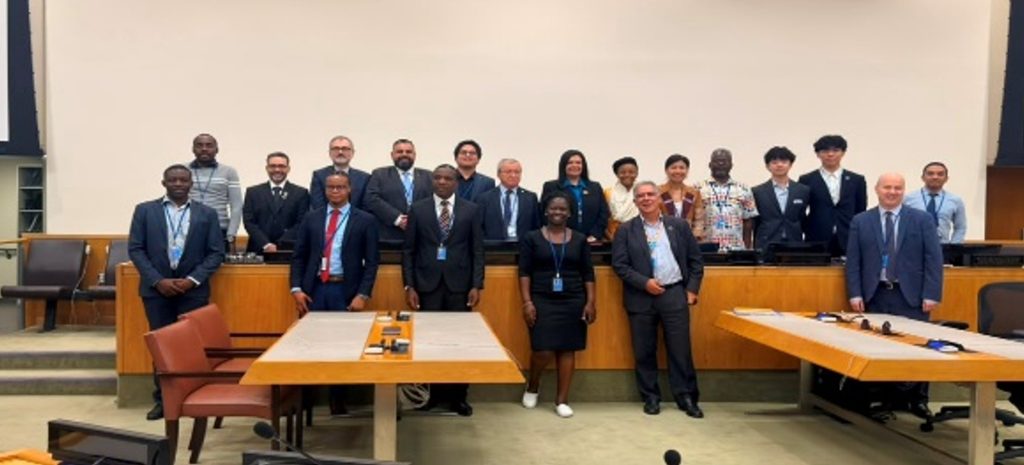
July 16, 2026 | UCLG ASPAC was invited by the five United Nations Regional Economic Commissions (UNECE, ECLAC, UNECA, ESCWA, and ESCAP) to participate in a side event focused on moving from planning to implementation by strengthening local capacities, improving investment readiness, enhancing multi-level governance, and fostering regional cooperation.
The UN Regional Commissions delivered three key messages:
- Planning and financing must go hand in hand: Planning without financing creates implementation gaps. Participants emphasised the need to integrate investment planning into VLRs, identify financing gaps early, align local priorities with national climate and development financing, and utilise VLRs as strategic investment planning tools rather than merely reporting mechanisms.
- Cities need investment-ready project preparation: Many cities, particularly small- and medium-sized cities, lack technical capacity to prepare projects that meet financiers’ requirements. Greater support is needed for: feasibility studies, financial modelling, environmental and social assessments, risk analysis, project packaging. The session also distinguished between: bankable projects, which generate commercial returns, and financeable projects, which deliver public value and therefore require public financing.
- Multi-level governance is essential: Urban resilience cannot be achieved by local governments alone. Effective implementation requires strong support from national government, regional coordination, international organisations, development partners, private sector participation, and local communities.
UCLG ASPAC also shared the Organisation’s perspective and recommendations for the post-2030 development agenda during the Future of Education and the Post-2030 Agenda session and the Bridging Science, Policy, and Practice to Address the Triple Planetary Crisis: Strengthening Synergies for the SDGs and a Sustainable Post-2030 Future session.
As the 2030 Agenda approaches its final milestone, UCLG ASPAC remains committed to its mission of supporting cities and local governments in achieving sustainable urban development and accelerating SDG localisation across the Asia-Pacific region.