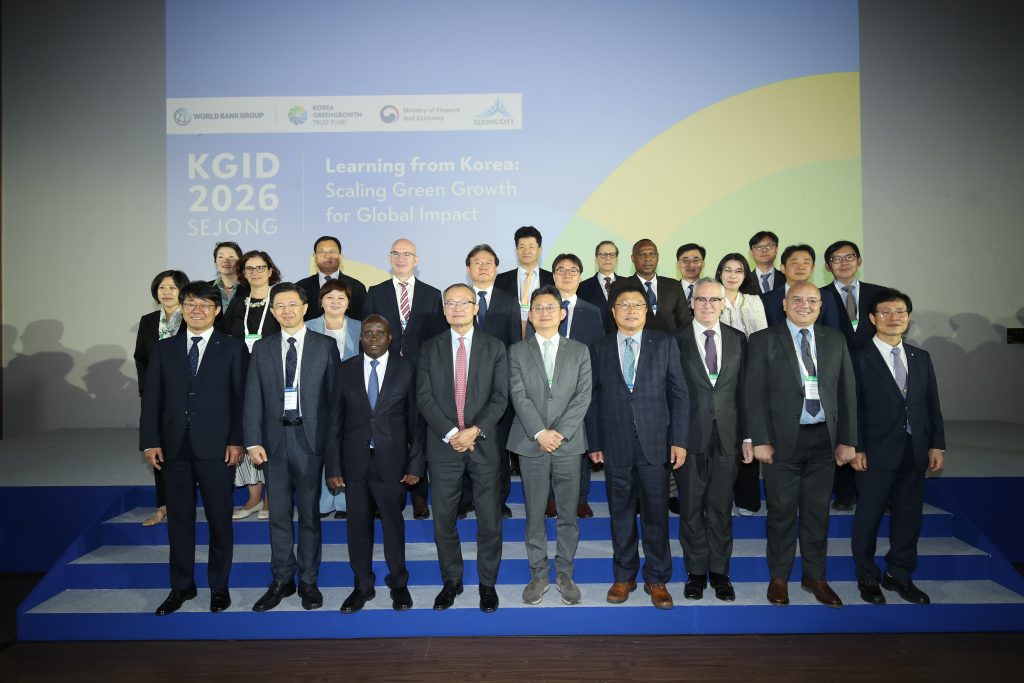




The 15th edition of the Korea Green Innovation Days (KGID 2026), held from May 6 to 8 at the Government Complex Sejong Convention Centre (SCC), has successfully established Sejong Special Self-Governing City as a premier global hub for sustainable urban policy. Co-hosted by the World Bank Group’s Korea Green Growth Trust Fund (KGGTF), the Ministry of Economy and Finance, and Sejong City, this flagship partnership event brought together over 300 international delegates, including World Bank officials and government representatives from Asia and Africa. By shifting the paradigm from policy ambition to large-scale green investments, the gathering directly advanced the global targets of SDG 11 for Sustainable Cities and Communities and SDG 9 for Industry, Innovation, and Infrastructure.
The selection of Sejong as the host venue underscores its unique status as a “Living Lab” where green growth theories are translated into tangible urban realities. As the planned administrative capital of the Republic of Korea, Sejong offers a dense institutional ecosystem housing 23 central government ministries and 26 national research institutes. This integration provides an unparalleled environment for international practitioners to engage directly with policymakers and technical experts. Furthermore, with nearly half of its urban area dedicated to public parks and green corridors, the city serves as a powerful reference point for low-carbon mobility and long-term climate resilience.
Operating under the theme “Learning from Korea: Scaling Green Growth for Global Impact,” KGID 2026 emphasised the urgent transition from knowledge sharing to practical project implementation. Since its foundation in 2011, the KGGTF has catalysed over $35.9 billion in World Bank lending and co-financing across 260 global projects. This year’s event elevated the discourse by exploring the intersection of Artificial Intelligence (AI) and green governance, focusing on how digital transformation can expand climate resilience and economic productivity in developing economies.
A core highlight of the three-day programme was Sejong’s pioneering smart mobility framework, which captured intense interest from international delegates. The city presented its “Future City Strategy,” which prioritises data-driven operations to maximise urban efficiency and transit convenience. Central to this presentation was the Sejong Integrated Mobility Model, an advanced ecosystem that seamlessly coordinates high-capacity Bus Rapid Transit (BRT) systems with AI-powered Demand Responsive Transport (DRT). This seamless mobility experience is further optimised by the innovative “I-eung Pass,” a monthly flat-rate public transport pass designed to incentivise eco-friendly commuting and drastically reduce private vehicle reliance.
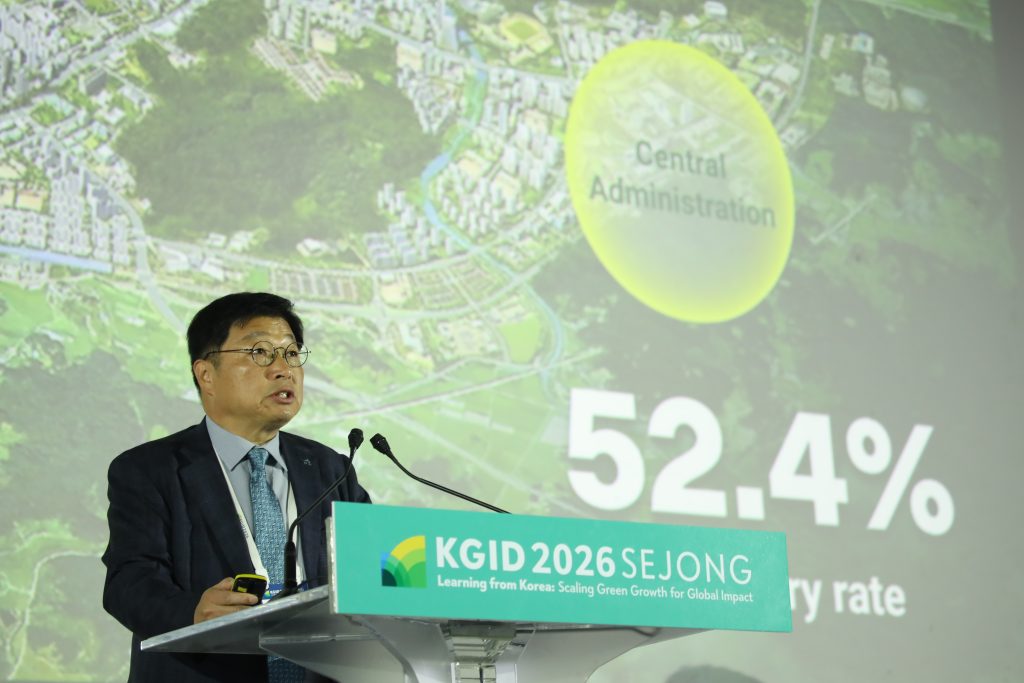
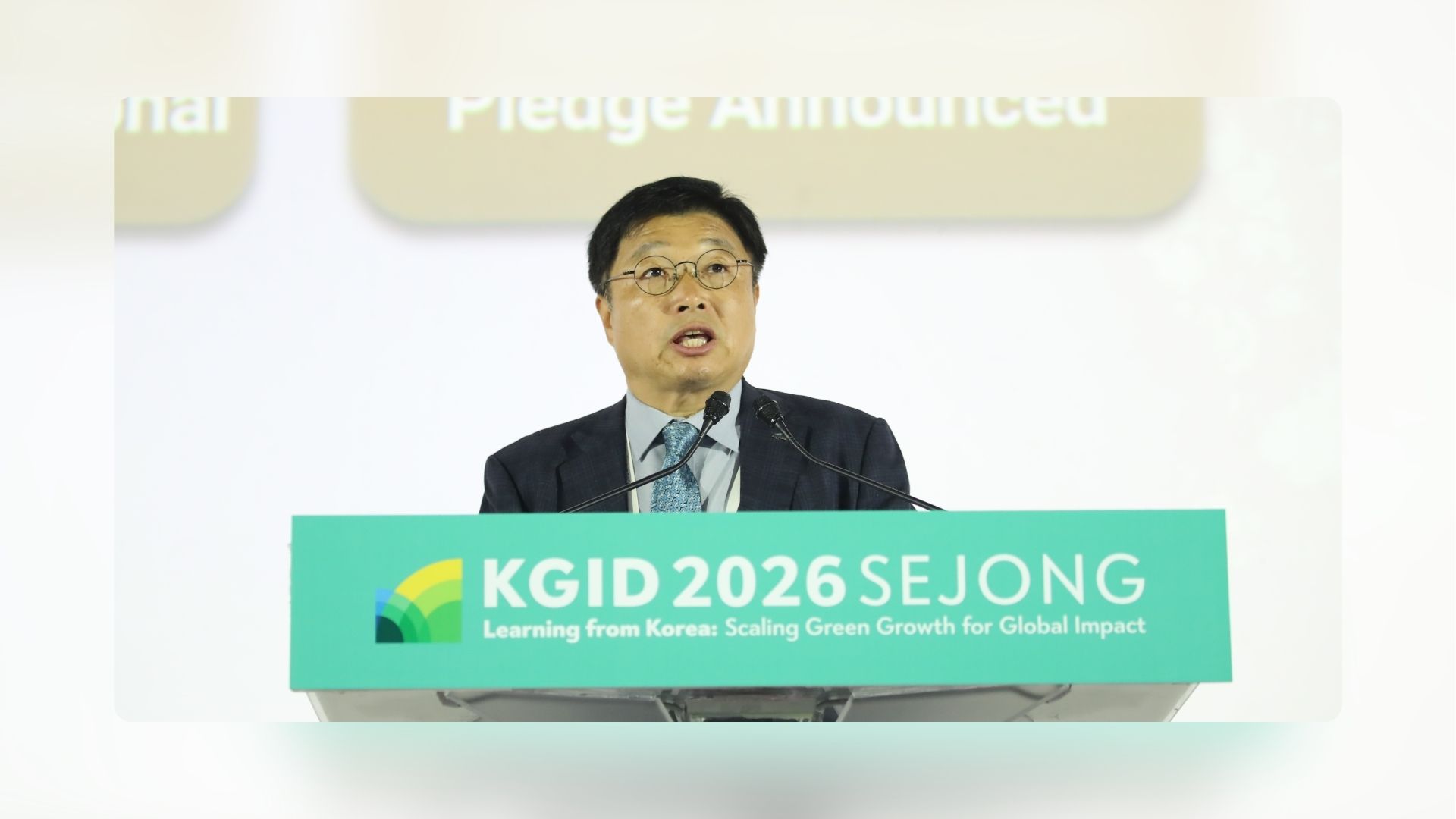
The international event reached its climax with a landmark keynote address by Lee Seung-won, the Vice Mayor for Economic Affairs of Sejong City, titled “Balanced National Development and Sustainable Cities.” Vice Mayor Lee illustrated Sejong’s historical journey from its inception to its current prominence, outlining a comprehensive blueprint that balances industrial productivity with environmental stewardship. He noted that hosting this prestigious global forum reflects international recognition of Sejong’s policy models and reaffirmed the city’s commitment to expanding its international cooperation networks by actively sharing urban development expertise with the global community to foster sustainable growth worldwide.
To bridge theoretical discussions with empirical evidence, delegates participated in targeted field visits to Sejong’s core innovation facilities. Participants explored the Sejong Smart City Center to witness how integrated data platforms optimise daily urban management and reduce carbon emissions. The itinerary also featured technical tours of the K-water headquarters, Smart Farm Innovation Valleys, and the National Information Resources Service. These practical experiences demonstrated that Sejong’s sustainable urban strategies offer concrete, replicable solutions capable of being adapted to rapidly urbanising regions worldwide, ensuring that local innovation drives global impact.