





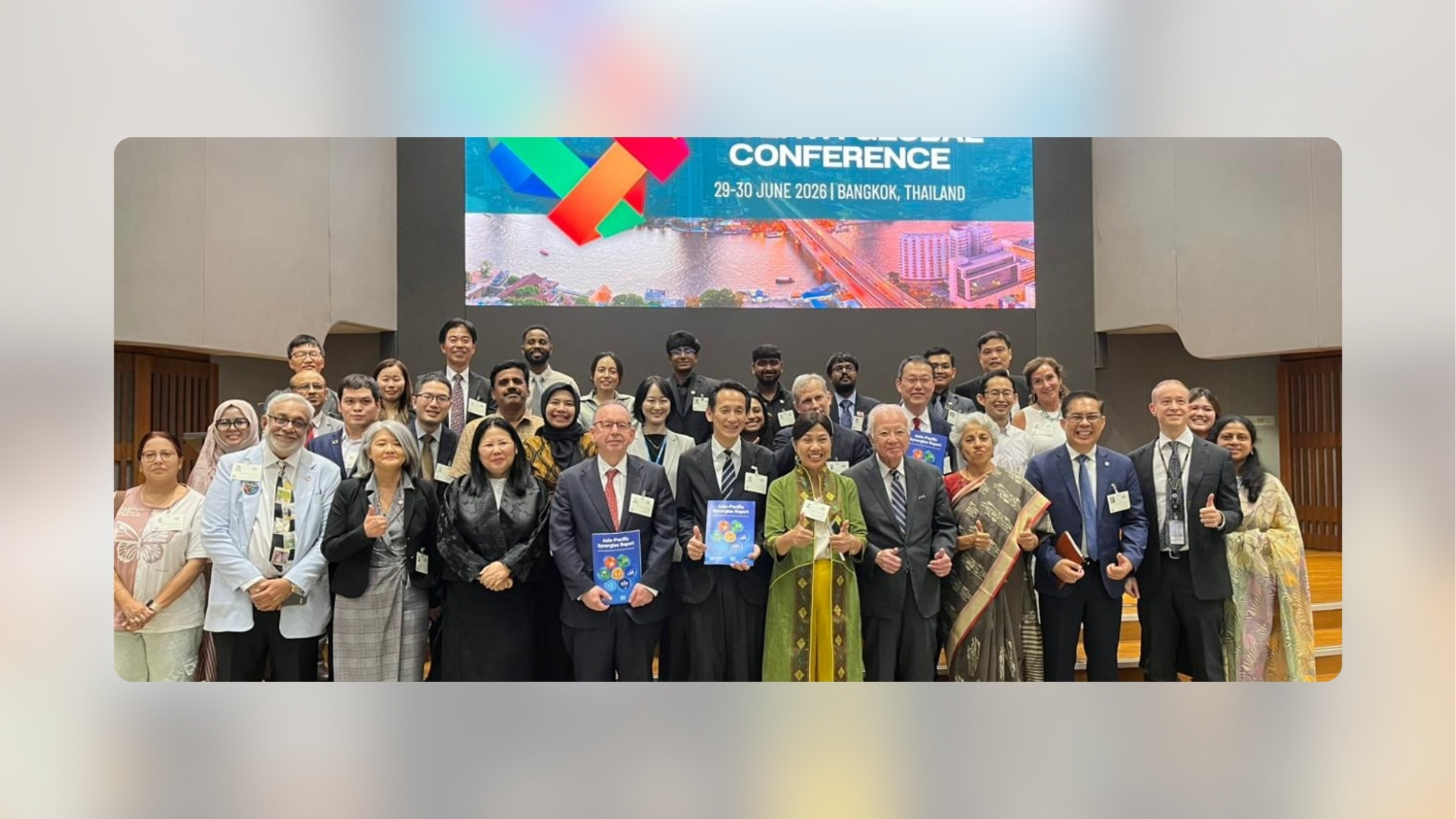
June 29 – July 3, 2026 | Bangkok – UCLG ASPAC brought the perspectives of Asia-Pacific’s local and regional governments to key discussions on climate–SDG synergies, urban resilience, digital transformation, climate finance, and regional cooperation through its participations in the 7th Global Conference on Strengthening Synergies between the Paris Agreement and the 2030 Agenda for Sustainable Development, held back-to-back with the Ninth Session of the Committee on Environment and Development at the United Nations Conference Centre.
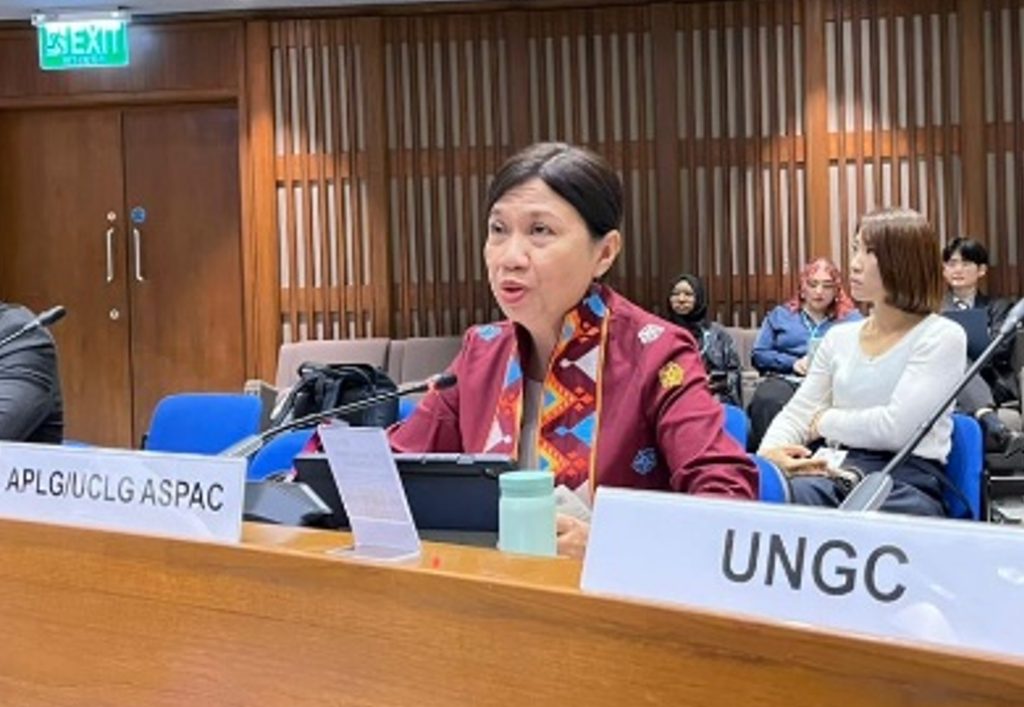
UCLG ASPAC, represented by Secretary General Dr. Bernadia Irawati Tjandradewi, advocated for cities and local governments to move beyond being viewed as mere implementers of national policies. She highlighted the transformations and enabling environments required to achieve this vision and outlined one of UCLG ASPAC’s approaches to leveraging artificial intelligence among cities and local governments in response to the discussions.
First, she emphasised that the main challenge is no longer a lack of commitments, but rather a delivery gap. Global climate and SDG ambitions must be translated into integrated local mandates, plans, budgets and implementable projects.
She further highlighted that while cities serve as essential delivery platforms, local governments should not be treated merely as the “last mile” of implementation. Instead, their practical knowledge and local priorities must inform and shape national climate strategies from the outset, particularly in key sectors such as transport, land use, buildings, waste, water, and urban infrastructure. She also underscored that localisation without adequate resources is ineffective. Cities require clear authority, predictable finance, institutional capacity, reliable data, and technical support—not additional responsibilities without the necessary means to fulfil them.

In the discussions, UCLG ASPAC further highlighted that cities must move beyond isolated pilot projects towards institutional transformation. Successful approaches should be integrated into municipal planning, budgeting, procurement and service delivery systems, supported by multilevel governance, regional cooperation and city-to-city learning.
Furthermore, UCLG ASPAC emphasised that improving cities’ access to climate finance requires more than simply increasing available funds. Local governments need predictable fiscal resources, enhanced financial capacity, technical assistance and stronger linkages with development partners and financing institutions.
UCLG ASPAC also endorsed the view that digital innovation is an enabler, rather than an end in itself. Smart city initiatives should be assessed based on their ability to improve services, reduce emissions, strengthen resilience, and address community needs, rather than by the number of technologies deployed.
Building on the momentum, UCLG ASPAC reinforced the important role of regional city networks as implementation platforms that connect cities, facilitate the exchange and adaptation of proven solutions, strengthen institutional capacity, and help ensure that successful local approaches inform national and regional climate policies.
Launch of the Asia-Pacific Synergy Report
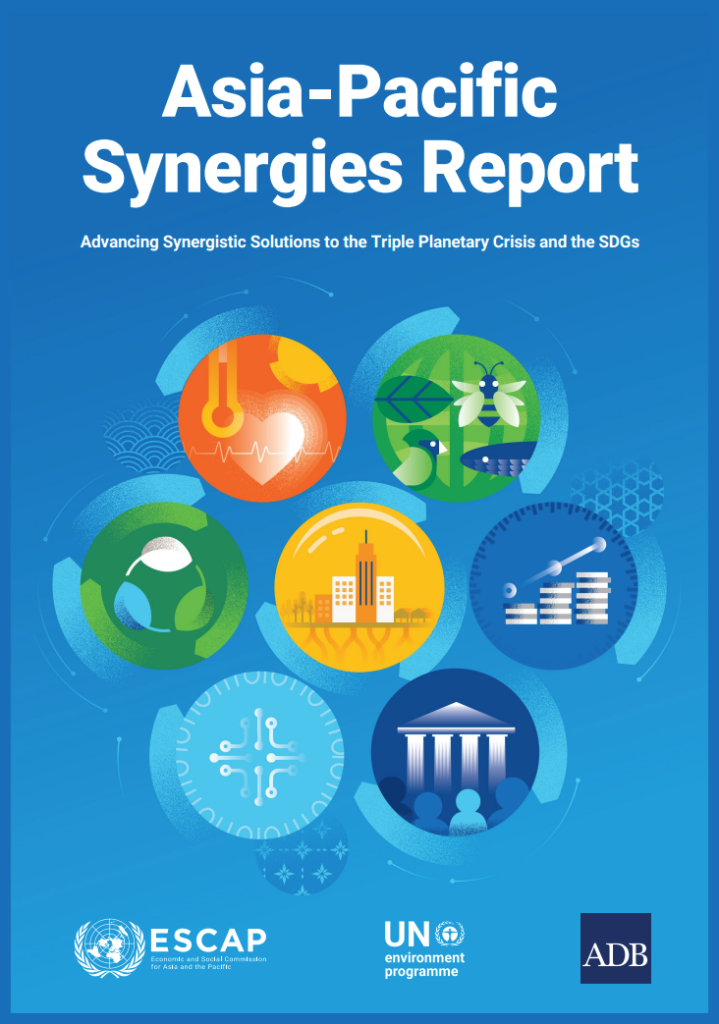
UCLG ASPAC Secretariat is also proud to contribute to the development of the Asia-Pacific Synergy Report, a collaborative initiative involving ESCAP, UNEP, UCLG ASPAC, the World Bank and the Institute for Global Environmental Strategies (IGES), with financial support from the Ministry of the Environment, Japan. The report provides recommendations for advancing climate–SDG synergies through pathways focused on cities and resilience, the circular economy, nature-positive approaches, and health-centred climate action.
From Dialogue to Local Delivery
For UCLG ASPAC members, the Bangkok discussions highlighted practical priorities: integrating climate targets into local planning and budgeting, developing investment-ready projects, strengthening cross=sector coordination, and expanding access to regional knowledge and financing networks. For national governments and development partners, the message is clear: cities cannot be expected to deliver ambitious commitments while remaining peripheral to policy design and financing decisions.
Through its contribution to the Asia-Pacific Synergy Report, co-organisation of the climate-finance networking event, and participation in the two forums, UCLG ASPAC reinforced a consistent position: regional and national ambitions will ultimately be measured through local delivery. Cities must therefore be recognised, engaged and adequately resourced as essential partners in designing, financing and implementing climate and sustainable development solutions across Asia and the Pacific.