





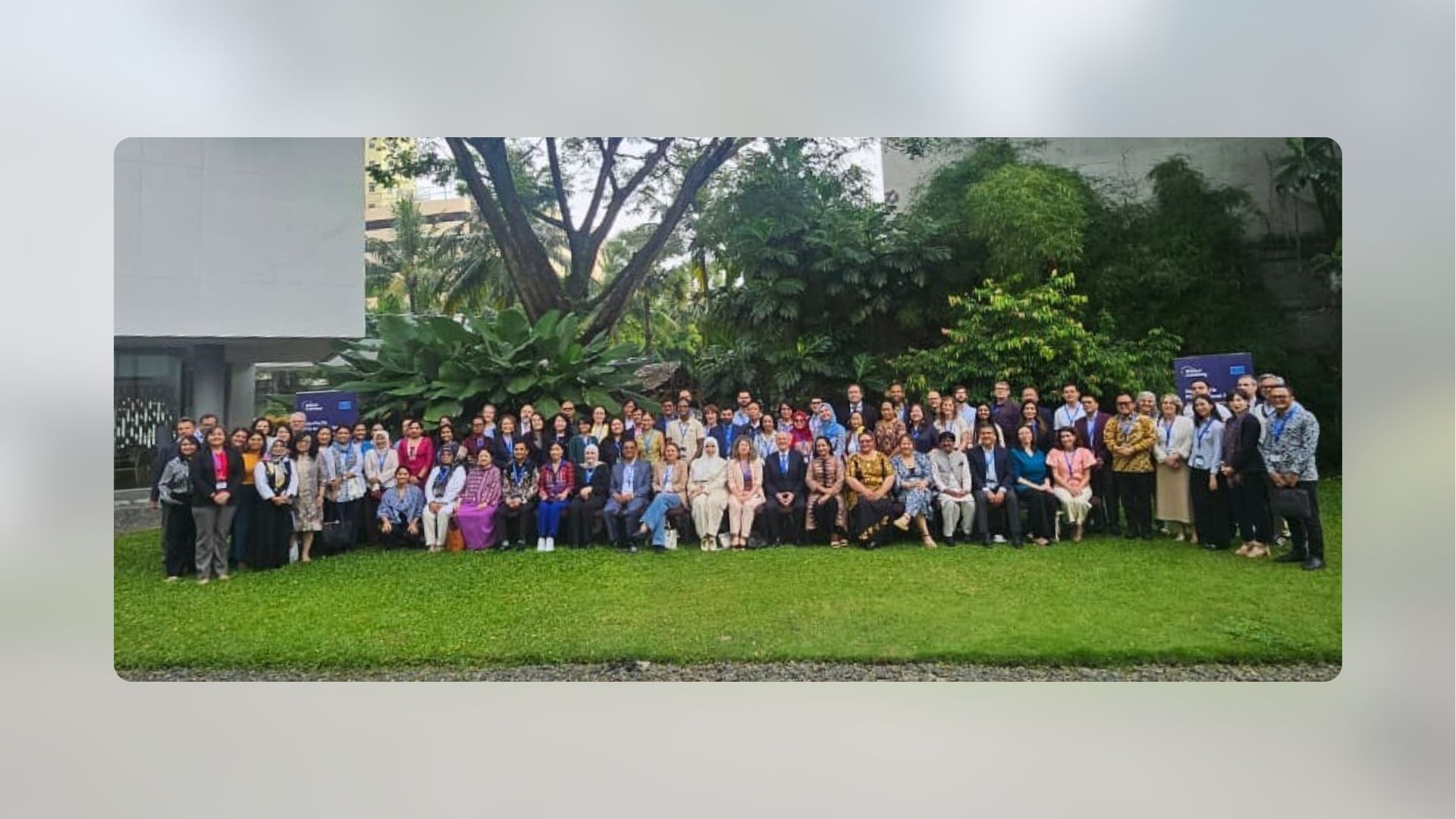
June 2–3, 2026 | Jakarta – UCLG ASPAC, representing local governments across the Asia-Pacific, co-hosted the 2026 Asia-Pacific Regional Meeting of the Policy Forum on Development (PFD) together with the Asia Pacific Research Network (APRN). Under the theme “Regional Partnerships for Shared Prosperity,” PFD 2026 brought together representatives of the European Commission, European Union Delegations, local and regional governments, civil society organisations (CSOs), indigenous peoples’ organisations, academia, development partners, cooperatives, and private-sector actors to explore how climate governance, climate finance, and regional partnerships can better respond to local realities and strengthen community resilience.
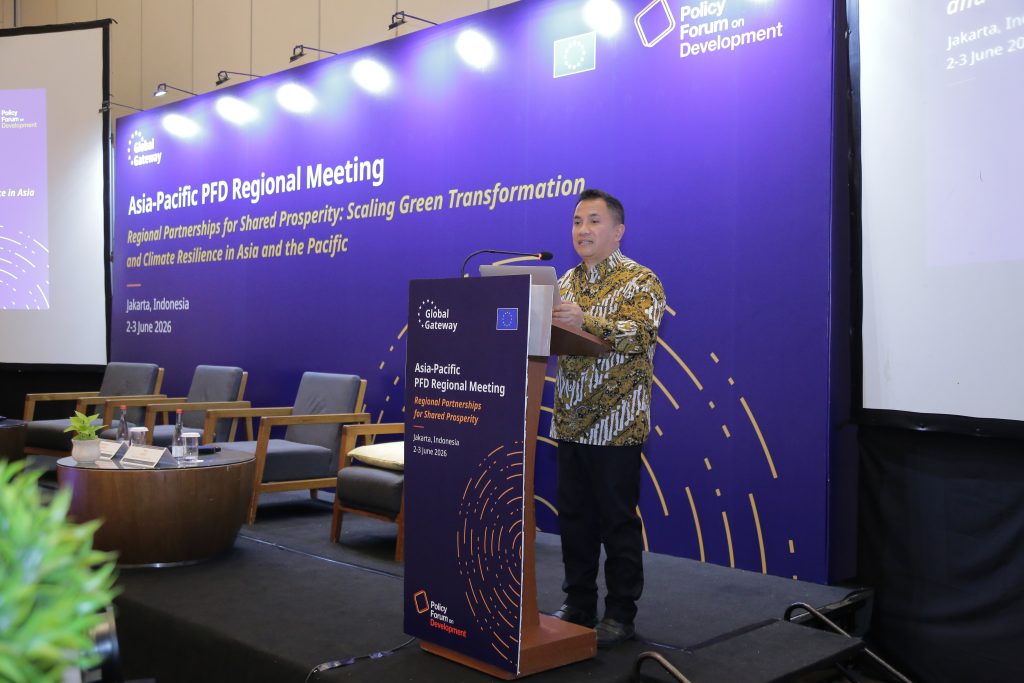
Representing the Government of Indonesia, Mr. Teguh Sambodo, Deputy Minister for Food, Natural Resources and Environment at the Ministry of National Development Planning (Bappenas), highlighted that Asia and the Pacific is at a defining moment as climate change, biodiversity loss, and environmental degradation increasingly affect economic stability, food security, energy systems, and livelihoods. He reaffirmed Indonesia’s commitment to placing the green economy at the centre of its long-term development strategy while ensuring that the transition creates opportunities for communities and leaves no one behind.
“The green transition is no longer an option. It is an economic necessity, a development imperative, and a strategic opportunity for our region.”
He further emphasised that achieving this vision requires stronger partnerships, sustainable investment, technology exchange, and capacity building, while ensuring that women, youth, indigenous peoples, local authorities, and communities become active participants and beneficiaries of development.
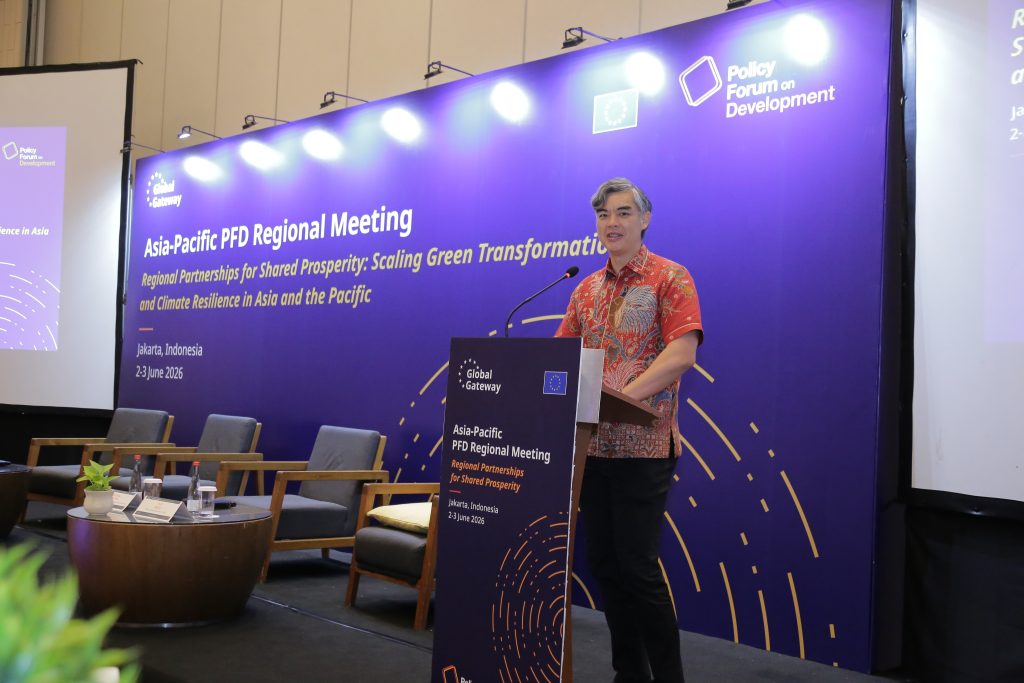
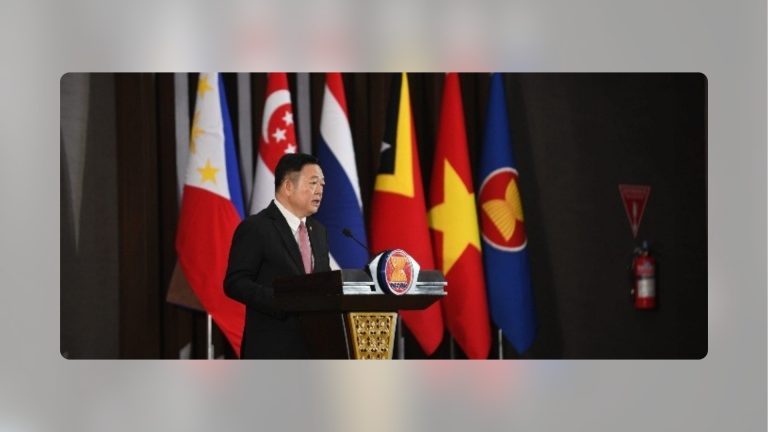
Mr. Sujiro Seam, Ambassador of the European Union to ASEAN, reaffirmed the European Union’s continued commitment to international development, climate action, and multilateral cooperation in an increasingly complex global environment. He highlighted that the EU’s development cooperation remains grounded in values such as democracy, good governance, human rights, inclusiveness, and leaving no one behind, while recognising civil society organisations and local governments as essential partners in advancing sustainable development.
“Whatever we do, our development policies have one target: to improve the lives of the people.”
He also noted that initiatives such as the Global Gateway and the EU Green Deal seek to support sustainable investment, green and digital transitions, and long-term partnerships that deliver tangible benefits for communities across Asia and the Pacific.
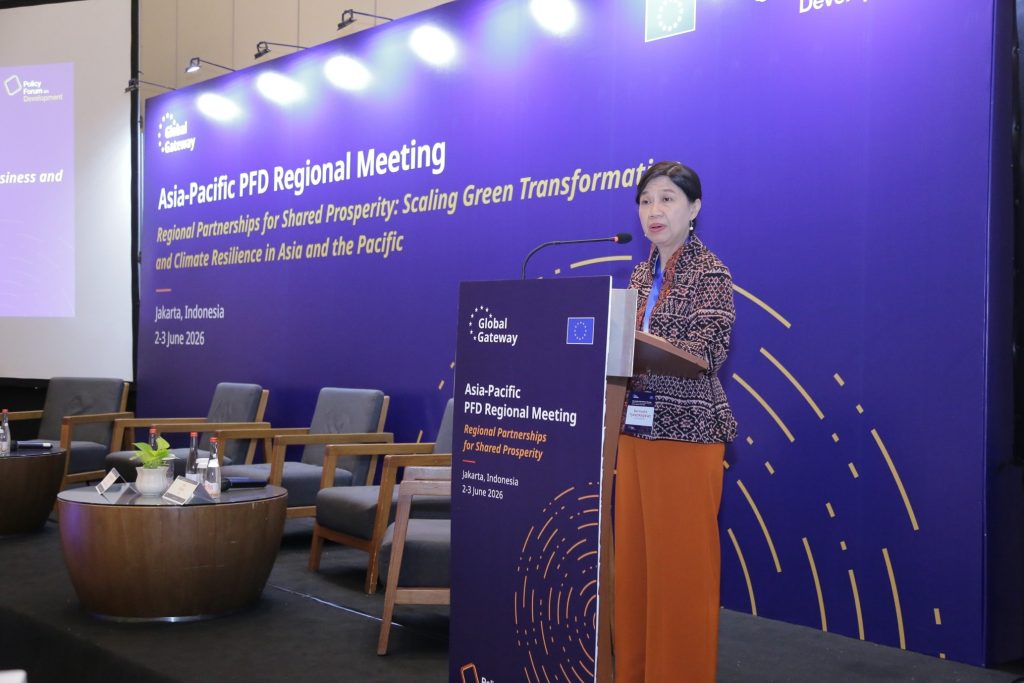
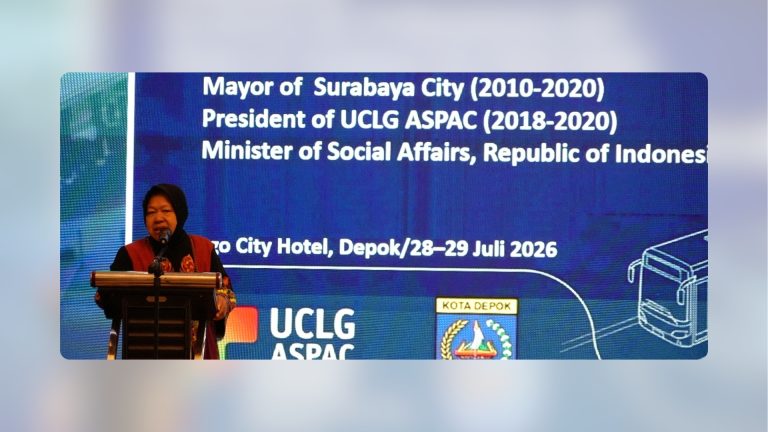
In her welcoming remarks, Dr. Bernadia Irawati Tjandradewi, Secretary General of UCLG ASPAC, emphasised that climate resilience and shared prosperity are inseparable.
“The success of climate policies, financing mechanisms, and investment programmes will ultimately be measured not by the commitments we make, but by the improvements they deliver for people and communities on the ground.”
She further highlighted that meaningful localisation requires local authorities and civil society organisations to participate not only in implementation, but also in planning, decision-making, and monitoring.
“Localisation is not simply about bringing projects closer to people; it is about bringing people closer to decisions.”
In addition to delivering the opening remarks on behalf of Local Authorities and Civil Society constituency, Dr. Bernadia also facilitated Breakout Group 1 on Climate Finance and Local Institutions, guiding discussions on how climate finance can become more accessible, inclusive, and locally driven. The discussion featured case studies from the Philippines and Papua New Guinea that illustrated different approaches to strengthening local resilience through climate finance.
Donna Dizon of CLIMBS Life and General Insurance Cooperative demonstrated how cooperative-based insurance and renewable energy initiatives have strengthened community resilience and financial inclusion in the Philippines. While Juliette Segard of Expertise France shared lessons from Papua New Guinea on strengthening climate governance, biodiversity conservation, and community participation through the EU-funded programme.
The discussion identified several common challenges, including limited access to climate finance, capacity constraints, insufficient involvement of local actors in project design, and difficulties in translating climate policies into practical local action.
At the same time, participants highlighted a number of promising approaches, including community-based insurance mechanisms, cooperative financing models, stronger legal and institutional frameworks, and the integration of climate considerations into local planning and budgeting systems.
Several key messages emerged from the breakout discussions:
- Climate finance must become more accessible to local governments and communities.
- Localisation means participation in decision-making, not only implementation.
- Climate finance should support resilience, livelihoods, and social inclusion alongside environmental objectives.
- Building local institutions, trust, and financial literacy is as important as mobilising new funding.
- A just transition requires protecting workers, livelihoods, and vulnerable groups.
- Climate challenges are interconnected and require coordinated responses across sectors, institutions, and levels of government.
Participants also noted that climate investments are most effective when they combine environmental objectives with livelihood benefits, community ownership, and long-term institutional strengthening.
Insights from Cities: From Local Knowledge to Local Impact
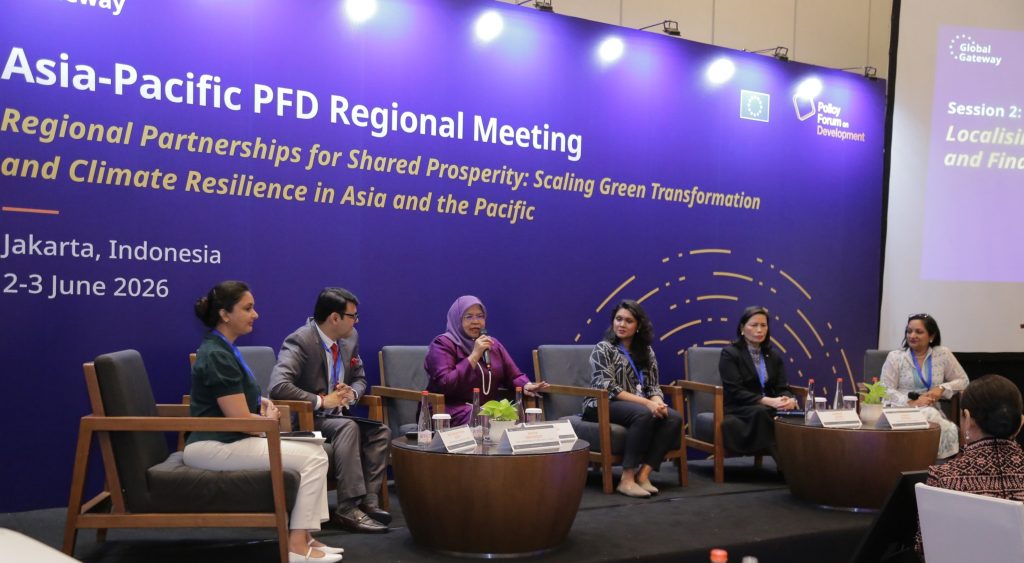
One of the strongest themes emerging from the meeting was the importance of local knowledge and local leadership.
Maimunah Mohd Sharif, former Executive Director of UN-Habitat and former Mayor of Kuala Lumpur, highlighted how climate adaptation efforts become more effective when communities are actively involved in identifying problems and shaping solutions.
Drawing on her experience as Mayor in Penang State, she shared how a recurring flood issue was eventually resolved after residents pointed out problems in the drainage system that technical assessments had overlooked. The experience demonstrated that communities often possess valuable knowledge about local risks and conditions that can complement technical expertise.
Maimunah also encouraged participants to “think local, act global, apply local,” emphasising that global discussions only become meaningful when translated into local implementation. She further stressed that climate action requires more than finance alone – leadership, capacity, expertise, finance, and good governance must work together to transform policies into meaningful outcomes.
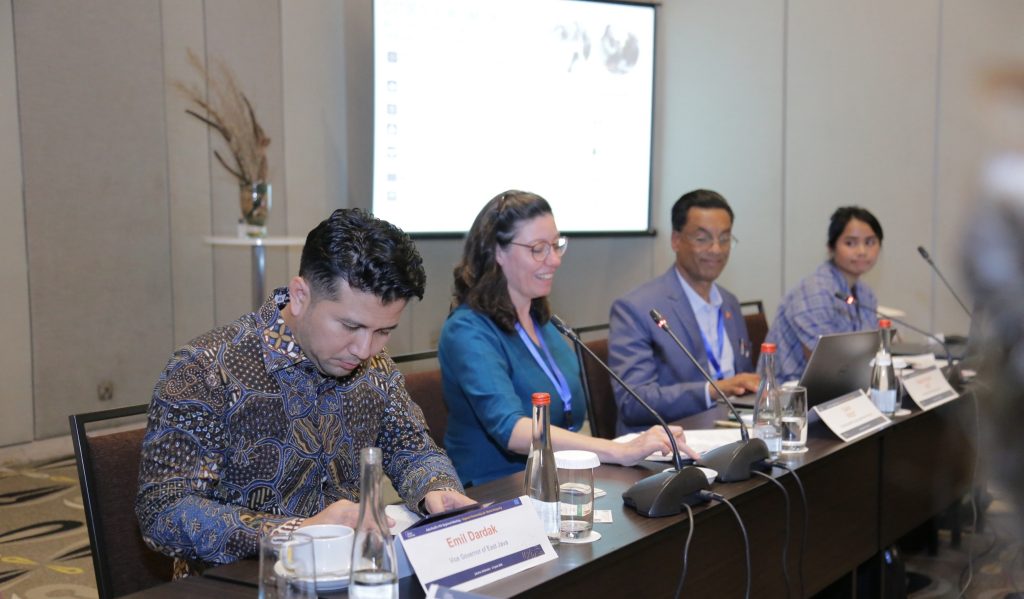
Complementing this perspective, Emil Elestianto Dardak, Vice Governor of East Java Province, reminded participants that climate challenges extend beyond cities and affect rural communities in different ways. He highlighted the importance of understanding local livelihoods when designing resilience and relocation programmes, noting that technically sound interventions may not succeed if they do not reflect how communities live and work. He also emphasised that climate policies must recognise the diverse realities of rural and urban communities. He noted that relocation and resilience programmes will only succeed when they reflect local livelihoods and provide sustainable economic opportunities alongside environmental objectives.
Both speakers reinforced a common message: climate solutions are most effective when they are grounded in local realities and developed together with the people they are intended to serve.
Ravi Ranjan Guru, Deputy Director General of the All India Institute of Local Self Government, highlighted the importance of investing in local capacity building as a solution to one of the biggest barriers facing cities today: accessing funding.
“Rather than funding only projects, donors should also support proposal preparation, project development, financial management, and institutional capacity building, as these factors determine whether cities can access climate finance,” he said. He shared the Indian examples, illustrated that cities can successfully mobilise climate finance when they combine strong planning, credible project pipelines, and sustained investment in institutional capacity.
Throughout the two-day meeting, a recurring message was that climate finance should not be measured solely by the amount of funding mobilised or emissions reduced. Instead, success should also be assessed through strengthened resilience, protected livelihoods, reduced inequalities, and tangible benefits delivered to communities. Participants also emphasised that climate finance must be accessible, transparent, accountable, and responsive to local needs, particularly for vulnerable groups that often experience the impacts of climate change most directly. Discussions also repeatedly highlighted that localisation is not only about implementing projects at the local level, but also about ensuring that communities and local institutions have meaningful opportunities to shape priorities, investments, and solutions from the outset.
Strengthening Partnerships for Localised Climate Action
The meeting reaffirmed the important role of local and regional governments and civil society organisations as strategic partners in advancing climate action and sustainable development.
For UCLG ASPAC, the meeting reinforced the importance of translating dialogue into action and ensuring that climate finance, governance, and development cooperation ultimately contribute to tangible improvements in the lives of communities across Asia and the Pacific.
As discussions throughout the meeting consistently demonstrated, meaningful localisation is not simply about implementing projects closer to communities. It is about enabling local governments, civil society organisations, and communities themselves to participate in shaping decisions, investments, and solutions. For UCLG ASPAC, this remains fundamental to ensuring that climate finance ultimately delivers stronger resilience, more inclusive development, and shared prosperity across Asia and the Pacific.