





May 8-9, 2026 | UCLG ASPAC, in collaboration with the Ministry of Home Affairs of the Republic of Indonesia through the Centre for Facilitation of Cooperation (Pusat Fasilitasi Kerja Sama) and the Government of Kendari City, organised the City-to-City Cooperation Training in Kendari, Southeast Sulawesi.
The training brought together around 35 representatives from provincial, city, and regency governments across Indonesia, including officials from regional development planning agencies (Badan Perencanaan Pembangunan Daerah/Bappeda) and international cooperation divisions. The activity focused on strengthening local governments’ capacity to initiate, manage, and expand international cooperation as part of sustainable and inclusive regional development.
The activity highlighted the growing importance of subnational diplomacy and local governments’ participation in global networks, allowing participants to explore practical approaches to developing international partnerships. These included understanding regulatory frameworks, strengthening city profiles and branding, preparing cooperation proposals, and improving monitoring and evaluation mechanisms for international cooperation initiatives.
Sessions on strengthening local government networking platforms, city profiling and branding, as well as experience-sharing from local government provided insights that successful international partnerships often begin with strong visibility and clear communication of a city’s unique strengths, development priorities, and competitive advantages. Local governments were also encouraged to move beyond passive approaches and actively promote their regions through national, regional, and international forums, while aligning city branding with local identity, development priorities, tourism potential, and investment opportunities. From the sharing session of Provincial Government of Jakarta, participants learned practical lessons on managing international cooperation initiatives, maintaining partnerships, and ensuring institutional coordination within local governments.
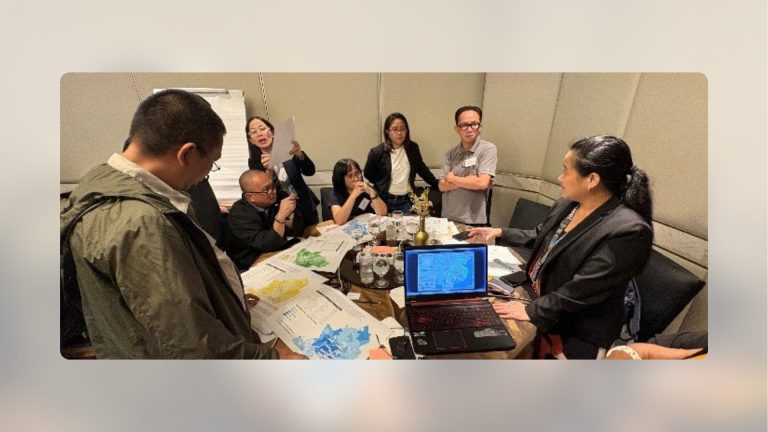
Participants were also equipped with knowledge on strategies for developing cross-border collaboration through the pilot implementation of monitoring and evaluation (Monev) instruments for international cooperation. Facilitated by the Ministry of Home Affairs, the session introduced practical approaches to measuring the effectiveness, impact, and sustainability of local governments’ international cooperation programmes. A practical session on preparing international cooperation proposals for local governments was also conducted, during which participants received step-by-step guidance on identifying potential partners, formulating cooperation objectives, preparing concept notes, and aligning proposed initiatives with regional development priorities and Sustainable Development Goals (SDGs).
Through interactive discussions, peer learning, and Mentimeter surveys, the training revealed that while many local governments already understand the benefits of international cooperation, several regions still face challenges related to limited networking opportunities, institutional readiness, and support from regional leadership.
During the closing session, the Secretary General of UCLG ASPAC, Dr. Bernadia Irawati Tjandradewi, emphasised that international cooperation should not be viewed merely as ceremonial activities, but as a strategic instrument capable of generating concrete benefits for communities. These benefits include strengthening local government capacity, promoting tourism and local products, improving public services, encouraging technology transfer, and supporting regional economic growth. She also highlighted the success of international cooperation at the local level depends greatly on the vision and commitment of regional leaders in positioning global partnerships as part of regional development strategies.
The training was organised in conjunction with the 2026 UCLG ASPAC Executive Bureau Meeting in Kendari, Indonesia. The capacity building activity concluded with a strong call for local governments to continue building networks, improving institutional readiness, and translating the knowledge gained during the training into concrete cooperation initiatives. The collaboration between the Ministry of Home Affairs and UCLG ASPAC is expected to continue supporting Indonesian local governments in becoming more confident and active actors in international cooperation and decentralised diplomacy.