

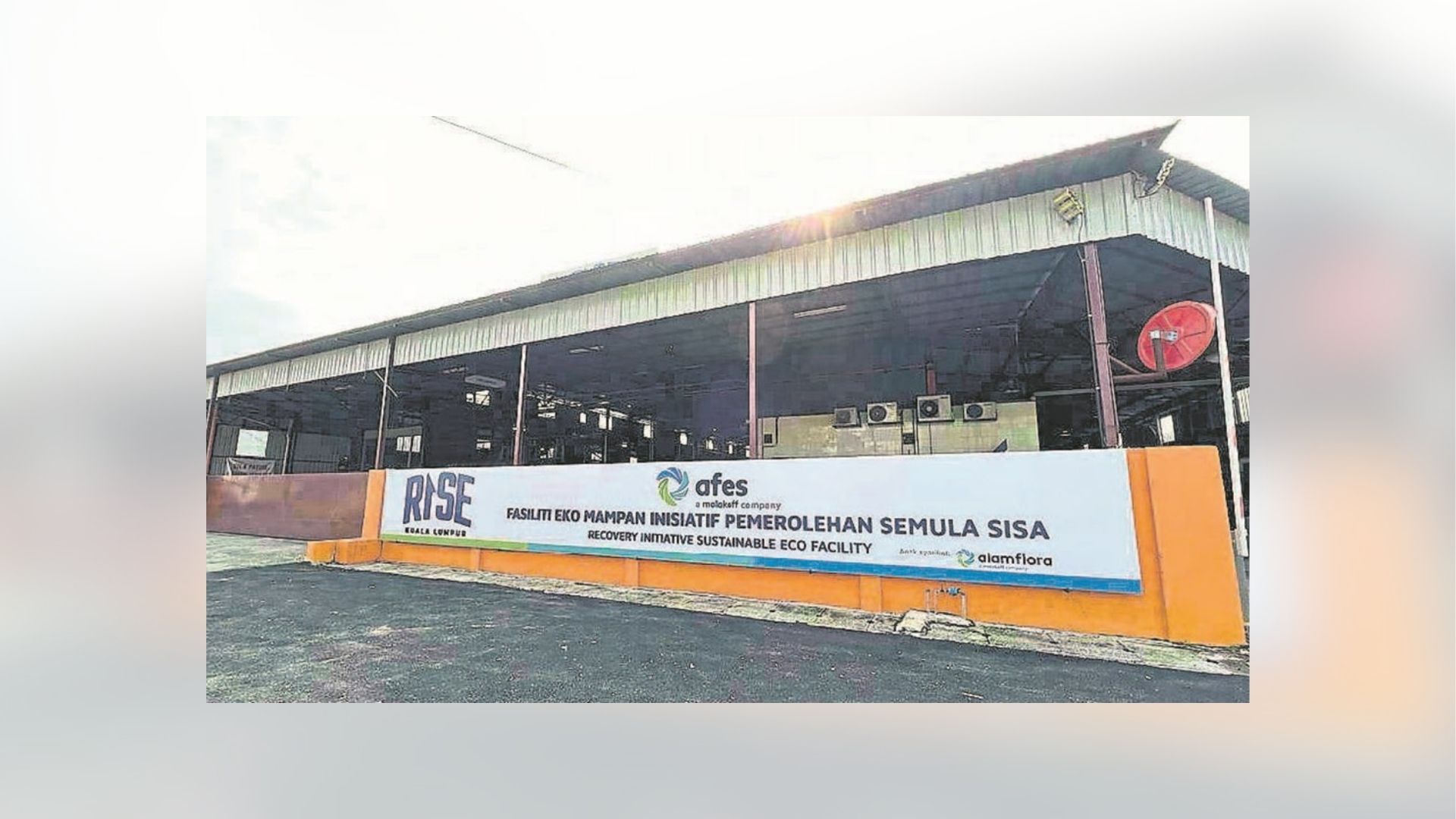
Kuala Lumpur, an active member of UCLG ASPAC, promotes the Recovery Initiative Sustainable Eco-Facility (RISE) as a solution to tackle the city’s growing urban challenges, such as rising waste volumes, increasing landfill pressure, and low recycling rates. According to UNESCAP (2021), Kuala Lumpur generates around 161,000 tons of plastic waste annually, much of which could end up in waterways if left unmanaged. RISE plays a crucial role in diverting this waste and protecting the urban environment. Located in Batu Caves, Gombak, RISE is Kuala Lumpur’s flagship model that also supports Malaysia’s national target of achieving a 40% recycling rate by 2025 and becoming carbon neutral by 2050.
RISE currently processes up to 50 tons of dry, source-separated waste per day, with an expansion target of 65 tons. It operates using a semi-automated sorting system equipped with conveyor belts, optical sorters, and manual sorting stations for quality control. The facility only accepts waste that has already been sorted at the source, either through single-stream or dual-stream systems, ensuring higher material purity and processing efficiency. After sorting, the materials are compacted into bales or shredded as needed, then sent directly to recycling manufacturers (off-takers), reinforcing a closed-loop recycling system and reducing the length of the supply chain.
Beyond its technical role, RISE also plays a vital function as a public education and engagement hub. Through its Recycling Discovery Hub, it provides interactive learning experiences for students, community members, businesses, and government representatives. Regular workshops, public campaigns, and policy discussions are held on-site to build awareness around the importance of waste separation, recycling behaviour, and sustainable living. To support wider community participation, RISE has complemented the operations of 10 Buy-Back Centres and one additional Material Recovery Facilities (MRFs) across urban Malaysia. These centres offer cash incentives for recyclable materials such as plastics, paper, and metals, making recycling more accessible and economically attractive for the wider public.
RISE has demonstrated tangible results in its operations. In 2022, the facility processed 1,235 tons of waste. This increased to 1,655 tons in 2023 and reached 2,466 tons in 2024. This steady growth shows its strong contribution to reducing landfill dependence and mitigating environmental risks, particularly from plastic pollution.
One of RISE’s key strengths lies in its ability to foster cross-sector collaboration. In tackling technical challenges, such as sorting diverse types of plastic, the facility works closely with recycling industry partners to ensure efficient material recovery. The facility demonstrates that successful urban waste management relies not only on advanced technology but also on strong partnerships and active public engagement.
Source: The Malaysian Reserve, 11 September 2023
Photo: AFES / Alam Flora