
The New Taipei City Government is promoting the New Taipei Surplus Food Network, a policy centred on “caring for the disadvantaged.” The initiative integrates public and private resources to build cross-sector partnerships, supported by a collaborative platform that brings together the city’s Social Welfare Department, Agriculture Bureau, Education Department, Market Administration Office, and Fruit and Vegetable Marketing Company.
Through this coordinated network, highly nutritious but visually imperfect produce that might otherwise be discarded is rescued and redistributed. These “off-grade” fruits and vegetables are transformed into nutritious meals and served at community dining locations for disadvantaged families and people in need.
By reducing food waste while strengthening social care, environmental sustainability, and the circular economy, the initiative is gradually developing a New Taipei Surplus Food Model that combines efficiency with caring and compassion.
As of May 2026, the initiative has repurposed more than 1.32 million kilograms of surplus food and provided meals to more than 2.86 million people since its launch in 2019. These achievements demonstrate New Taipei City’s concrete commitment to advancing sustainability, promoting resource circulation, and improving social well-being—offering a practical model of how food surplus can be transformed into social value.
This model, developed and refined over the past decade, has increasingly attracted international attention. New Taipei City was recently invited by Metropolis to participate in the FoodCLIC EU project as a peer partner city for Buenos Aires, the capital of Argentina, sharing its practical experience in implementing surplus food policy.
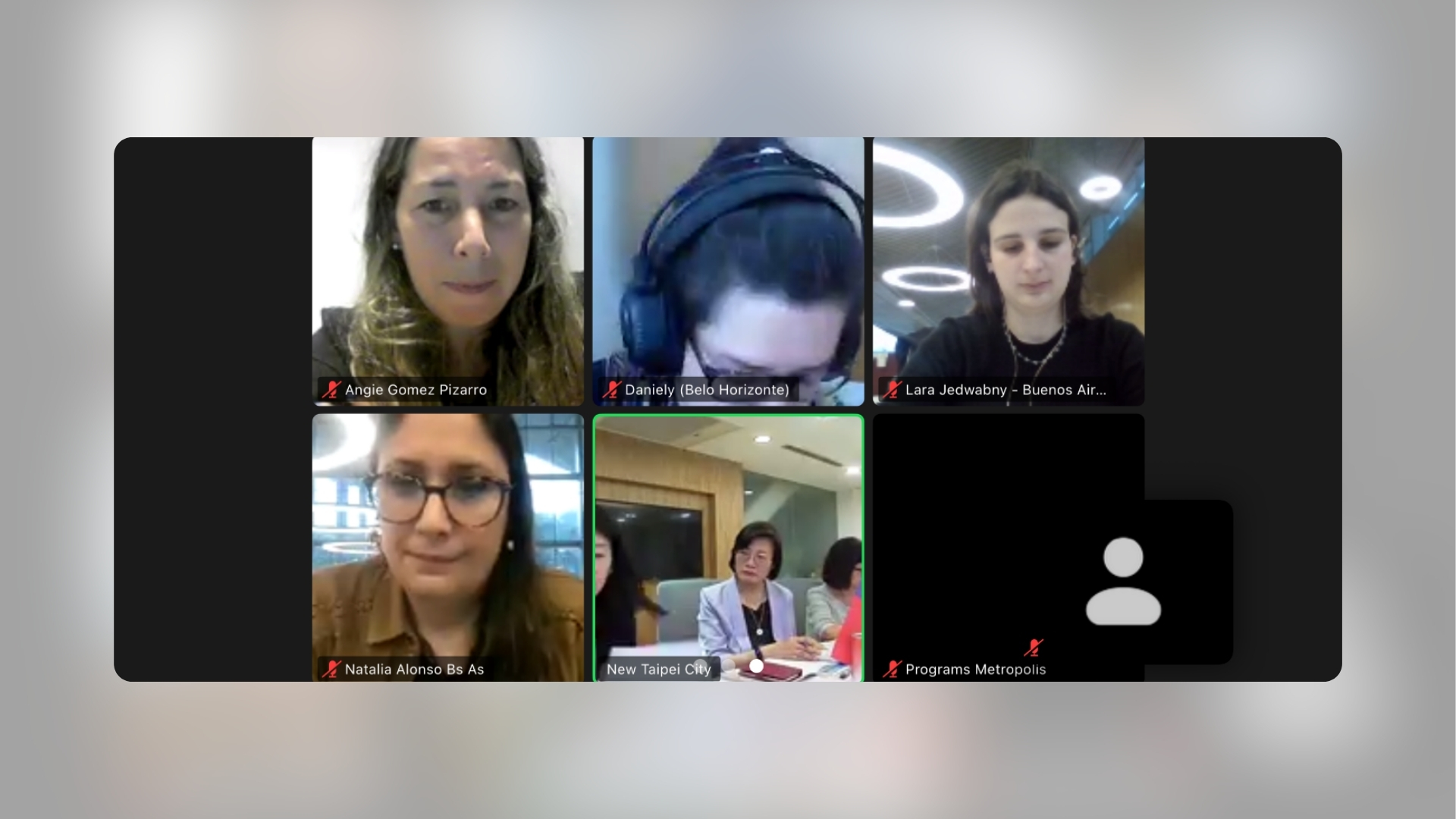
Alongside Buenos Aires, representatives from Bogotá and Cartagena in Colombia, Belo Horizonte in Brazil, and Rosario in Argentina also took part in the virtual workshop exchanges. The FoodCLIC project focuses on integrating healthy food systems with urban planning while facilitating the exchange of research findings and urban governance experiences through online workshops. By sharing practical experiences and locally grounded solutions, the project enables participating cities to learn from one another and explore ways to adapt and scale successful approaches in different urban contexts globally.
During the exchange, New Taipei City used cabbage as an example—often classified as “off-grade” produce in local markets—to illustrate how its public-private partnership mechanism operates in practice. Vegetables that retain their nutritional value but do not meet market standards are re-sorted and delivered to community dining locations, where they are transformed into nutritious and delicious meals for disadvantaged seniors and children.
This approach not only helps reduce food waste but also addresses the nutritional needs of vulnerable groups, allowing the value of food conservation to take deep root in the community.
New Taipei City also shared its grassroots governance experience, explaining how district and village chiefs connect local resources with private-sector partners to translate the surplus food policy into meaningful action in people’s daily lives. This governance model was highly praised by the Buenos Aires City Government, which noted that local governance and community mobilisation will remain key to advancing related policies in the future.
Participating cities also actively raised questions on topics including food waste composting, the promotion of off-grade produce, food-saving education in schools, and the management of school lunch leftovers, demonstrating a strong interest in sharing experiences and learning from one another.
This international workshop demonstrated the vital role cities can play in promoting sustainable food policies and strengthening societal resilience. It also highlighted the growing international recognition of New Taipei City’s achievements in surplus food governance.
Looking ahead, New Taipei City will continue to deepen exchanges and cooperation with cities around the world, sharing its experience in sustainable urban governance and promoting surplus food sharing as a meaningful way to build connections and foster friendship across borders. Through these efforts, cities can work hand in hand to create a more resilient, sustainable, and inclusive urban future.
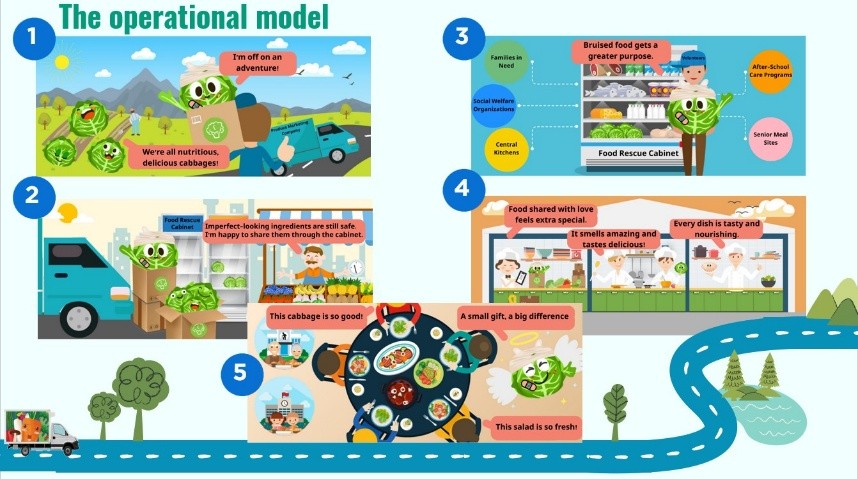
Figure 1
New Taipei City shared the process of repurposing off-grade produce.
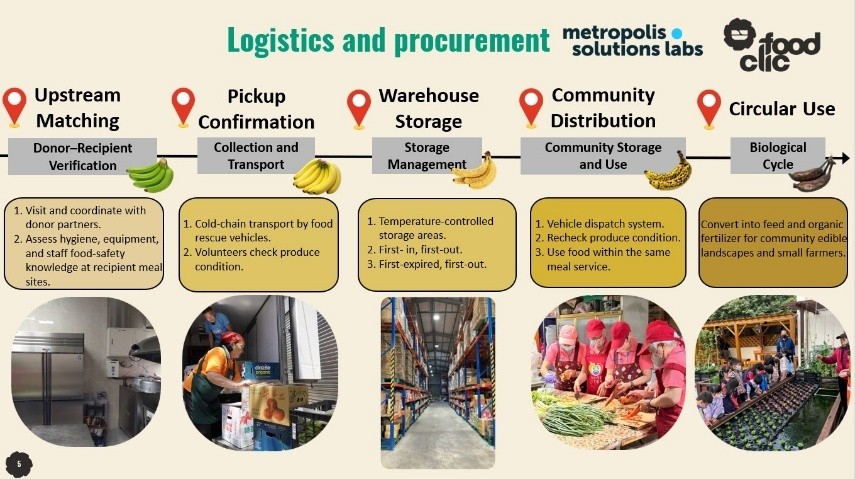
Figure 2
New Taipei City partnered with NGOs to establish a distribution network.