




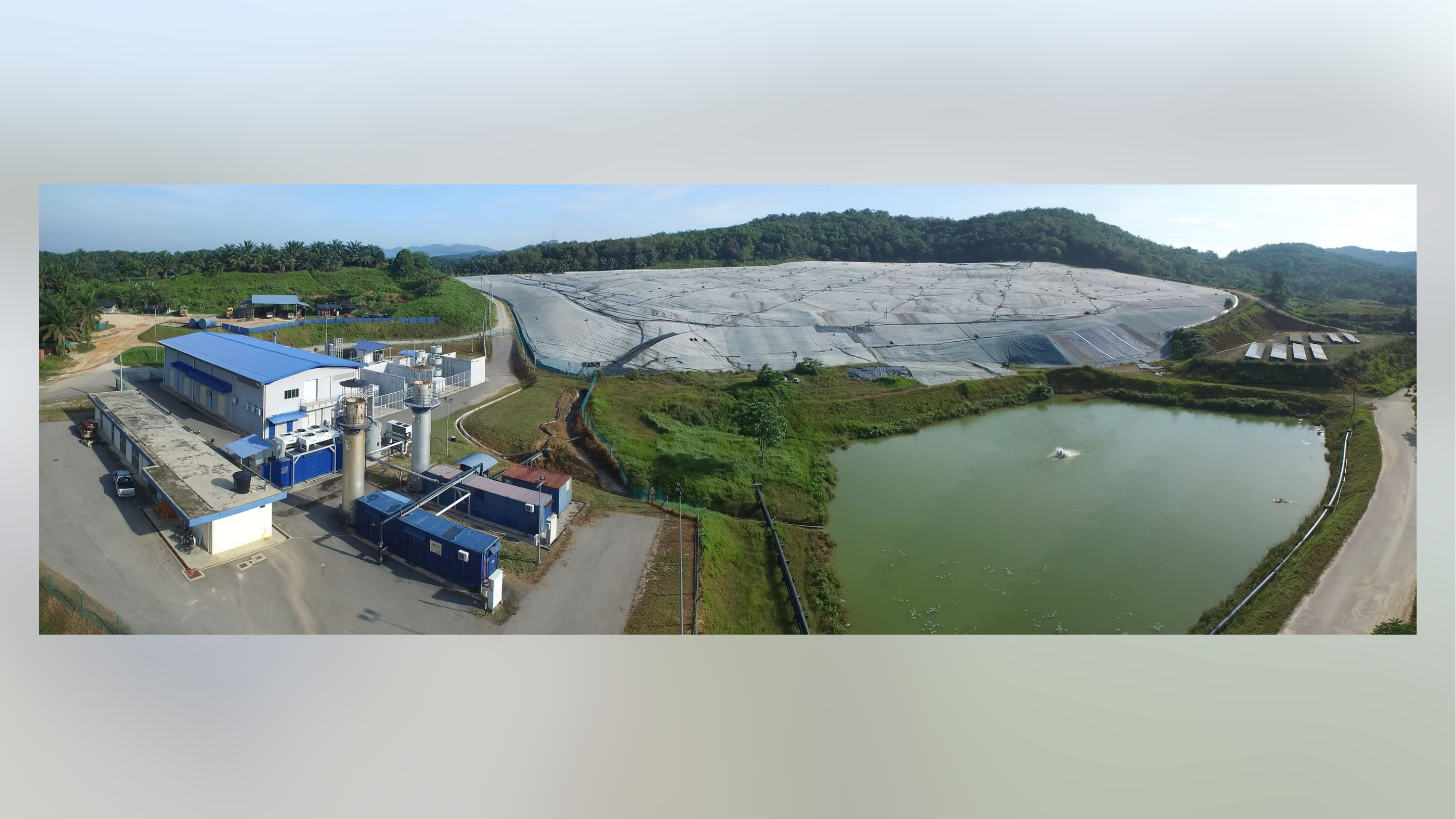
Bukit Tagar Enviro Park (BTEP) is an award-winning sanitary landfill located in Hulu Selangor, Malaysia. BTEP serves as a model of successful collaboration between national and local governments as well as private-public partnerships, for driving large-scale environmental impact, particularly in waste management, which remains one of the most pressing environmental challenges in rapidly urbanising regions. Originally initiated by the Ministry of Housing and Local Government of Malaysia, BTEP supports the decarbonisation goals of Dewan Bandaraya Kuala Lumpur (DBKL) and other local authorities aiming to become carbon-neutral cities in 2050. Since 2011, BTEP has been developed and operated by Berjaya Enviroparks Sdn Bhd.
BTEP is a fully engineered Level IV sanitary landfill designed to ensure that no untreated contaminants are released into the environment. It sits on 659 acres of land and is surrounded by 1,000 acres of permanent buffer zone, effectively ensuring residential and commercial premises are 500m radius away from the site boundary to comply with the requirements imposed by the Department of Environment (DoE) of Malaysia.
The facility has been conceived not as a final disposal site, but as an integrated hub for waste transformation. Its establishment reflects both a technical response to Malaysia’s waste management crisis and a broader commitment to sustainable development, offering valuable insights into the evolution of waste infrastructure in the country.
The creation of BTEP addresses a fundamental question: how can a land-scarce nation responsibly manage the thousands of tons of solid waste generated daily by its urban centres? Conceived as a long-term, scalable solution, the facility was engineered to handle an initial 3,000 tons of waste per day from Kuala Lumpur, Selayang, and Hulu Selangor, with the capacity to expand to 6,000 tons per day. Yet beyond its capacity, the defining feature of BTEP lies in its ability to convert waste into valuable resources, positioning itself as a model of circular economy principles in practice.
Innovation in Resource Recovery
At the core of BTEP’s operational achievements is its 12 MW Landfill Gas-to-Energy (LFGTE) facility, recognised as the largest of its kind in Malaysia. Commissioned in 2011, the plant employs methane (CH₄) capture technology to mitigate emissions of a high global warming potential gas while simultaneously converting it into renewable energy. Since its inception, the facility has generated over 339 million kWh of electricity supplied to the national grid, with an estimated annual revenue stream of approximately RM 25 million. This output directly supports Malaysia’s renewable energy transition trajectory, particularly the national target of achieving 40% renewable capacity by 2035 as outlined in the National Energy Policy. Furthermore, the LFGTE project has been registered under the Clean Development Mechanism (CDM), achieving verified emission reductions totalling 2.7 million tons of CO₂ equivalent.
Beyond renewable energy, BTEP has also developed solutions for hazardous industrial waste through its waste treatment centre. Using advanced co-processing technologies, hazardous materials are transformed into Alternative Raw Materials (ARM) and Alternative Fuels (AF). These outputs are then supplied to industries such as cement manufacturing, reducing dependence on virgin raw materials and fossil fuels. This strategy ensures the safe management of hazardous waste while contributing directly to industrial decarbonisation and resource efficiency, reinforcing the park’s role as a circular economy hub.
Environmental Safeguards
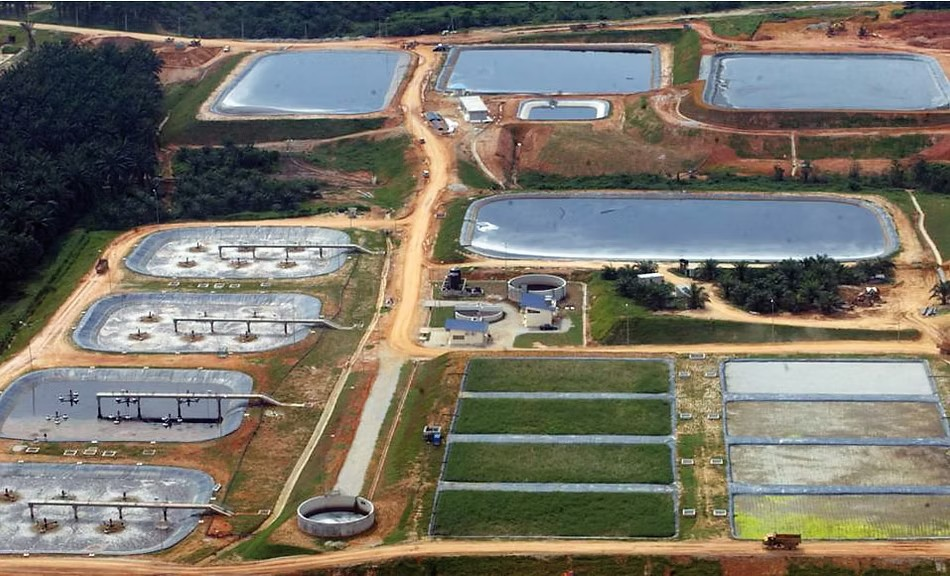
Source: Berjaya EnviroParks Sdn Bhd. (n.d.) Leachate treatment plant [Photograph]. Retrieved September 16, 2025, from https://www.berjayaenviroparks.com.my/landfill-management
BTEP’s integrated model is further strengthened by its comprehensive leachate management system. Leachate, often one of the most significant environmental risks associated with landfills, is treated through multiple stages before safe discharge. The facility’s long-term objective is to achieve a zero-discharge policy, in which all treated water is reused on-site. This approach demonstrates a proactive commitment to water conservation and pollution prevention, setting a benchmark for environmentally responsible landfill management in the region.
Awards
BTEP has received numerous awards both locally and internationally, including:
- Waste Management Association of Malaysia (WMAM)’s Exceptional Facility Management Award Large Enterprise – 2023
- Recognition from the Institution of Engineers Malaysia for its invaluable contribution to the engineering industry – 2008 and 2021
- Merit Award in National Grid Renewable Energy at the National Energy Awards presented by The Ministry of Energy, Science, Technology, Environment and Climate Change (MESTECC) – 2019
- Outstanding Singapore Environmental Achievement Award by the Singapore Environment Council – 2013
Conclusion
Bukit Tagar Enviro Park illustrates how advanced engineering, innovative resource recovery, and strong sustainability commitments can redefine the role of landfills in modern waste management. By integrating renewable energy generation, industrial co-processing, and sophisticated environmental safeguards, BTEP demonstrates the feasibility of turning waste from a societal burden into an economic and environmental asset.
As Malaysia and other nations in the Asia-Pacific grapple with the growing pressures of urban waste, the case of BTEP offers important lessons. It underscores the potential for landfills to evolve platforms for resource recovery, climate action, and circular economy development, establishing a national benchmark and a regional model for sustainable waste management.
More information about BTEP’s operational process is available on its official website: https://www.berjayaenviroparks.com.my/.
Sources:
- Sustainable Energy Development Authority (SEDA) Malaysia. (2021). Malaysia Renewable Energy Roadmap (MyRER). Putrajaya: SEDA.
- Berjaya Enviro Parks. (n.d.). Bukit Tagar Enviro Park. Retrieved September 16, 2025, from https://www.berjayaenviroparks.com.my/
- Bernama. (2024, March 22). Bukit Tagar Enviro Park generates RM25 mln annual revenue from renewable energy. Bernama. Retrieved from https://bernama.com/en/news.php?id=2227366
- malasyiakini.(2025, March 3). Bukit Tagar Enviro Park: Selangor’s Waste-to-Energy Hub for Sustainability. Retrieved from https://m.malaysiakini.com/announcement/734825