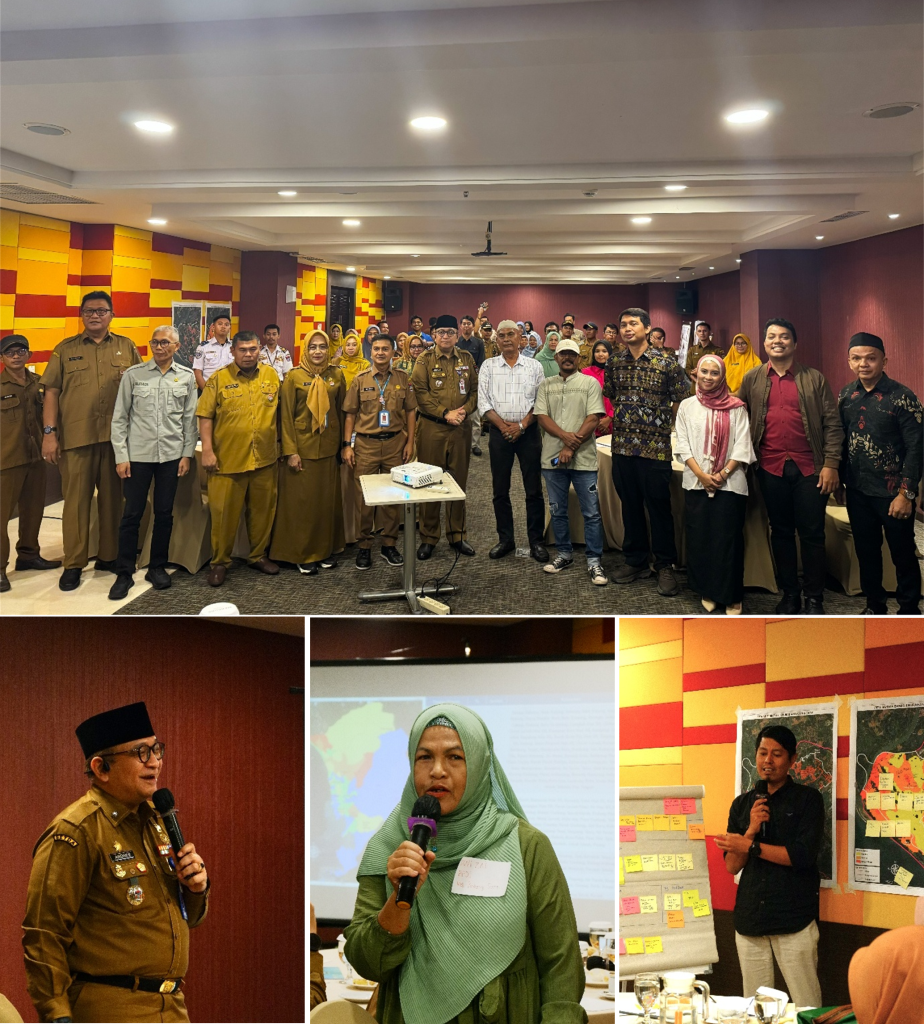



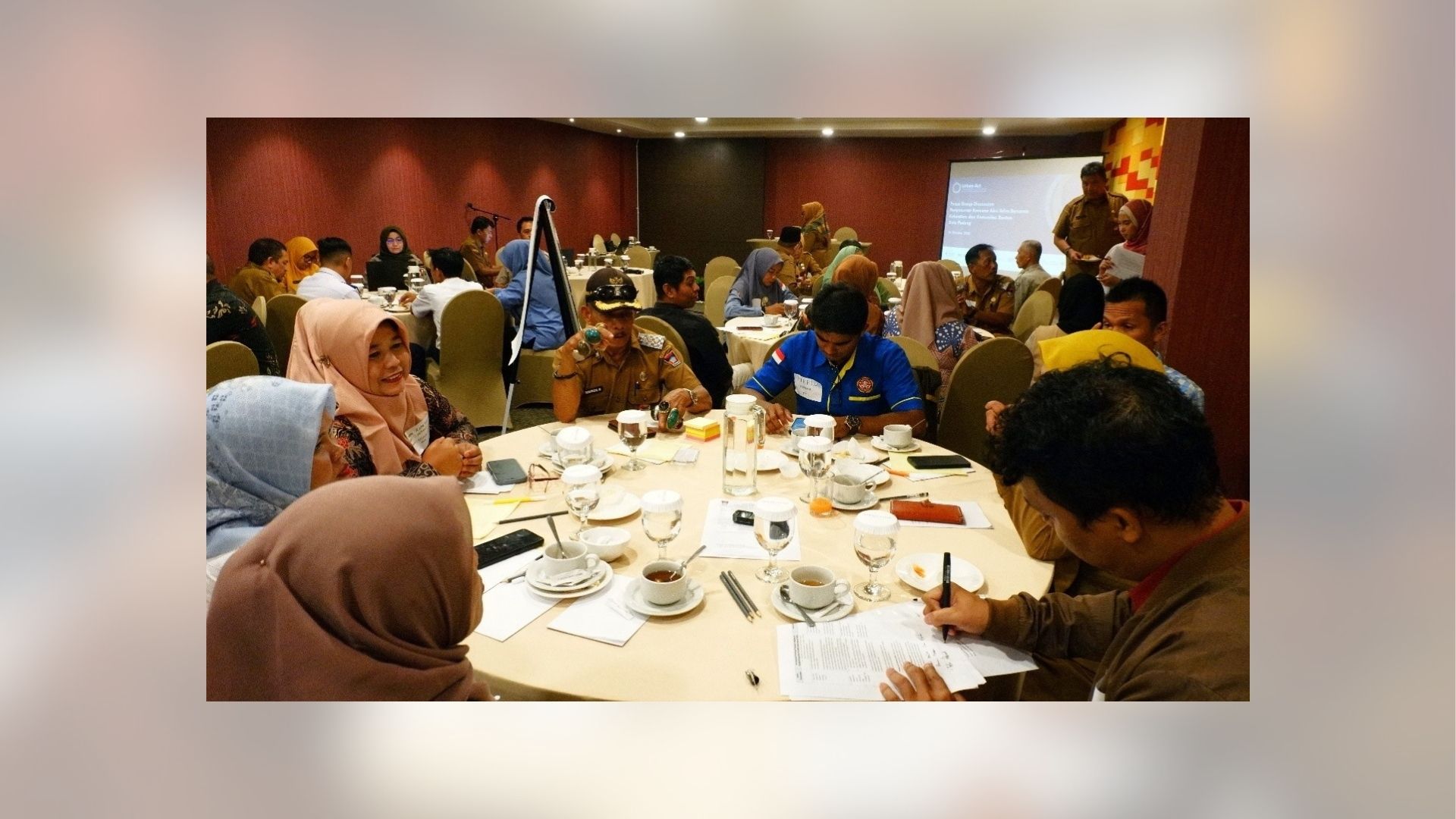
October 21, 2025 | Padang – UCLG ASPAC Secretariat, under the framework of the Urban-Act project, facilitated a Focused-Group Discussion (FGD) to support Padang City Government in the formulation of its Climate Action Plan (CAP). The FGD brought together 43 participants representing nine local government agencies within the Padang City Climate Change Working Group, and three vulnerable urban villages—Kuranji, Padang Sarai, and Batipuh Panjang, and vulnerable community groups, particularly women and persons with disabilities.
The FGD aimed to validate the occurrence and impacts of climate-related disasters from the ground up by gathering community perspectives and local knowledge. It also sought to identify practical and contextually relevant solutions to strengthen climate action efforts at the community and urban village levels, addressing not only adaptation but also mitigation. The three urban villages are among those most affected by severe flooding caused by sea-level rise and extreme weather events, conditions further aggravated by inadequate drainage systems, high river sedimentation, and improper waste disposal practices that obstruct water flow in rivers and drainage channels.
Regional Secretary Mr. Andree Algamar, in his opening remarks, emphasised that climate change is no longer a threat of the future but a reality already confronting us today—one that demands immediate, collective, and sustained action from all stakeholders. He underscored the importance of active community participation in formulating action plans to ensure that the resulting recommendations are concrete, relevant, and grounded in local realities. He further highlighted the Padang City Government’s strong commitment to addressing climate change, demonstrated through efforts to reduce emissions, such as optimising public transportation via Trans Padang and improving waste management, as well as through initiatives to enhance disaster preparedness at both the city and community levels.
During the discussion, participants, grouped according to their respective villages, brainstormed on local vulnerabilities, the impacts of climate change, community-led adaptation and mitigation initiatives, and expectations for government support and policy action.
The FGD saw active participation, particularly from women representatives and local people with disabilities, as well as from urban village heads (Lurah), Community Disaster Preparedness Group (KSB) members, youth organisations (Karang Taruna) representatives, and other community members. Women participants shared that women are not only disproportionately affected by climate change but also serve as essential leaders and agents of resilience. Regarding vulnerable groups, the Padang City Government has coordinated with a school for children with special needs (Sekolah Luar Biasa/SLB) to deliver a contextual disaster preparedness training programme specifically targeting groups with disabilities. The community has also proposed further developing SLB schools as school-based shelters, given that their students represent one of the most vulnerable groups. For elderly groups, community support has been highlighted, in addition to the distribution of cash and/or essential items through neighbourhood-level leaders.
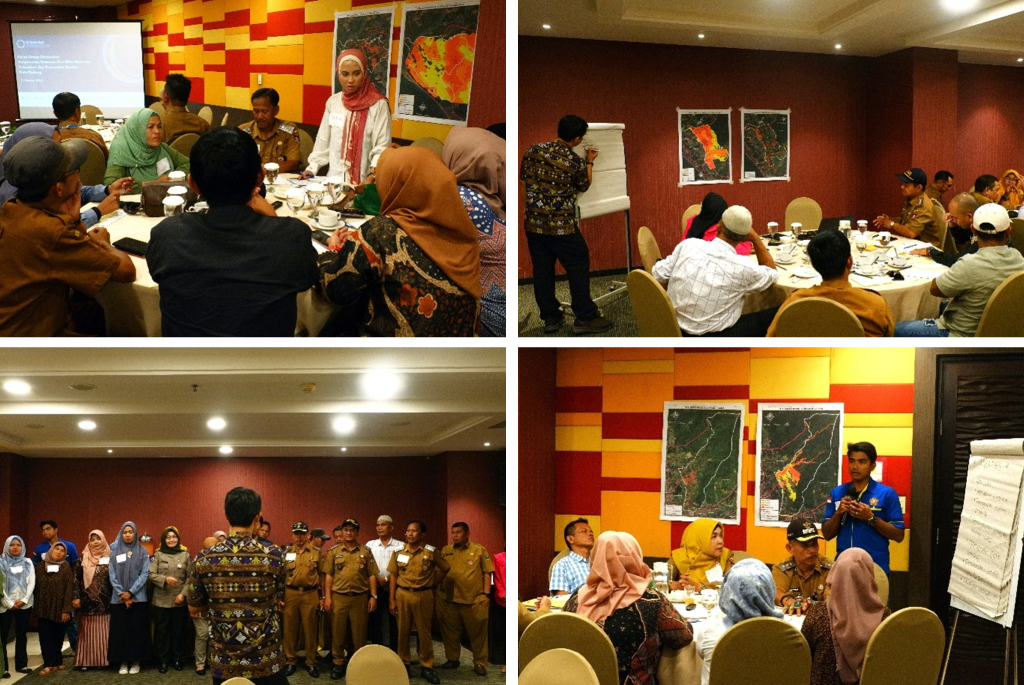
Participants from across the three urban villages emphasised both infrastructure improvements and community-based actions to strengthen flood resilience and disaster preparedness. In Kuranji, priority actions include elevating house foundations, tree planting, and enhancing waste segregation through waste banks and community-based waste management institutions. In Padang Sarai, participants highlighted the need to accelerate the river normalisation programme, improve neighbourhood drainage, build shelters and evacuation routes, and conduct flood preparedness training. They also stressed the importance of integrating slum upgrading programmes with disaster mitigation efforts. In Batipuh Panjang, discussions focused on developing an interconnected drainage system, strengthening the Community Disaster Preparedness Group (Kelompok Siaga Bencana/KSB) in operational and logistical capacities, and improving flood control infrastructure along the Batang Kandis River to reduce long-term risks.
The FGD generated meaningful community inputs to be integrated into the evaluation and updating of local development plans, ensuring that Padang’s climate actions remain relevant, equitable, and responsive to on-the-ground realities.
UCLG ASPAC Secretariat highly appreciated the strong commitment of Padang City Government in ensuring inclusivity in the formulation of the Climate Action Plan (CAP), a document that is continuously evolving and improving through active participation and community-driven insights.