




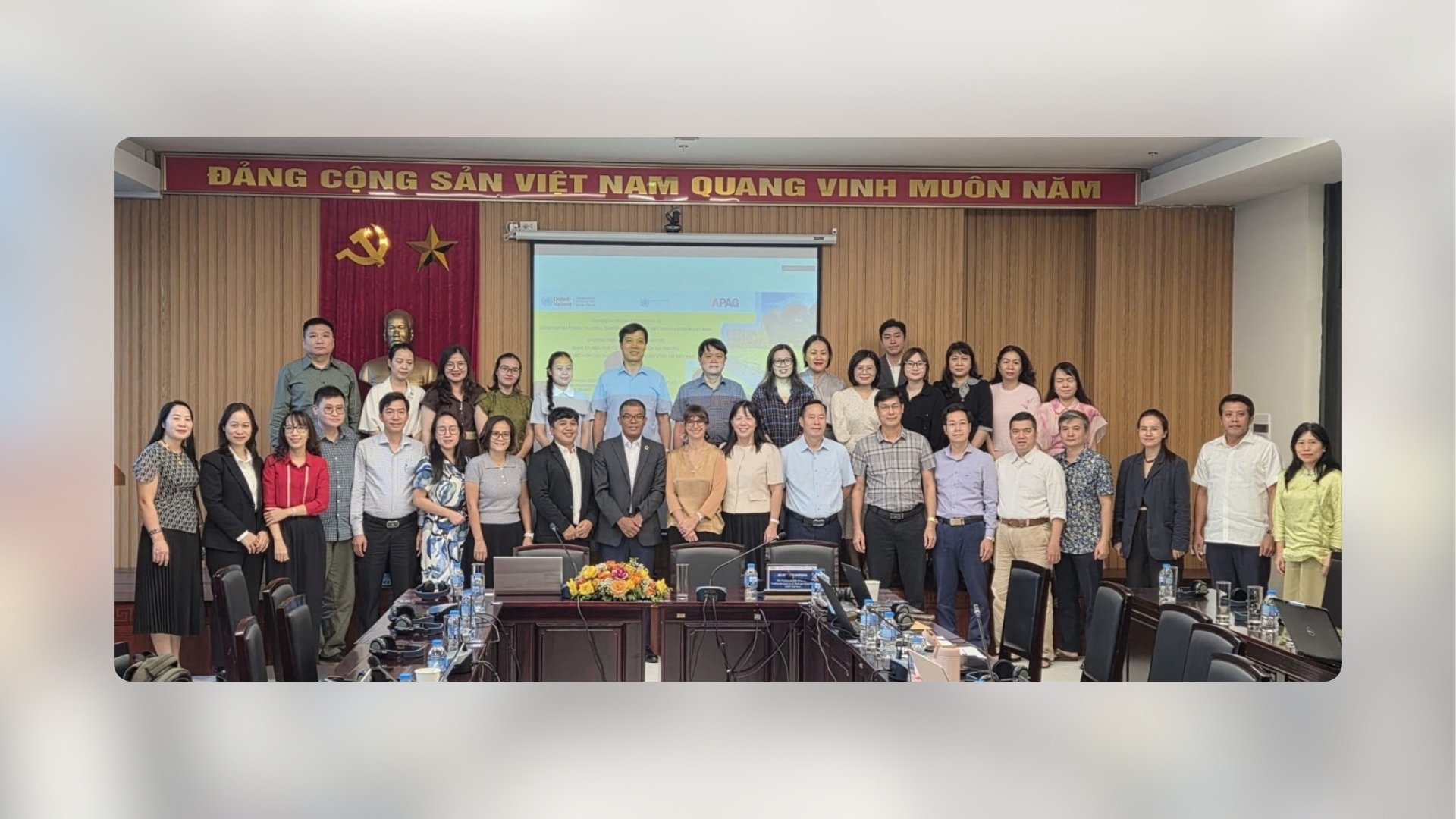
September 17, 2026 | Hanoi – UCLG ASPAC supported the Capacity Development Programme on Effective National to Local Governance for SDG Implementation in Viet Nam. This event was organised by the Academy of Public Administration and Governance (APAG) in collaboration with the United Nations Department of Economic and Social Affairs (UN DESA), through its Project Office on Governance (UNPOG), with support from the UN Resident Coordinator Office and UNDP Viet Nam.
The three-day programme brought together at least 25 participants from local governments and APAG officers, strengthening capacities for accelerating SDG implementation at the local level. The programme was designed around key themes including SDG localisation, multi-level governance, multi-stakeholder engagement, financing, data, monitoring and reporting for practical exchange on how local governments can translate the global SDGs into local development action.
Connecting City-to-City Cooperation with SDG Localisation
UCLG ASPAC Secretariat, represented by the Capacity Development and Learning Coordinator, contributed to the session “City-to-City Partnerships to Localise the SDGs,” highlighting how international and city-to-city cooperation can become a practical instrument for addressing local development challenges and accelerating SDG implementation. UCLG ASPAC encouraged participants to consider a more result-oriented approach based on peer learning, co-creation, joint action and measurable results.
The presentation introduced a practical partnership framework centred on five elements: purpose, partners, peer learning, practical action and progress. Participants were encouraged to begin cooperation from a clearly identified local challenge and then identify suitable partners, rather than starting with the search for a partner before defining the problem to be addressed.
The discussion also demonstrated how city-to-city cooperation can be linked directly to SDG priorities. Examples included technical exchanges on waste management linked to SDGs 11 and 12, water and sanitation linked to SDG 6, digital government cooperation linked to SDGs 9 and 16, and climate resilience linked to SDGs 11 and 13.
From Learning to Practice: Conducting a Voluntary Local Review
UCLG ASPAC also facilitated the programme’s practical session on Conducting a Voluntary Local Review (VLR) on the final day of the programme. The agenda specifically included a 60-minute VLR activity facilitated by UCLG ASPAC.
Rather than treating a VLR solely as a reporting exercise, the session introduced participants to VLR as a process that can help local governments understand their SDG progress, identify gaps, strengthen coordination and bring different stakeholders together around local development priorities.
The session was conducted through a practical group exercise. Participants were asked to work through key questions that a local government needs to consider when preparing a VLR, including:
- What should be the first step for the local government?
- Which SDG goals and targets should be reviewed based on local priorities?
- Where will the data come from, and what data gaps need to be addressed?
- Which local stakeholders should be involved in the review process?
- What follow-up actions should be taken after completing the VLR?
Through the exercise, participants explored how a VLR can connect existing situation, data and stakeholder engagement processes with the broader SDG framework. The discussion also emphasised the importance of identifying relevant stakeholders from the beginning, including government institutions, academia, civil society, the private sector and other local actors.
The VLR session concluded with a key message: a VLR should be developed through an inclusive process, ensuring that the review reflects different perspectives and experiences within the local community rather than being prepared solely as a government report.
An inclusive VLR can also become a platform for dialogue and partnership, helping local governments identify areas for further cooperation, innovation and policy action. Once completed, the VLR can serve not only as a tool for local reflection and planning, but also as an opportunity to share local experiences and achievements with the international community.
Strengthening Local Governments as Drivers of SDG Action
UCLG ASPAC’s contribution to the programme reflected its broader commitment to strengthening the capacity of local and regional governments across the Asia-Pacific to localise the SDGs.
The programme demonstrated that effective city-to-city cooperation and SDG localisation requires more than policy alignment. It also requires strong institutions, effective multilevel coordination, meaningful stakeholder engagement, reliable data, peer learning and practical mechanisms for translating knowledge into action. These priorities are reflected in the programme’s objectives to strengthen institutional capacities, improve local data systems, foster peer learning and enhance monitoring and reporting for SDG implementation.
Through continued collaboration with APAG, UN DESA and other partners, UCLG ASPAC will continue to support local governments in turning knowledge exchange, international cooperation and SDG reporting into practical pathways for more inclusive and sustainable local development.