




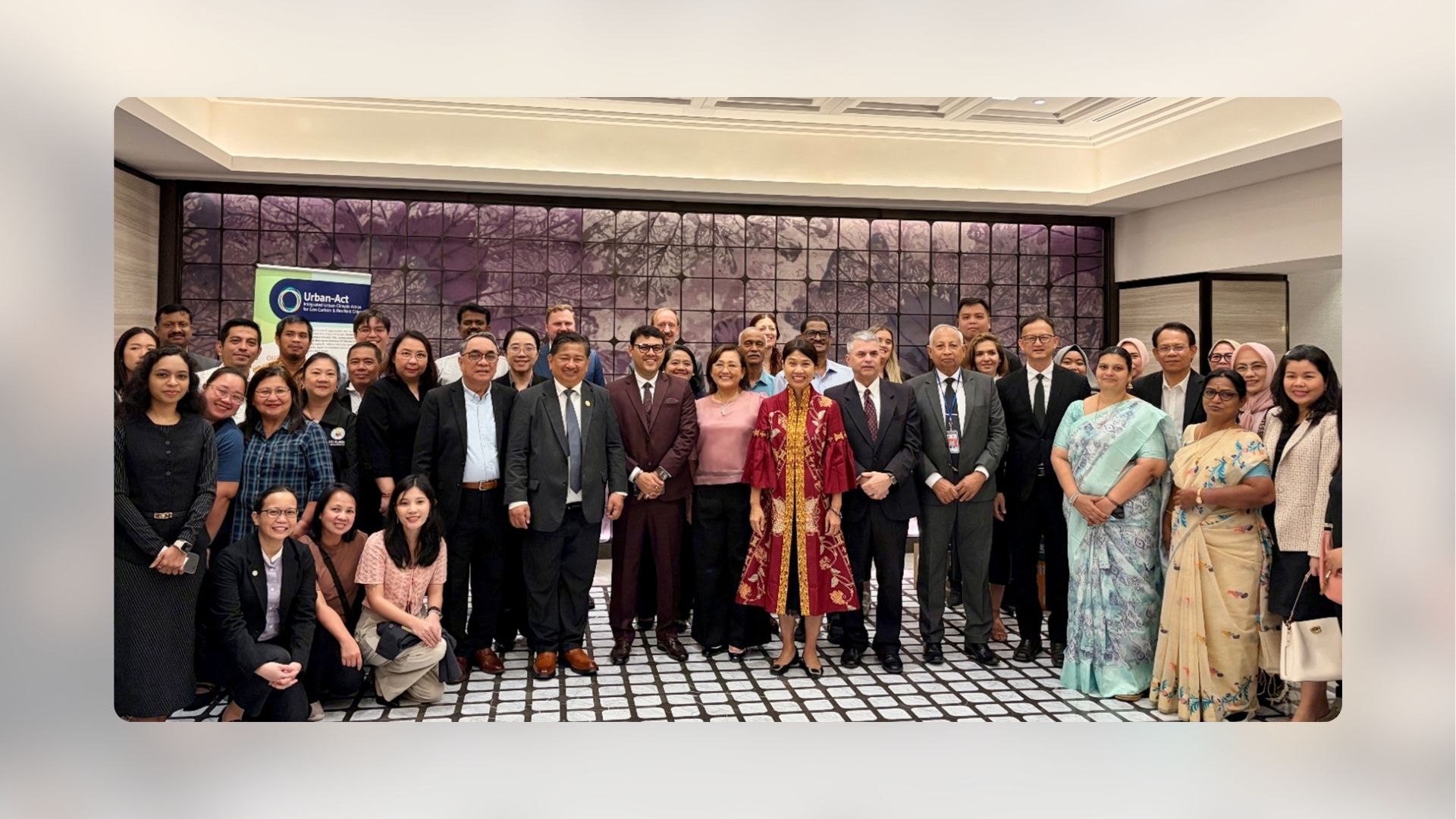
February 23, 2026 | UCLG ASPAC, as the coordinator of the Asia-Pacific Local Government Coordinating Body (APLG), organised the third Local and Regional Government Assembly (LRG Assembly) in Bangkok, Thailand. An associated event of the 13th Asia-Pacific Forum on Sustainable Development (APFSD), the Assembly engaged leaders and representatives of local and regional governments.
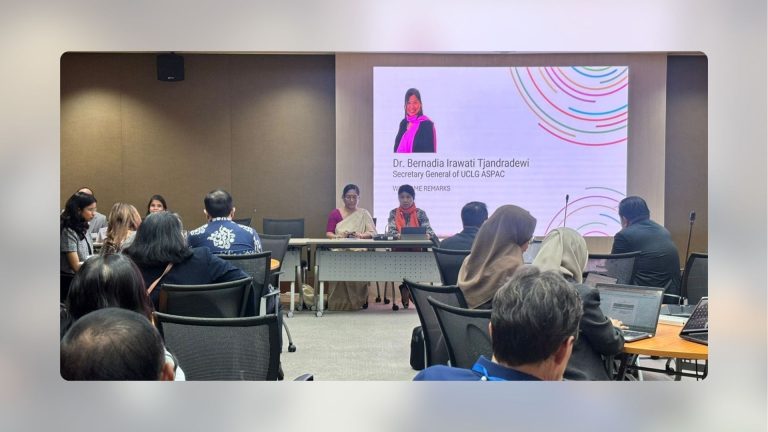
Dr. Bernadia Irawati Tjandradewi, Secretary General of UCLG ASPAC, welcomed the participants to the joint opening of the LRG Assembly and the Urban Act Regional Training and Synthesis Workshop. In her video message, Mrs. Armida Salsiah Alisjahbana, Executive Secretary of ESCAP, acknowledged the importance of local leadership to the achievement of the SDGs.
Mr. Curt Garrigan, Chief of the Sustainable Urban Development Section of ESCAP, provided the context to the meeting by presenting the highlights of the 2026 Asia and the Pacific SDG Progress Report. He reported that the region is not on track to meet any of the 17 SDGs, there is regression in the environmental sphere, and that data availability is improving, but large gaps remain. Goal 11 (sustainable cities and communities) is critical for the region, which is home to more than 2.2. billion urban residents and over half of the world’s megacities, but progress is fragmented and uneven, with only one indicator on track.
In the session on “Local Implementation of the 2030 Agenda for Sustainable Development”, local and regional governments presented their actions to implement the SDGs. These included initiatives of Kurunegala on the provision of water and sanitation services, Bangkok Metropolitan Administration’s energy action plan, Guiuan on disaster resilience, Baguio’s circular economy transition, Surigao on housing resettlement for Indigenous Peoples, Nakhon Si Thammarat’s people-centric smart city, and the All-India Institute for Local Self-Government (AIILSG) on fostering partnerships and financing for the SDGs.
In the session on “Voluntary Local Reviews (VLRs)”, Surigao, Baguio, and Nakhon Si Thammarat discussed their experience on the process, institutionalisation, and lessons learned in developing the VLR. The Joint Statement of Local and Regional Governments to the 13th APFSD was adopted as an outcome document of the LRGA and submitted to the APFSD. In his closing message, Mr. Dakila Carlo Cua, President of UCLG ASPAC, President of the Union of Local Authorities of the Philippines, and Governor of Quirino Province, underscored the crucial role of local governments and localisation for a sustainable future.
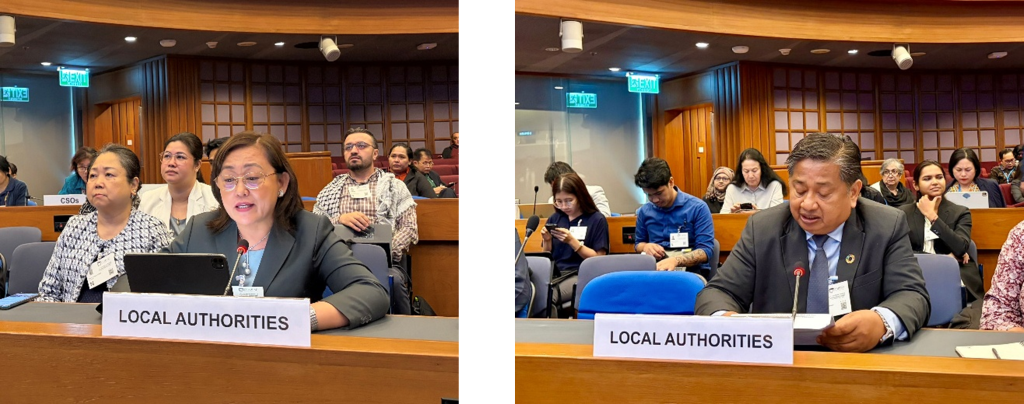
Results of the discussion from the LRGA were delivered in the relevant plenary sessions of the APFSD. Ms. Annaliza Gonzalez-Kwan, Presidential Adviser for Economic Affairs of League of Municipalities of the Philippines and Mayor of Guiuan Municipality, reiterated the role of localisation and access to financing. Atty. Elmer Datuin, Chair of the Advocacy Committee of the Philippine Councillors League and Councillor of Baguio City, delivered the recommendations of the LRG constituency to achieve the SDGs.
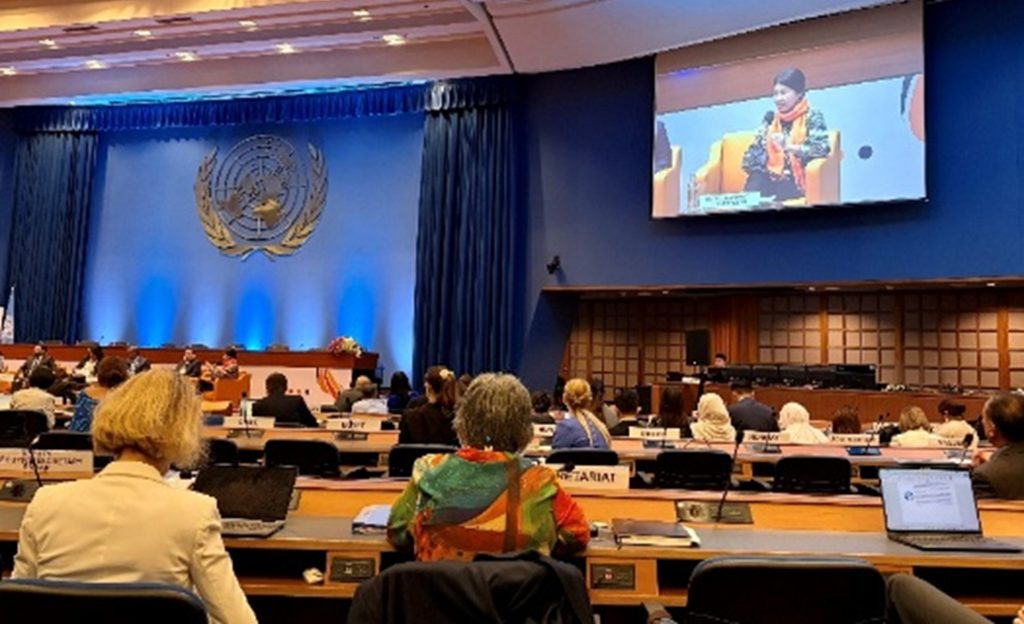
“The acceleration of the 2030 Agenda in Asia and the Pacific will depend on institutionalising multilevel governance, strengthening local data ecosystems, and aligning financing with territorial realities — because leaving no one behind begins at the local level,”as said by Secretary General Bernadia at the Plenary Session organised under the Agenda Item 3 on Accelerating the implementation of the 2030 Agenda for Sustainable Development through voluntary national reviews.
Convened by ESCAP, February 24 to 27, 2025, at the United Nations Conference Centre, Bangkok, Thailand, the 13th APFSD had the theme “Transformative, equitable, innovative and coordinated actions for the 2030 Agenda and its SDGs for a sustainable future for all”. The Asia-Pacific SDG Partnership Report 2026 was launched during the APFSD. Prior to this, ESCAP launched the Asia and the Pacific SDGs Progress Report 2026. The Report of the 13th APFSD will serve as the region’s input to the HLPF to be held in July 2026.