



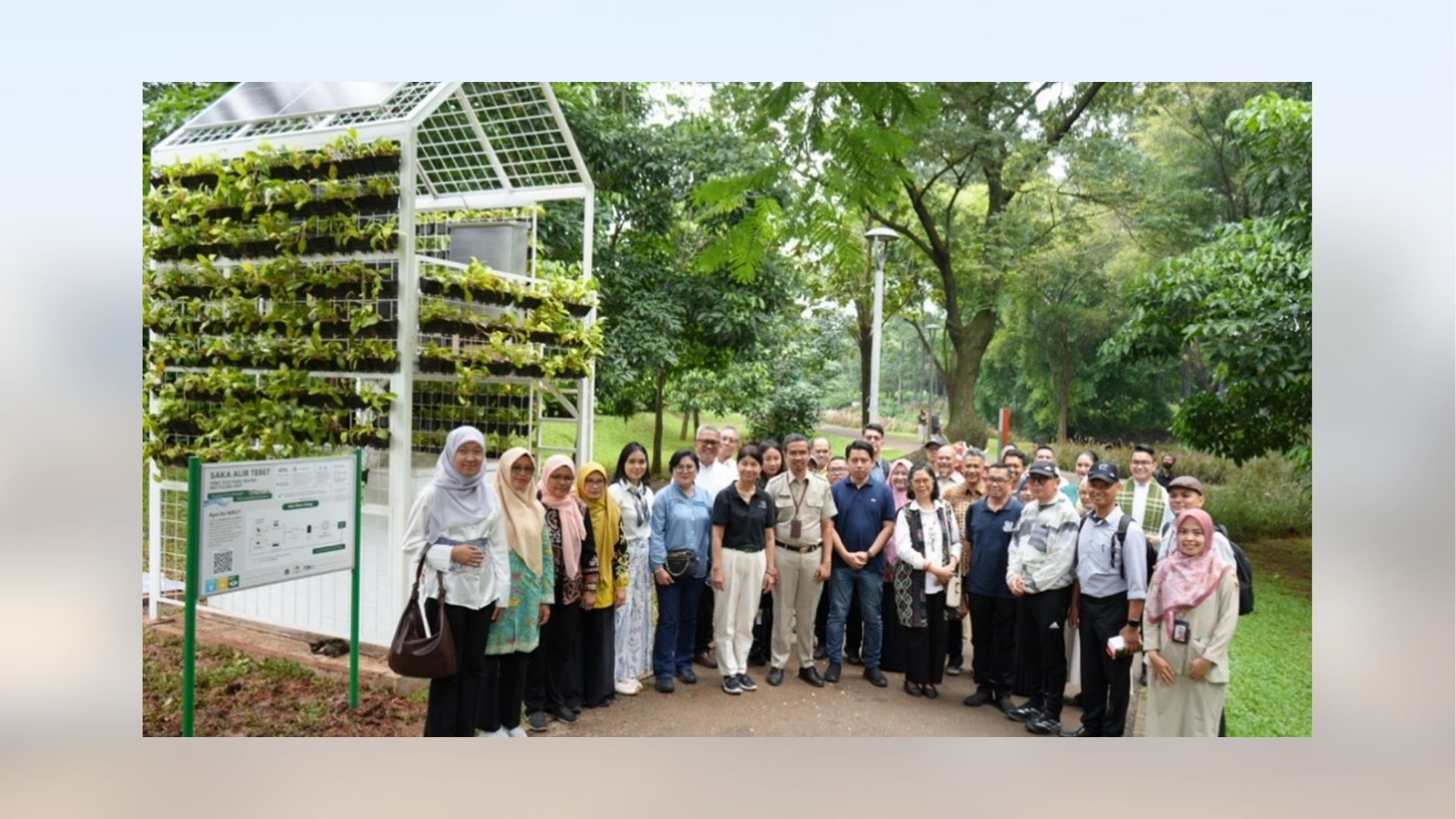
February 10, 2026 | UCLG ASPAC, in close collaboration with the Provincial Government of Jakarta, its host city, officially inaugurated Saka Alir Tebet – the Water Recycling Unit (WRU) at Tebet Eco Park, South Jakarta. The ceremony was attended by representatives from the Provincial Government of Jakarta, delegates from 16 local governments, and technical experts. This facility is a support that contributes to solving the interconnected challenges faced by Jakarta Provincial Government: groundwater depletion, polluted waterways, and land subsidence — partly driven by long-term groundwater extraction.
The Saka Alir WRU introduces an innovative system designed to treat domestic wastewater from toilets and wash basins—including liquid blackwater—into safe, reusable water for public space operations. By integrating this technology, the initiative contributes to urban resilience by reducing dependence on groundwater, supporting safe sanitation standards, and lowering greenhouse gas emissions associated with unmanaged wastewater.
How the System Works
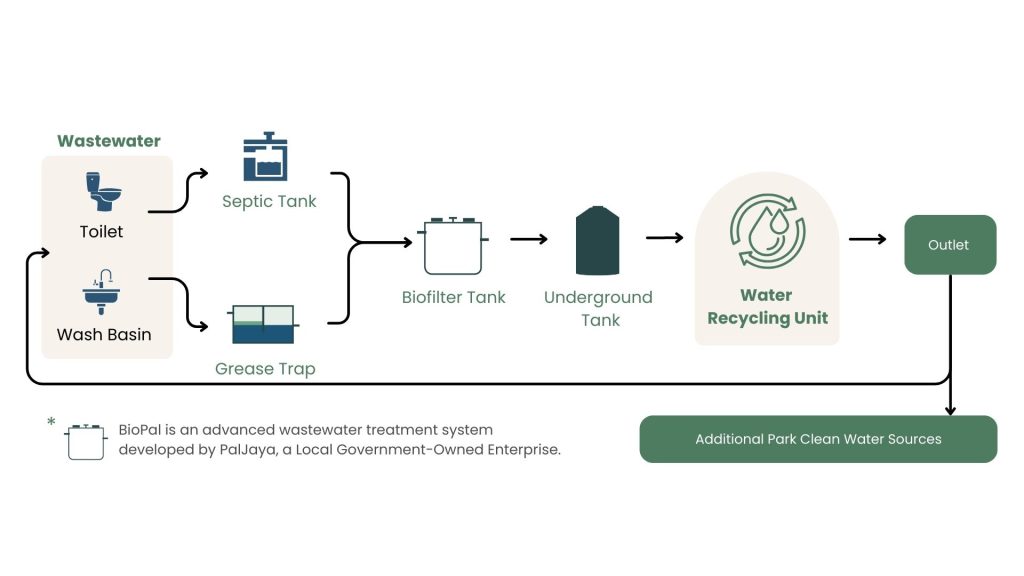
The WRU applies a structured wastewater treatment process that separates and treats different waste stream:
- Greywater from wash basins flows through a grease trap to remove oils and residues.
- Blackwater from toilets is directed to a septic tank where solids and liquids are separated.
- The liquid fraction is then further processed through a biological treatment system to reduce organic matter and pathogens.
The treated water is stored in an underground tank before entering the Saka Alir Unit, which features a nine-chamber system employing multiple treatment stages, including sedimentation, biological processes (anerobic, aerobic, and anoxic), recirculation, and chlorination.
With a treatment capacity of five cubic metres every four hours, the system produces reusable water that serves as an additional source for the park operations, including toilet flushing and landscape irrigation.
The unit is fully locally manufactured, supporting domestic industry while ensuring accessible maintenance and spare parts. To enhance operational safety, the facility is equipped with an automated water quality monitoring system powered by a dedicated solar panel, enabling continuous and energy-efficient monitoring.
A Replicable Model for Cities
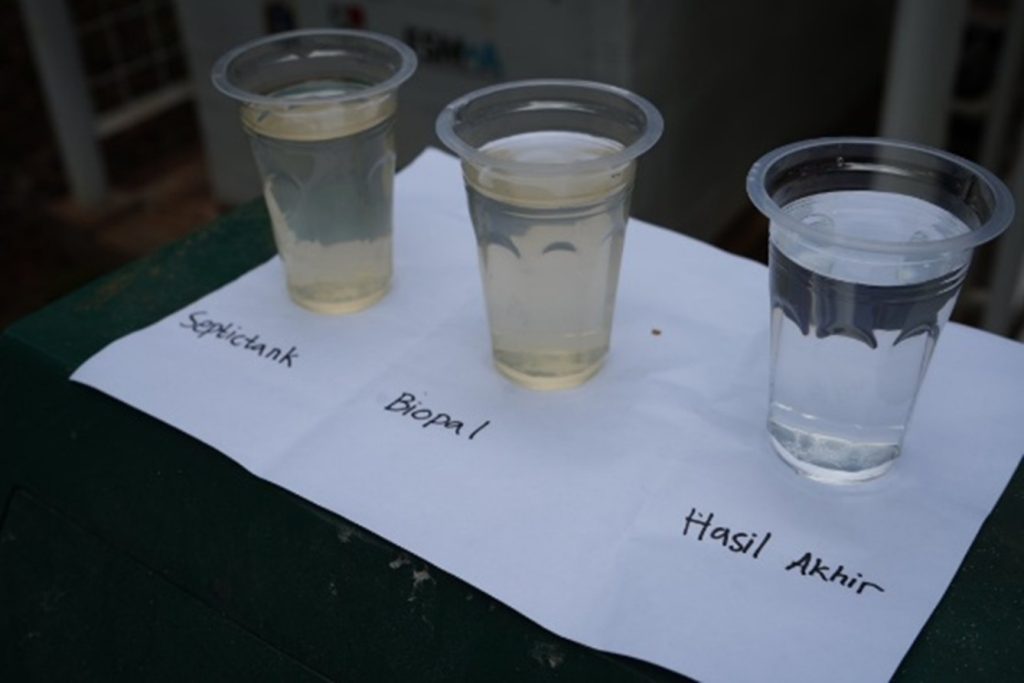
Beyond serving Tebet Eco Park, Saka Alir demonstrates how wastewater—particularly liquid blackwater that is often poorly managed—can be repositioned as a resource within urban systems.
By reducing groundwater extraction, the system contributes to efforts to address water scarcity and land subsidence challenges. Proper treatment of blackwater also helps minimise methane emissions commonly associated with conventional septic systems that are not optimally managed.
As a pilot initiative, the WRU offers a practical model that can be adapted by local governments in schools, terminals, public parks, and other public facilities, based on their respective contexts and budgets. Through Saka Alir Tebet, wastewater is no longer viewed as a burden, but as part of a circular solution supporting greener, more resilient cities.
Upon the completion of the project, UCLG ASPAC acknowledges the strong collaboration with the Provincial Government of Jakarta, particularly the Jakarta Parks and Urban Forest Agency, the Jakarta Development Planning Agency, and its local partner, Fasilitasi Sehat Manfaat-kembali Aman (FSMAman), which has been instrumental in achieving meaningful and sustainable outcomes. “Saka Alir”, “Saka” meaning “supporting pillar or a foundation that strengthens”, and “Alir” meaning “flowing without stopping, or bringing life” represents more than a technological installation. It reflects strong intergovernmental collaboration and a shared commitment to transforming urban challenges into sustainable opportunities.