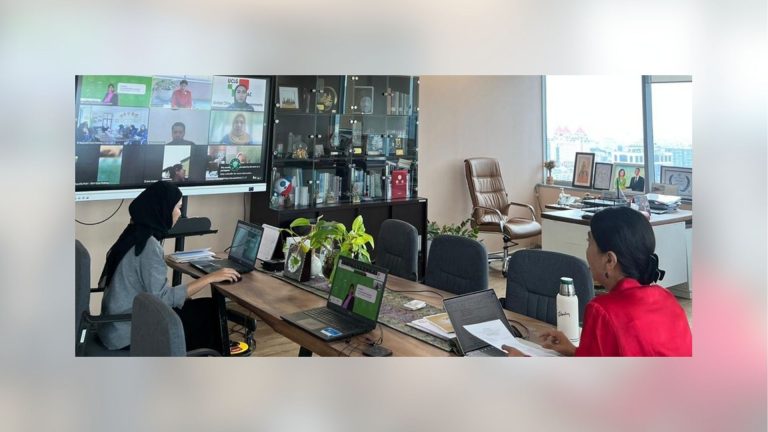





11 March 2026 | Online – UCLG ASPAC joined the 13th Asia-Pacific Forum on Sustainable Development (APFSD) Associated Event on “Caring Cities: Gender-Responsive Pathways to Ageing, Inclusion, and Transformation in Asia and the Pacific.”
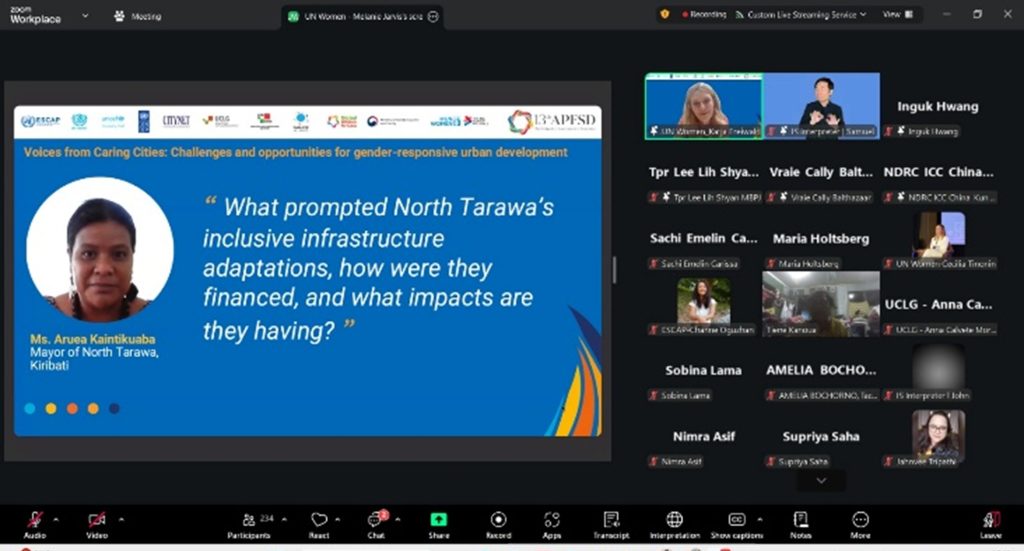
The event brought together local leaders, development partners, and practitioners to explore how care can be better integrated in urban governance, financing, and service delivery. The event also drew strong engagement across sectors and countries, with more than 340 participants joining via Zoom and 235 via YouTube. It was organised by UN Women Regional Office for Asia and the Pacific, with financial support from the Ministry of Gender Equality and Family of the Republic of Korea, and co-organised by UN ESCAP, UNICEF, UN-Habitat, UCLG, UCLG ASPAC, City-Net, Global Alliance for Care, and Data-Pop Alliance.
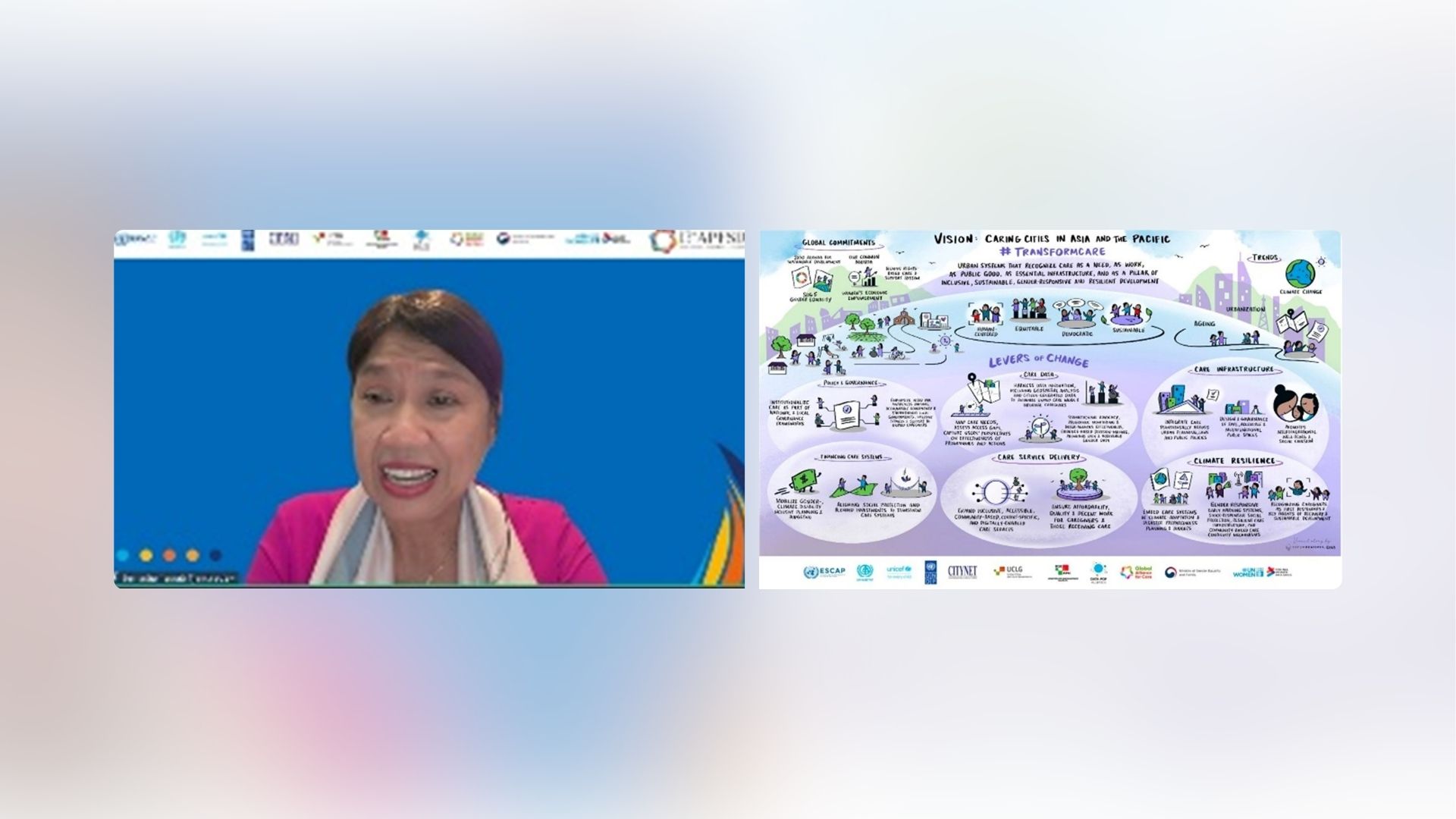
Opening the event alongside representatives from UN Women, UN-Habitat, and ESCAP, Dr. Bernadia Irawati Tjandradewi, Secretary General of UCLG ASPAC, underscored that care lies at the heart of gender equality, social justice, and the sustainability of life. She stressed that from a local government perspective, SDG 11 is not only about infrastructure, but also about how cities are lived, governed, and cared for. As she noted, the future of cities will not be defined only by how fast they grow, but by how well they care.
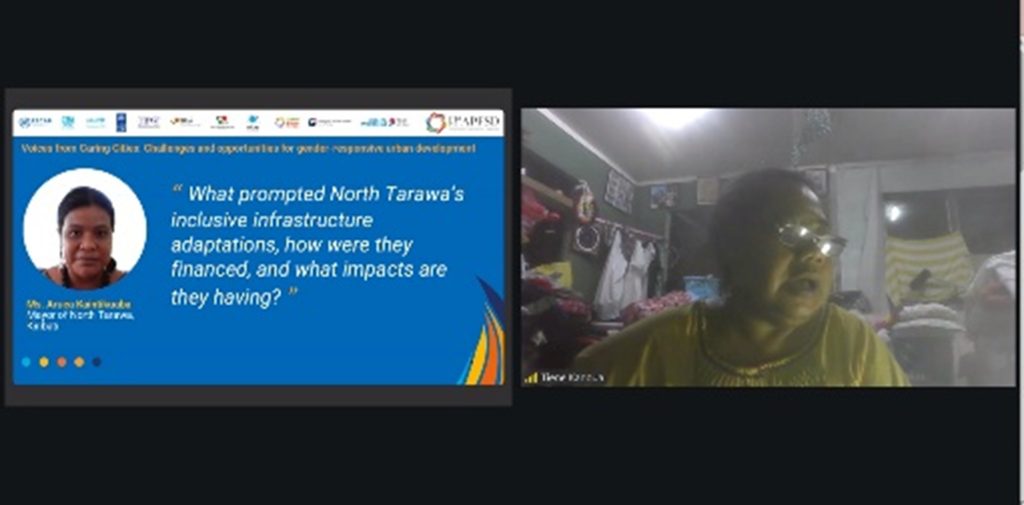
The event also demonstrated how this vision can be translated into practical local action. During the panel session, Mrs. Tiene Kanoua, CEO of Kiribati Local Government Association (KiLGA)representing Mayor Aurea Kaintukuaba shared the experience of North Tarawa, Kiribati, where modest but meaningful improvements, such as providing chairs and benches in waiting areas for elderly residents, pregnant women, and persons with disabilities helped make local public services more inclusive and dignified. Supported through the council’s annual budget, this example showed how care can be integrated into everyday local governance.
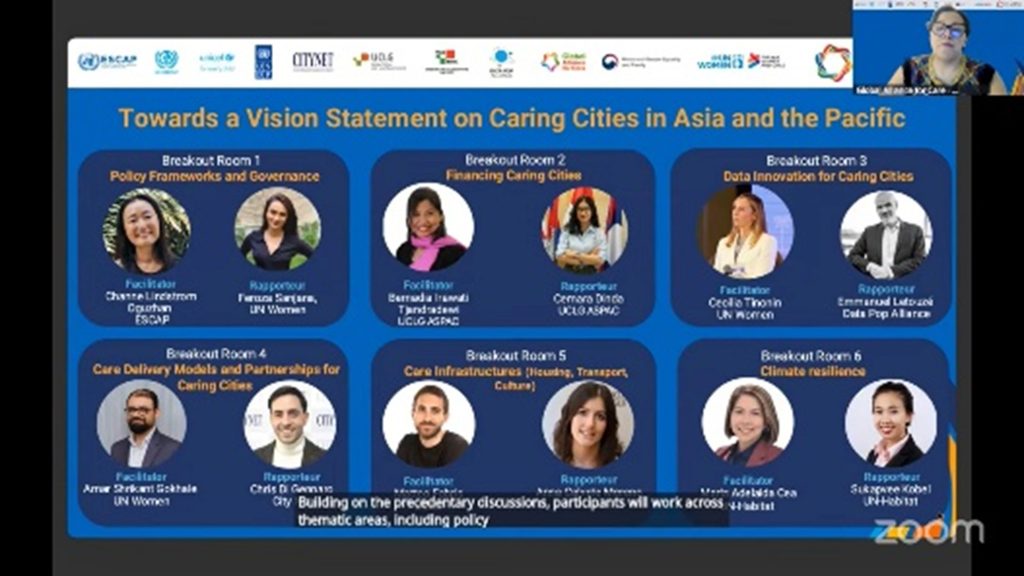
A major highlight of the event was the interactive breakout segment designed to contribute directly to the co-creation of the Vision Statement on Caring Cities in Asia and the Pacific. Participants were divided into six thematic breakout sessions covering Enabling Policy Frameworks for Caring Cities; Financing Caring Cities; Data Innovation for Caring Cities: Moving Beyond GDP; Care Delivery Models and Partnerships for Caring Cities; Care Infrastructures (Housing, Transport, Culture); and Climate Resilience.
Across these parallel breakouts, participants reviewed concrete local practices, identified priority actions and enabling conditions, and refined the language of the Vision Statement in relation to each theme, ensuring that the final document would be grounded in regional realities and implementation needs.
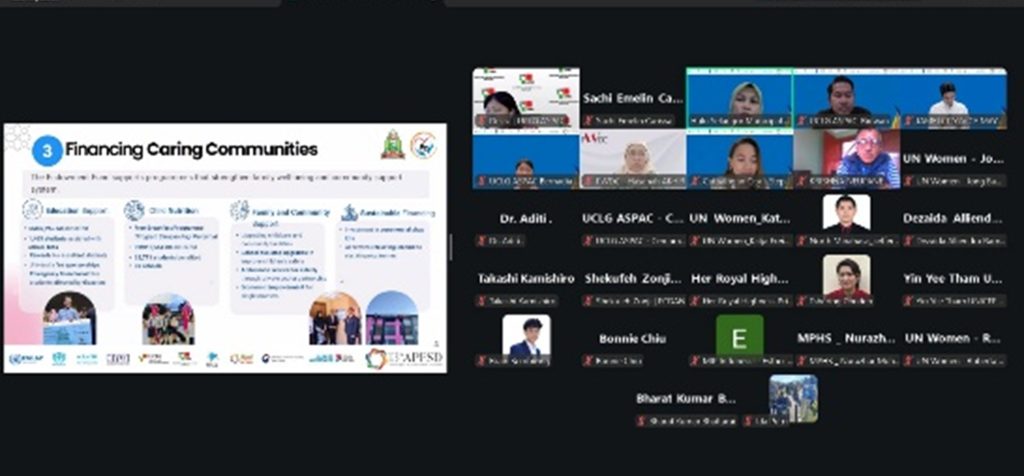
UCLG ASPAC facilitated the breakout session on Financing Caring Cities, led by Dr. Bernadia. The session reaffirmed that care should not be treated merely as a social welfare issue, but as a governance and budgeting priority. Discussions highlighted the importance of sustainable financing, stronger local capacity, reliable social data, and coordinated support across levels of government and society.
Ms. Julaihah binti Jamaludin, Mayor of the Hulu Selangor Municipal Council (MPHS), Malaysia, shared an inspiring practice from the Council’s Municipal Endowment Fund. It is the first municipal endowment initiative by a local government in Malaysia. Introduced in 2018, the fund has grown to RM 7.28 million as of February 2026 and supports a wide range of programmes that strengthen family and community well-being, including free breakfast programmes, school fee support, childcare and community facility upgrades, school bus stop improvements, ambulance services for the elderly, and economic empowerment for single mothers. The Hulu Selangor experience showed that innovative municipal financing, backed by leadership, transparent governance, partnerships, and asset investment, can provide a sustainable foundation for local care systems.
The financing discussion was further enriched by reflections from Mr. Diza Hazra Aljosha, Vice Mayor of Jambi City, Indonesia, which stressed who emphasised the need for an integrated financing system for care services that; linking local budgets, national government support, community participation, and private sector contributions through Corporate Social Responsibility (CSR).
Additional reflections from Councillor Stephany Uy of Catbalogan City and Mr. Krishna Neupane from Nepal further encouraged participants that financing care is both political and practical local governance issue that requires clearer prioritisation, greater local fiscal space and stronger municipal capacity.
Overall, the event reaffirmed that caring cities are not just a social agenda, but an urban imperative essential to building inclusive, just, and resilient Asia-Pacific urban futures. Through the sessions, participants collectively contributed to the Vision statement, which underscores that local governance needs to be equipped with inclusivity, reliable care data, accessible infrastructure and coordinated support systems to build caring cities. This is so that dignity, equality and care is at the centre of city life in Asia-Pacific. From UCLG ASPAC’s perspective, this event further reinforced how local governments are not just implementers of care-related policies, but key actors in shaping how care is governed, delivered, and financed across this dynamic region.
To read the final Vision Statement for Caring Cities in Asia and Pacific, please click here.