





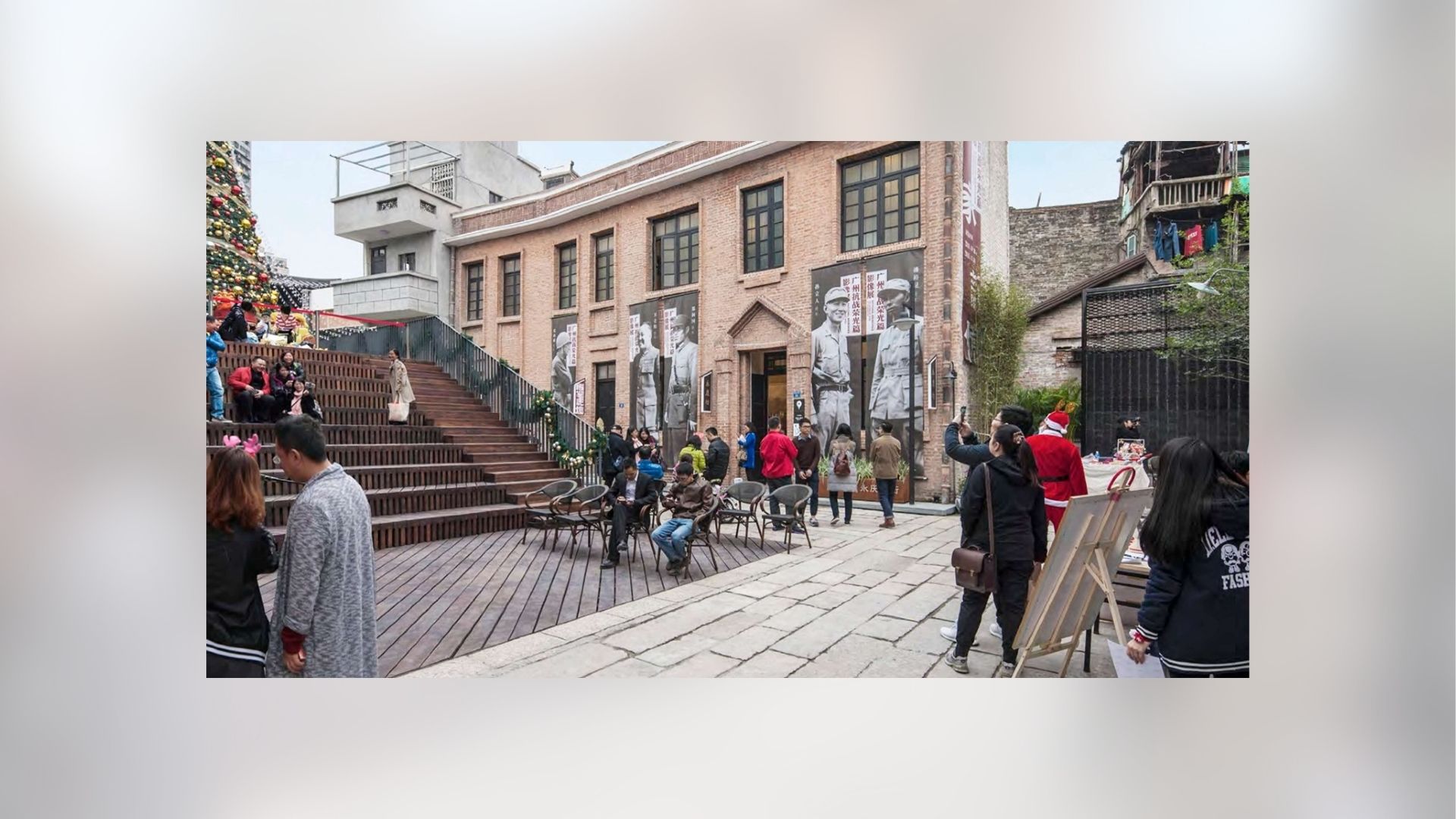
Yongqing Fang Alleyways, located in Enning Road District, was once an important treaty port connecting eastern and western China during the Qing dynasty. Located in an area of 120,000 square meters, urban decay and lack of development made Yongqing Fang Alleyways filled with dilapidated old buildings. Thanks to the rejuvenation initiative by the city government in 2016, the area has now become a must-visit tourist spot in Guangzhou for its beautiful streetscape, popular cafes, cultural and creative shops, and home-stay hotels. The en.people.cn mentioned that in 2019, the average number of visitors to the ancient street hit 3,000 per day during weekdays and 5,000 on weekends at the peak time.
Yongqing Fang Alleyways is the result of a mini transformation in the old town of Guangzhou. The strategy is part of city expansion conducted through inner-city renewal and is expected to become incubators for new urban life as well as highly valuable differentiators for city branding and marketing.
The mini transformation refers to the design strategy that emphasises building restoration and switching on existing resources in the area; thus, avoiding the relocation of original residents. The preservation of the historical sites has also allowed local people to keep their emotional attachment to the physical location. The rejuvenation effort is conducted with environmentally sustainable strategies, recreating old city life and reducing negative impacts.
The mini transformation/rejuvenation of the area was not without challenges. Discarding the decaying parts and retaining the memories of old buildings required detailed efforts. It also adopted modern architectural elements for better space structure and transformation of the building interior to meet the needs of modern activities.
Shared Public Space
The Grand Wooden Steps, the Water Feature Garden, and the Roof Garden are multifunctional public spaces. The Grand Wooden Steps are used as a resting and display area during the day, and to show movies at night to provide entertainment for local people and visitors. The Water Feature Garden is located at the back of main street and shielded with existing old trees. Recycled roof tiles are also used to reduce the project’s overall environmental impact. The Roof Garden public space is created to connect the back of the buildings and provide a semi-private leisure area.
Multifunctional System
This system is developed to solve challenges of drainage, lighting, and aged electrical cables hanging, creating a dangerous and unsightly mess. It kept the door sill stones of the original buildings and continued the stone edges on each side of the alleys. The design was also created to hide the cables. Low levels of light were also installed to make the multifunctional system display attractive.
Sustainable Design
The initiative carefully treated the demolition waste, including tiles, brick, and natural stones and used them as materials for new landscape components. Those materials made a unique historical atmosphere and brought back memories for residents and visitors
Source:
https://worldlandscapearchitect.com/