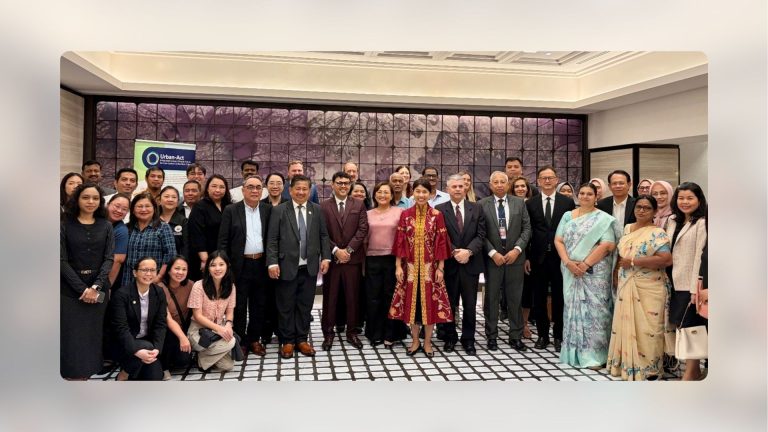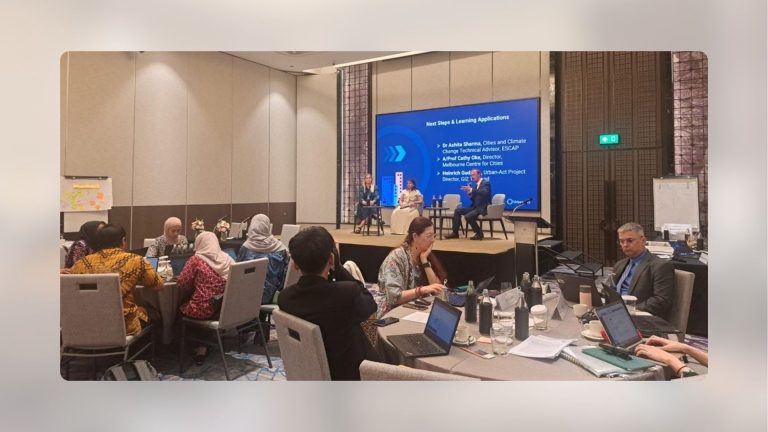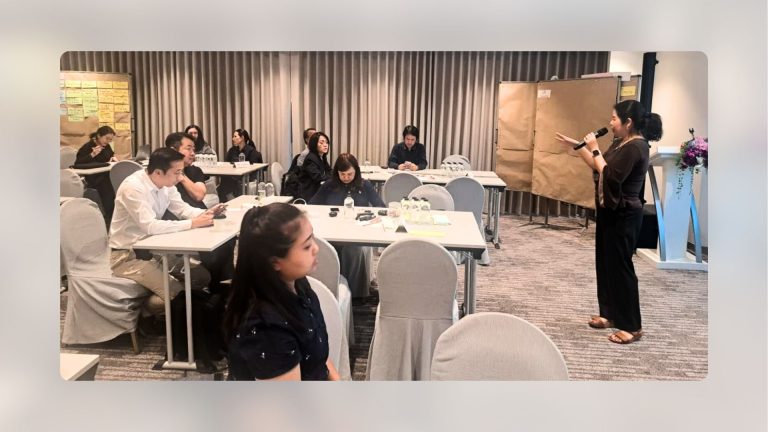




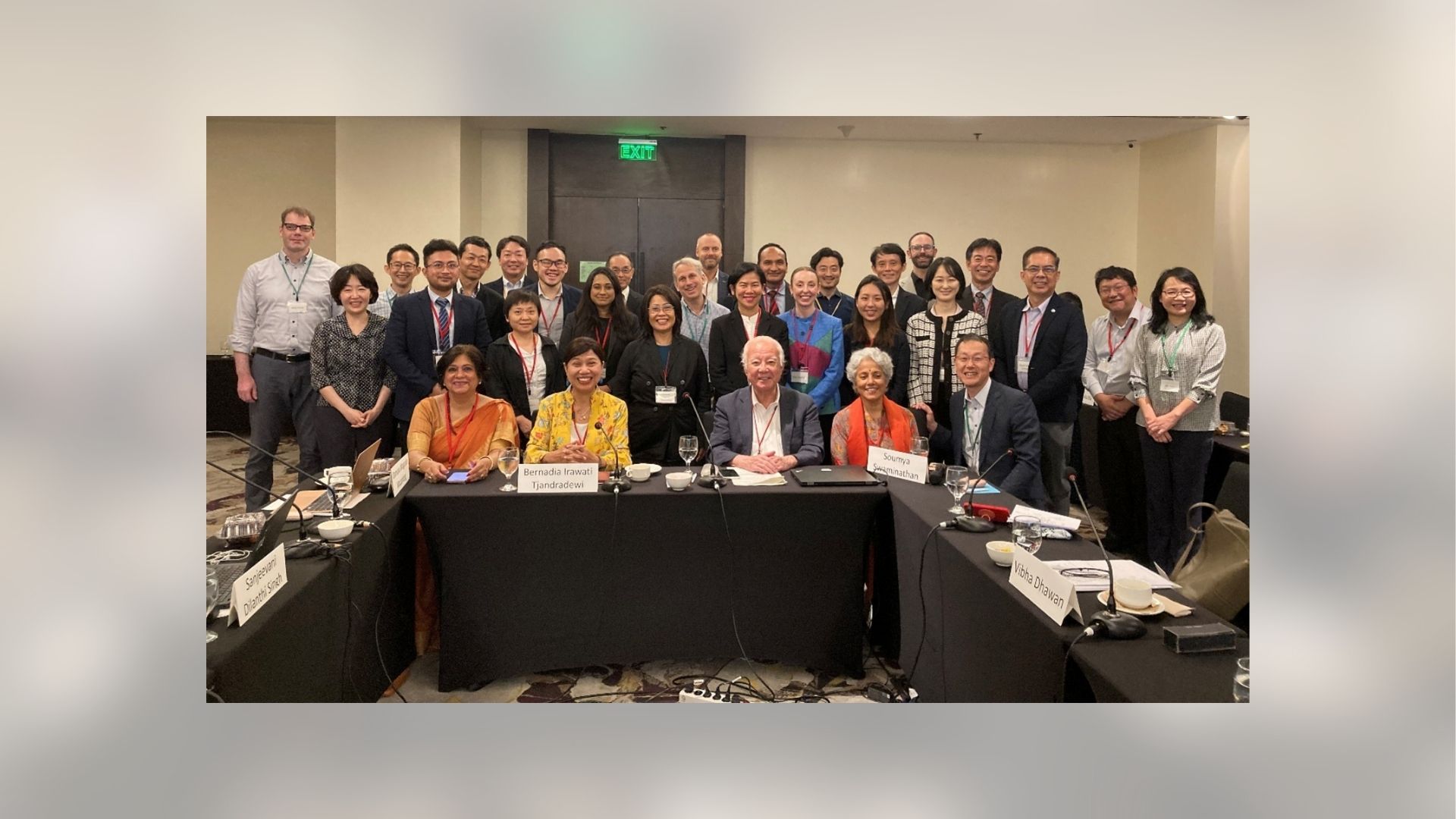
July 7–8, 2025 | Manila – UCLG ASPAC Secretary General, Dr. Bernadia Irawati Tjandradewi, shared a key voice anchoring the role of local governments and cities in the broader sustainability discourse in the First In-Person Expert Group Meeting for the Asia-Pacific Synergy Report. This event, attended by over fifty experts from across the region, is a collective effort led by UN ESCAP, UNEP, ADB, and IGES, aiming to produce an integrated regional report that addresses triple planetary crisis—climate change, biodiversity loss, and pollution—through a lens of strategic synergy.
In the dedicated working group on Cities and Urban Resilience, Dr. Bernadia brought critical insights shaped by years of engagement with subnational governments across Asia and the Pacific. She called for a shift in framing—moving away from the traditional narrative of cities as drivers of environmental degradation, toward understanding them as systems of synergy: places where transitions intersect, where decisions meet implementation, and where innovation takes shape in response to complexity.
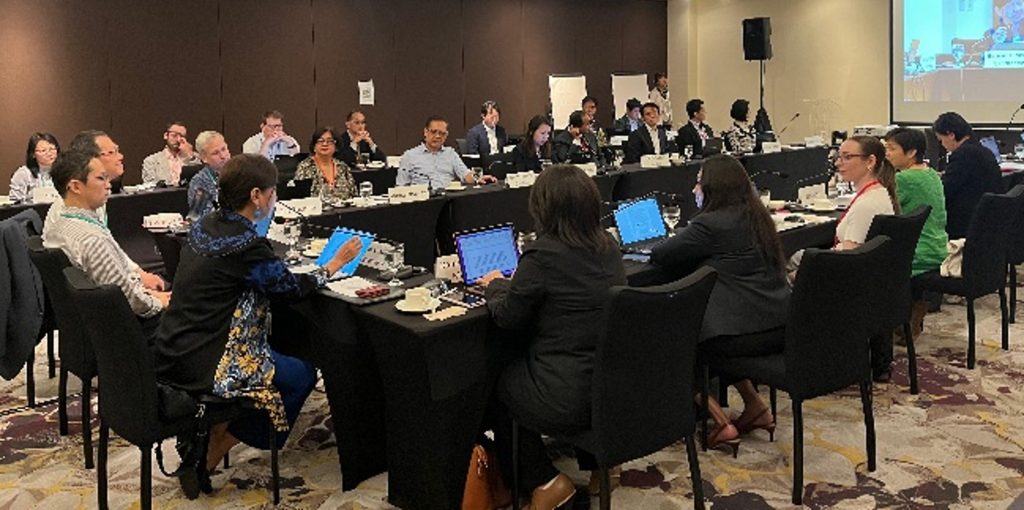
Dr. Bernadia urged the authors to consider cities not just as spatial units, but as living systems that operate across sectors and scales—bound to natural ecosystems, deeply shaped by social and economic forces, and governed through often fragmented arrangements. She pointed out that sustainable transitions are rarely linear in cities, and thus, solutions must be adaptive, inclusive, and territorially embedded.
Her intervention during the Plenary Session on July 8, 2025, reinforced this stance. Addressing the broader expert group, she highlighted that cities can only deliver on synergy if governance gaps are narrowed, informal dynamics are acknowledged, and finance and tools are made accessible at the local level. She advocated for a systems approach that puts equity, local knowledge, and interlinkages—between urban, peri-urban, and rural zones—at the centre of analysis.
Importantly, Dr. Bernadia stressed that the report must go beyond thematic silos and respond to the actual practice of governance. Mayors, city staff, and local planners need more than conceptual frameworks—they need examples, templates, and replicable tools. In this light, she proposed the inclusion of lesser-known but powerful case studies from intermediate and coastal cities, many of which are members of UCLG ASPAC, to illustrate how synergy is already being applied on the ground.
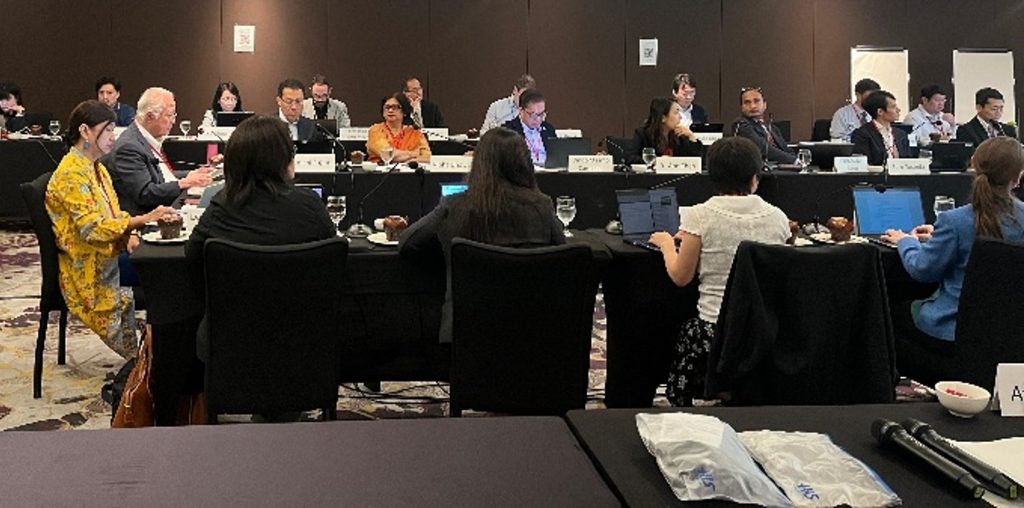
Throughout the discussions, Dr. Bernadia consistently brought attention to cross-cutting dimensions, including gender equality, youth leadership, indigenous knowledge, and community-based action, emphasising that these are not supplementary layers but foundational components of resilient systems. She also encouraged the report team to apply territorial and ecological logic in discussing cities, so that the resulting recommendations speak to both climate-vulnerable island towns and fast-growing secondary cities.
While the overall meeting set in motion the co-writing process of the Synergy Report—establishing deliverables, writing timelines, and shared definitions—Dr. Bernadia reminded participants that the report’s influence depends not only on its academic merit, but on its accessibility and strategic value for decision-makers. Her input shaped the commitment to ensure the Cities chapter includes operational tools, policy-ready messages, and visually communicative formats that allow local actors to translate the document into real action.
In the closing segment, she echoed a point that resonated widely: “We already have data, we know the challenges—what we need now is coherence, direction, and courage to act across levels. Cities are not just targets of policy, they are designers of it.” The meeting was chaired by the authors of the Asia-Pacific Synergy Report, Prof Kazuhiko Takeuchi, the President of IGES, and Dr. Bernadia Irawati Tjandradewi, Secretary General of UCLG ASPAC.