



July 15-16, 2025 | New York – This year, the High-Level Political Forum (HLPF) has once again reaffirmed that the achievement of the Sustainable Development Goals (SDGs) cannot be realised without the meaningful and empowered participation of Local and Regional Governments (LRGs). As part of the official programme of the HLPF 2025, the Global Task Force of Local and Regional Governments organised the Local and Regional Governments (LRG) Forum and LRG Networking Hub, that brought together city leaders, subnational government representatives, and global partners to review SDGs progress, share innovations, and voice urgent calls for stronger multilevel governance and financing.
With only five years left to deliver on the 2030 Agenda, the HLPF 2025 served as a wake-up call and a platform for renewed commitments. The 2025 thematic review of SDG 3 (Good Health and Well-being), SDG 5 (Gender Equality), SDG 8 (Decent Work and Economic Growth), SDG 14 (Life Below Water), and SDG 17 (Partnerships for the Goals) underscores the need for local leadership, community resilience, and global solidarity. It is clear: without empowered local and regional governments, there will be no meaningful acceleration of the SDGs.
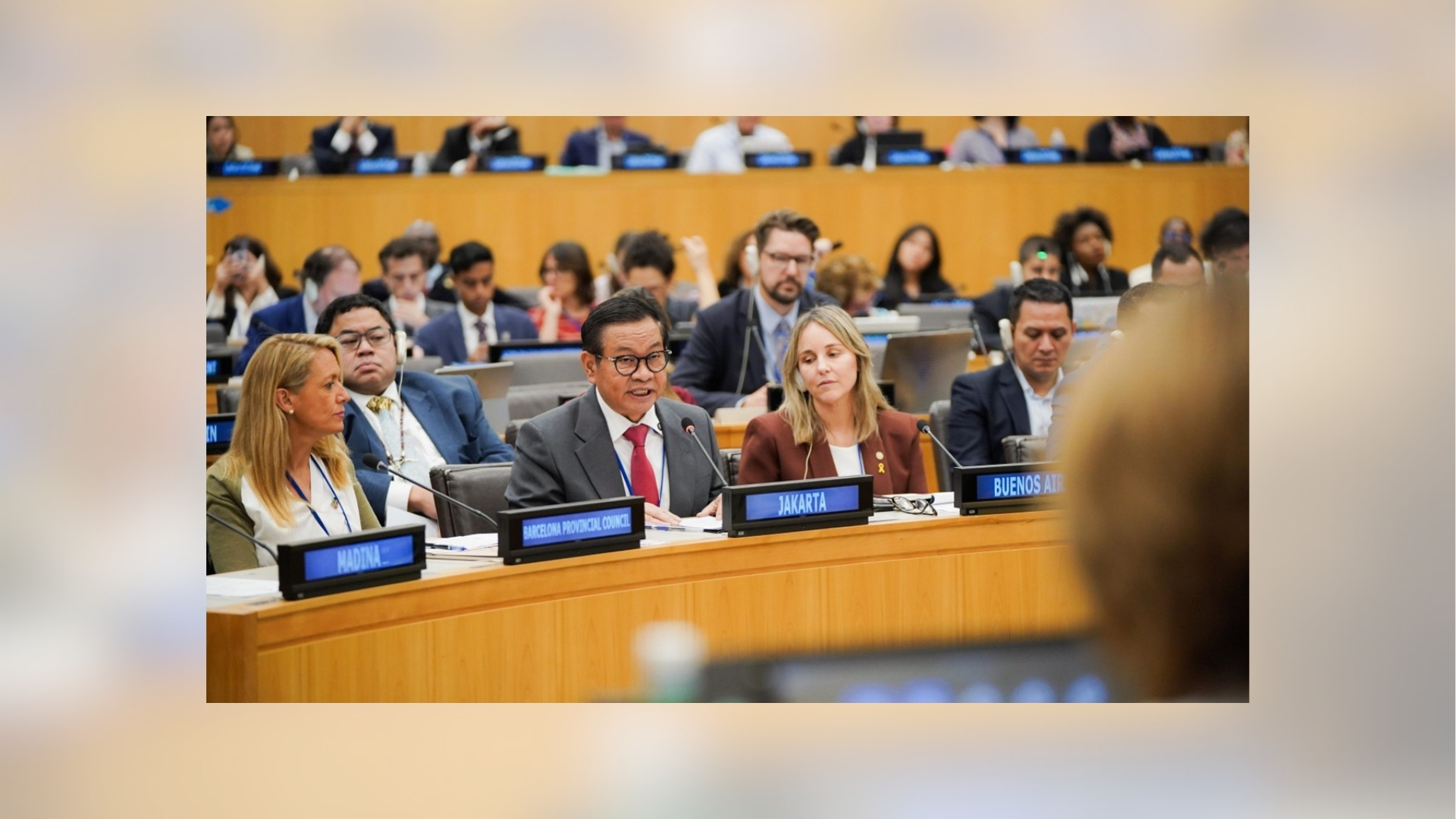
UCLG ASPAC Co-President, Governor Pramono Anung of Jakarta, spoke at the LRG Forum and highlighted Jakarta’s progress in implementing the SDGs, covering in health sector, safety for women, community empowerment, and cross sector collaboration.
Mr. Pramono also highlighted the importance of inter-city and international collaboration to address issues in urbanisation, climate crisis, and social gap. “Jakarta is no longer an administrative city. It needs to level up and become a global city,” he said in a press statement on July 15, 2025. He further said, Jakarta is currently working on important initiatives including clean energy transition, public service digitalisation, and strengthening community-based green economy. As for Jakarta’s participation in HLPF event, he further mentioned that “This initiative underscores Jakarta’s diplomatic role toward becoming a resilient and adaptive global city.”
Local and Regional Governments’ Important Roles in Advancing Gender Equity
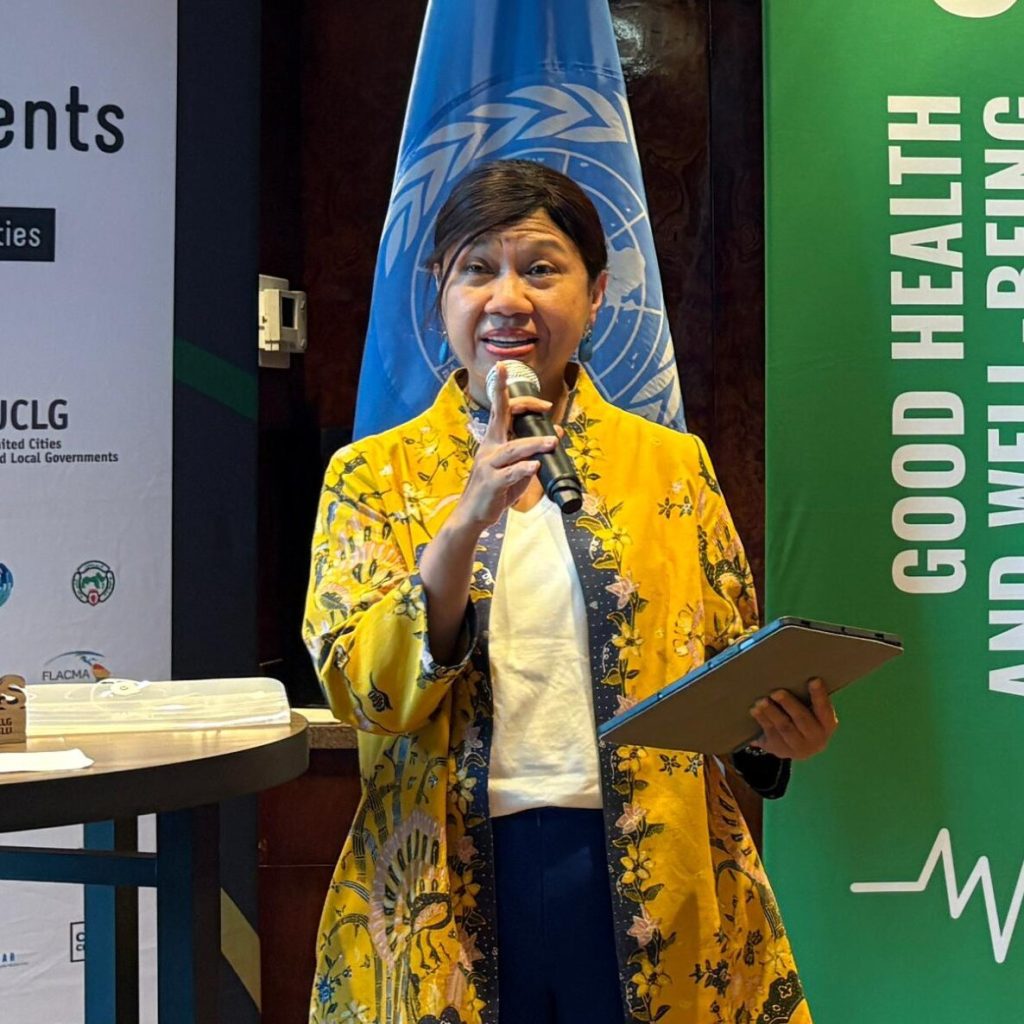
During the LRG Networking Hub session, Secretary-General Dr. Bernadia Irawati Tjandradewi highlighted the achievements and challenges of Goal 5 deriving from the ninth report of the Global Task Force of Local and Regional Governments to the HLPF 2025 titled “Towards the Localisation of the SDGs”. Dr. Bernadia mentioned that although 2025 marks a significant year for the feminist municipal movement to consolidate the path since the Beijing Declaration and reaffirm the role of local leadership in delivering global commitments for gender equality, local and regional governments still need to continue to drive progress on equality and care from the ground up. She highlighted three key messages on SDG 5 achievement from the report:
- Local and regional governments are leaders in promoting women’s political participation and gender balance in decision-making,
- Gender-responsive urban planning and budgeting are employed to embed equality in local governance. Combating all forms of violence against women and girls—including those targeting female political leaders—remains a top priority at the local level, and
- A transformative approach to care is emerging across territories, treating the achievement of SDG 5 not only as a rights issue, but as one of justice, redistribution, and power.
Dr. Bernadia also underscored UCLG ASPAC’s initiative in the formation of the Standing Committee on Women in Local Governments, which plays a critical role in promoting SDG 5 across Asia-Pacific. The Committee led by Guangzhou City Government, advocates for increased participation of women in decision-making processes and supports gender-inclusive policies within local governments through knowledge exchange, capacity-building, and regional cooperation. The Committee’s key milestones include the development of a Gender-Responsive Participatory Budgeting (GRPB) training module as well as the organisation of capacity building activities to equip local officials and stakeholders with practical tools, knowledge, and skills to integrate gender perspectives into local planning and budgeting processes. This has contributed to the strengthening of local capacity in aligning resource allocation with the needs and priorities of women and marginalised groups.
The Call to Action: The Last Mile Must Be Local
With only five years remaining until the 2030 deadline, the message from local and regional governments is important: we cannot afford to leave local governments behind. Acceleration of the SDGs will not happen top down—it must be driven by local solutions, shaped by community needs, and supported by enabling governance frameworks.
The SDGs are global in ambition but local in implementation. Only by accelerating local action and reinforcing regional cooperation can we achieve the 2030 Agenda. The local and regional governments sessions organised by the Global Task Force of Local and Regional Governments in the HLPF 2025 stand as a testament to the critical leadership, innovation, and commitment of cities and regions across the world.
Sources:
https://www.beritajakarta.id/video/play/35340/pramono-paparkan-visi-pembangunan-berkelanjutan-jakarta-di-forum-pbb
https://www.tempo.co/politik/diundang-di-forum-pbb-pramono-anung-jakarta-bukan-lagi-kota-administratif-2005365#goog_rewarded
Photo of Governor of Jakarta:
https://www.beritajakarta.id/potret-jakarta/album/18160/pramono-sampaikan-komitmen-pembangunan-keberlanjutan-di-forum-pbb