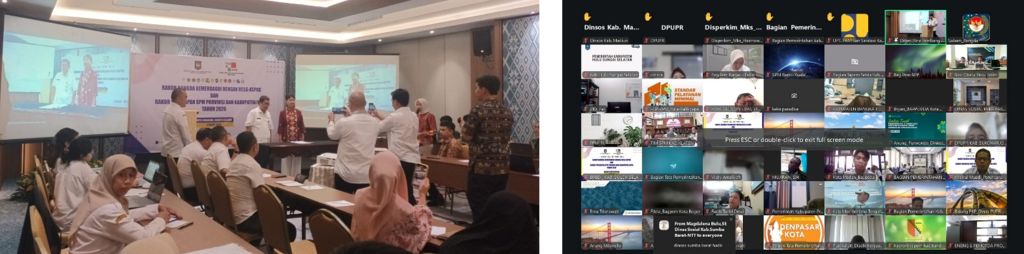





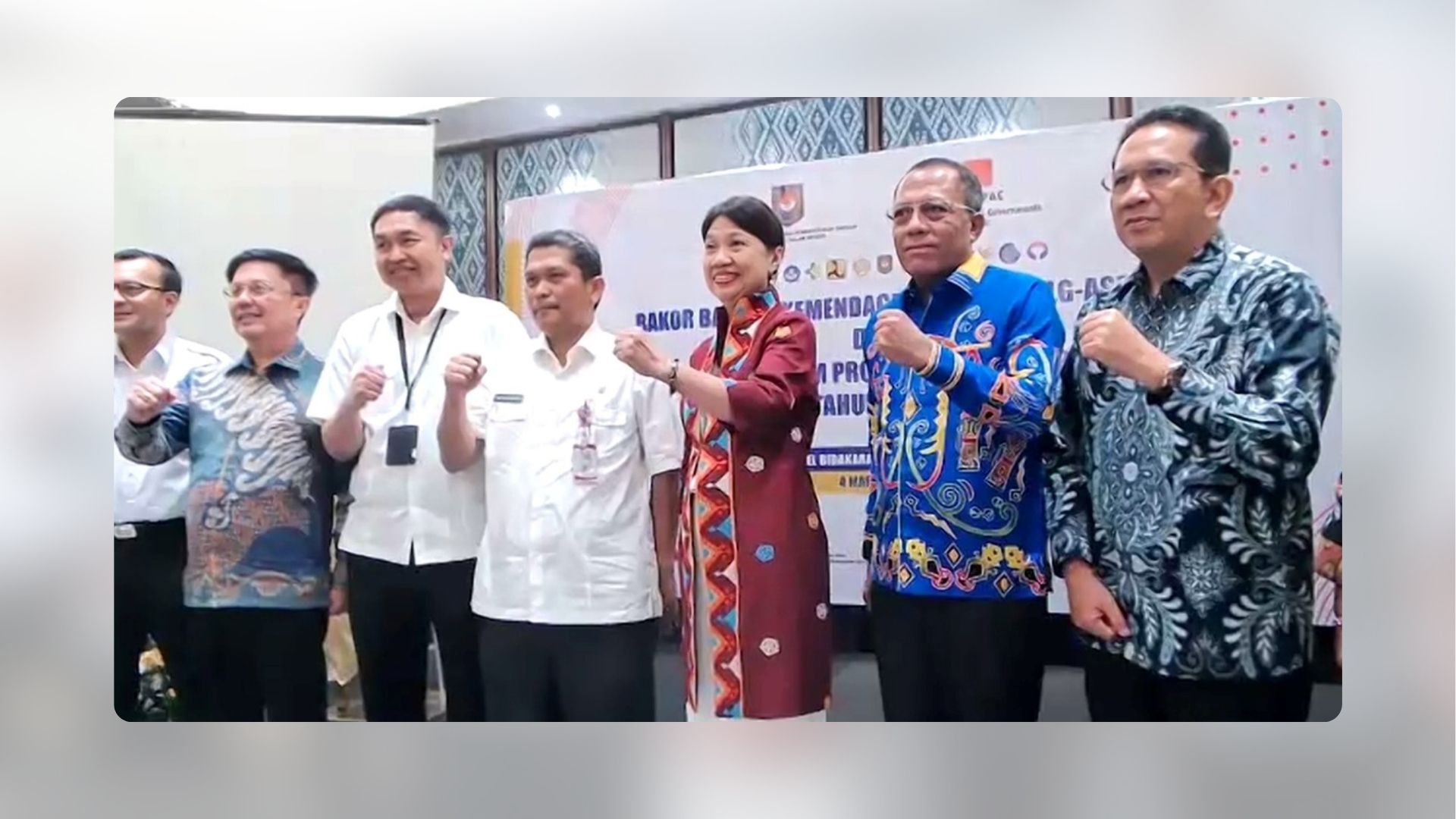
March 4, 2026 | Jakarta – UCLG ASPAC reaffirmed its commitment to strengthening local governance and improving public services delivery in Indonesia, as expressed in the National Coordination Meeting (Rapat Koordinasi Nasional/Rakornas) on Standard Pelayanan Minimum/SPM between UCLG ASPAC and the Ministry of Home Affairs (MoHA) of Indonesia.
SPM is a national programme calling on local governments to provide public services and meet at least the minimum standard set in the regulation. The meeting brought together around 100 representatives from national ministries, provincial and local governments, attending offline and at least 6,000 representatives joining online. It also served as a key platform to evaluate the implementation of SPM in 2025 and to align priorities for 2026–2027.
A Strategic Partnership for Localising SDGs
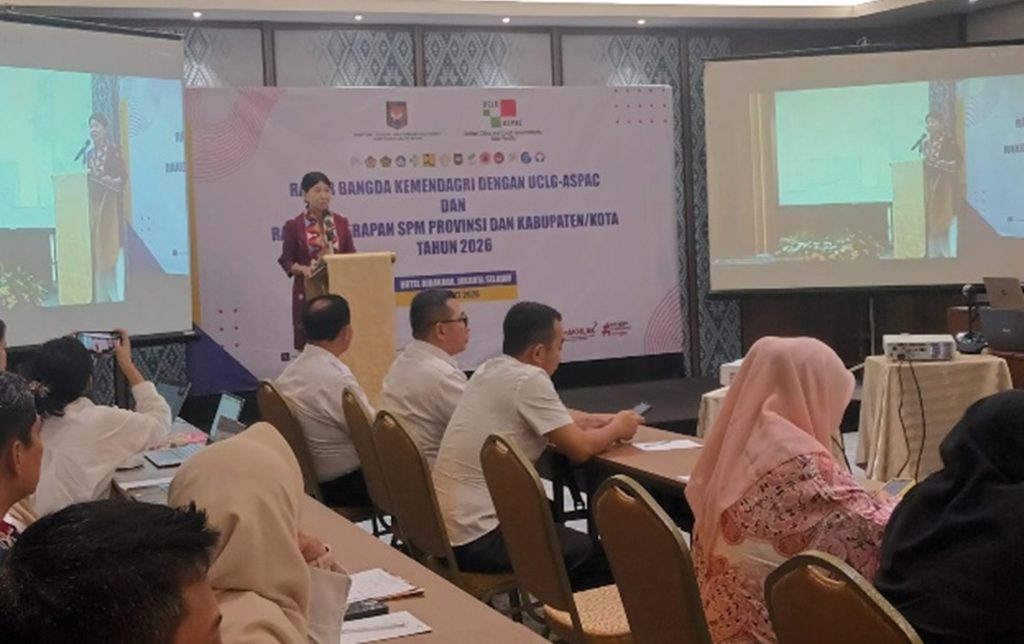
Secretary General of UCLG ASPAC, Dr. Bernadia Irawati Tjandradewi, emphasised the strategic partnership between UCLG ASPAC and the Ministry of Home Affairs under the 2024–2027 Memorandum of Understanding. She highlighted that this collaboration goes beyond administrative cooperation, serving as a key mechanism to align local development with national priorities and the Sustainable Development Goals (SDGs).
She underscored that SPM serves as a fundamental instrument to ensure that all citizens—regardless of location—have access to quality basic services, including health, education, water, housing, and social protection.
“SPM is a commitment of the state to guarantee basic rights. It must not stop at compliance, but drive real improvements in people’s quality of life,” she noted.
From Compliance to Transformation
Drawing from UCLG ASPAC’s experience across the region, the Secretary General highlighted encouraging progress in Indonesia, including:
- Increased integration of SPM into local planning and budgeting;
- Strengthened monitoring and reporting systems; and
- The emergence of local best practices driven by strong leadership.
However, she also acknowledged persistent challenges, such as fiscal disparities among regions, fragmented sectoral data systems, and the need for stronger inter-agency coordination.
In response, UCLG ASPAC promotes a “transformation-based approach” where SPM implementation becomes a driver of governance reform, enhancing transparency, accountability, and results-based management, rather than a compliance exercise.
UCLG ASPAC’s Role: Bridging Policy and Practice
The coordination meeting also highlighted UCLG ASPAC’s continued role as a facilitator, connector, and capacity builder within Indonesia’s local governance ecosystem. Throughout 2025, UCLG ASPAC has delivered technical capacity-building programmes and strengthened collaboration amongst cities and local governments in Indonesia and beyond.
Looking ahead, UCLG ASPAC presented its 2026–2027 work plan, reaffirming its support to:
- Strengthen local governments’ capacity in delivering basic services;
- Promote peer learning and knowledge exchange across regions;
- Elevate Indonesian local innovations to the Asia-Pacific stage; and
- Accelerate the localization of SDGs through integrated planning and governance.
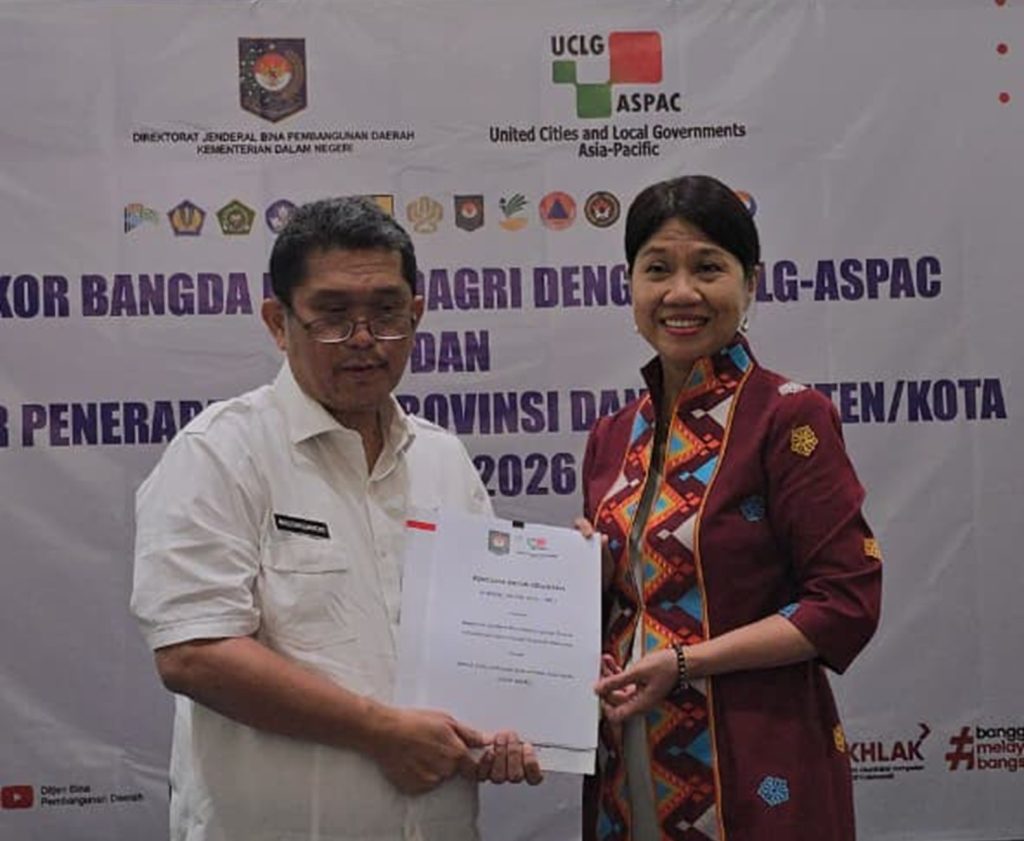
During the meeting, UCLG ASPAC and MoHA signed the Programme Master Plan (Rencana Induk Kegiatan/RIK) and Annual Workplan (Rencana Kerja Tahunan/RKT) 2026-2027.
A Shared Commitment to Inclusive and Resilient Development
The meeting reinforced the importance of multi-level governance and collaboration in addressing today’s complex challenges—from fiscal pressures and climate change to evolving socio-economic dynamics.
As emphasised by Dr. Bernadia, no single level of government can work in isolation. Instead:
- The national government provides policy direction and regulatory frameworks;
- Local governments serve as frontline implementers; and
- UCLG ASPAC acts as a regional enabler of capacity, partnerships, and knowledge exchange.
Moving Forward: From Dialogue to Action
The National Coordination Meeting concluded with a shared commitment among stakeholders to:
- Accelerate the achievement of SPM and SDG targets by 2030;
- Strengthen accountability and transparency in public service delivery; and
- Ensure that no one is left behind in enjoying prosperities and local development.
As Indonesia continues to advance its decentralisation agenda, UCLG ASPAC remains a strategic partner aiming to support local governments to become more responsive, innovative, and globally connected