




February 9, 20, 2026 | UCLG ASPAC, the national coordinator of the Urban-Act Programme in Indonesia, in collaboration with GIZ, supported the Indonesian government in ensuring that its national policy direction is effectively implemented at the subnational level. At the same time, the collaboration also strengthened local governments’ capacity to translate climate commitments into implementable local actions.
Alignment of the National Level Direction to the Sub-National Implementation
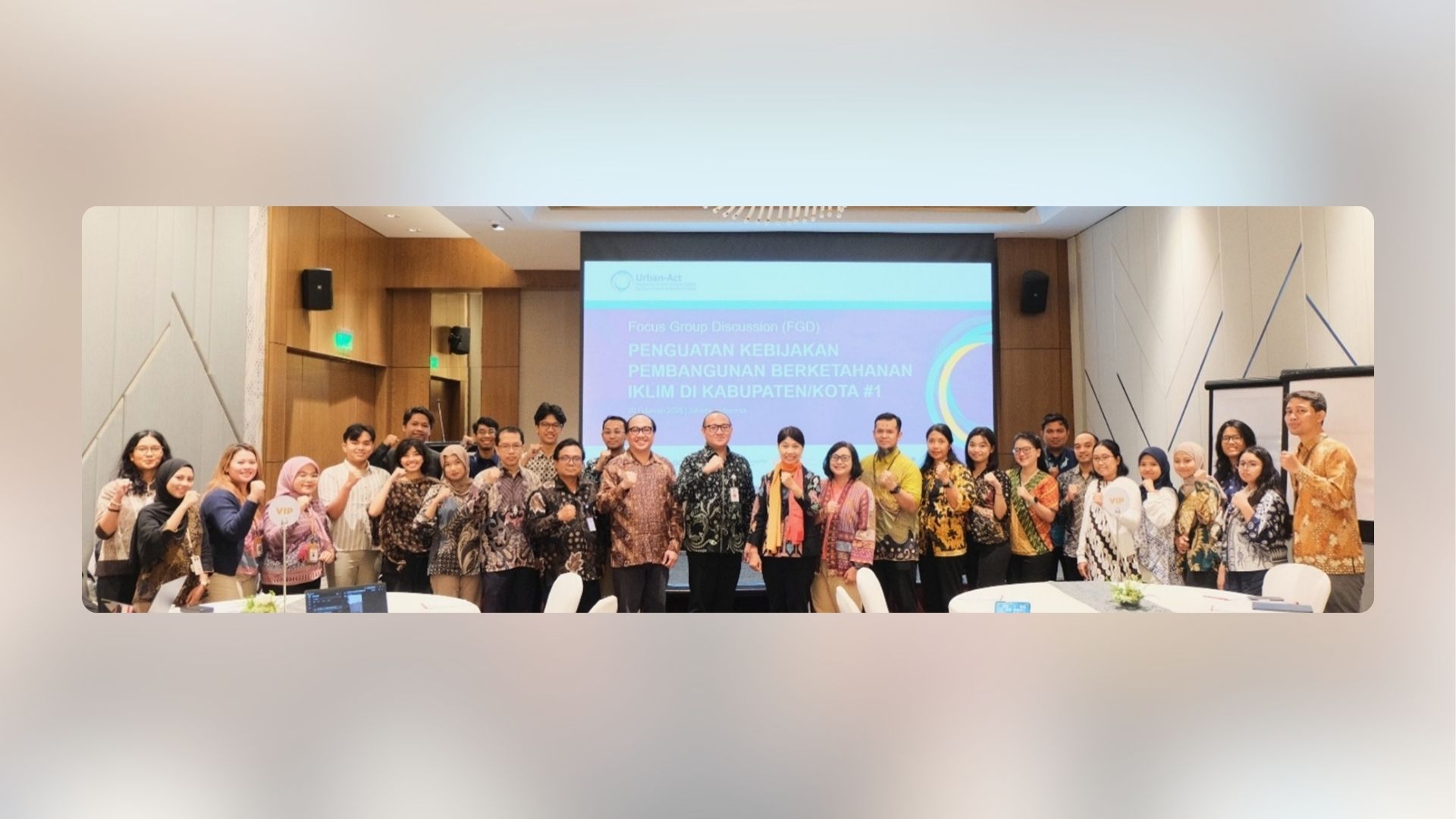
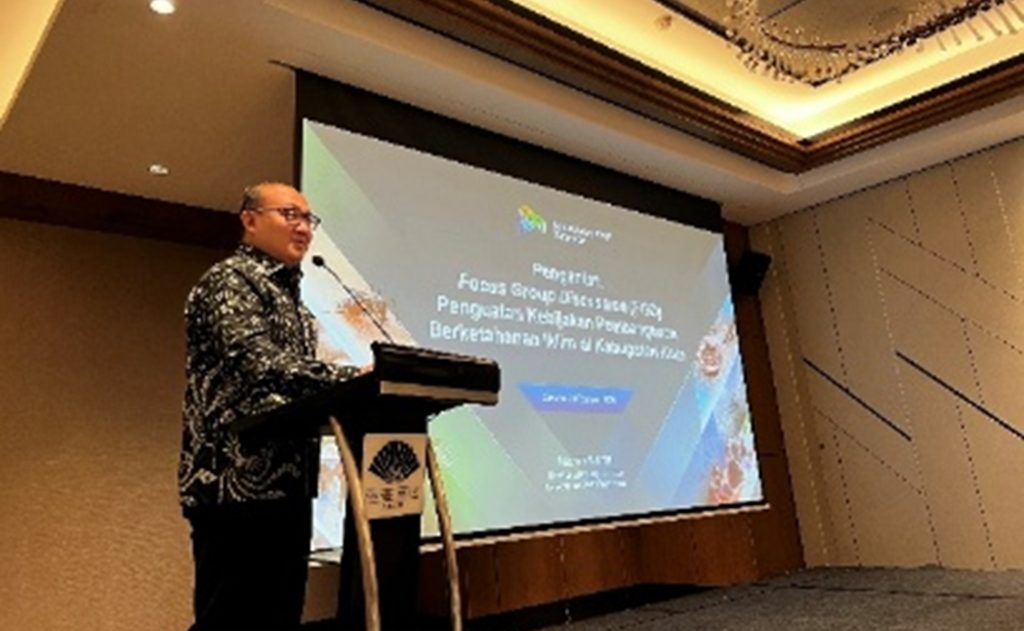
The support began with an evaluation of the vertical integration of climate policies and an examination of the City Enabling Environment on Environmental Climate Governance (CEE-ECG). The results were further discussed during the first Focus Group Discussion (FGD), titled “Strengthening Climate-Resilient Development Policy in Indonesia,” organised on February 20, 2026.
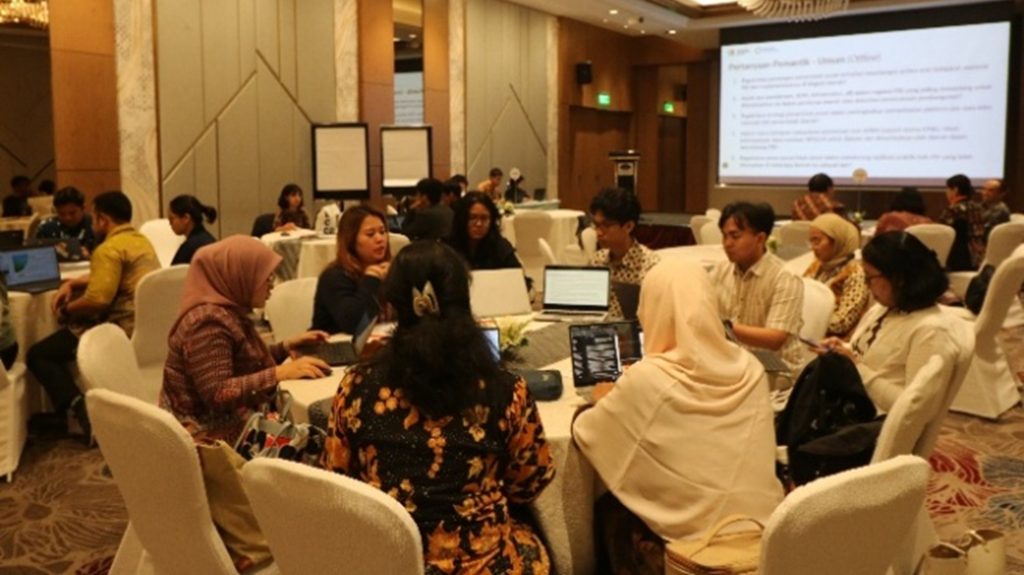
Conducted in a hybrid format, the FGD engaged participants from various national ministries and agencies, development partners, and local government representatives, including Padang and Medan, the Urban-Act project partner cities in Indonesia.
Participants in the FGD discussed four priority sectors of climate-resilient development (marine and coastal areas, water resources, agriculture, and health), focusing on the alignment between national policy directions and local implementation. The discussion also highlighted aspects of national policy that are most challenging to translate into regional regulations and development planning documents.
Participants further explored strategies to improve local utilisation of national climate platforms and data systems and examined the role of the central government in encouraging the replication of successful climate-resilient practices across regions. In more in-depth discussions, participants identified feasible and relevant climate resilience indicators for each priority sector and examined data, capacity, and institutional gaps that hinder the monitoring and reporting of resilience performance at the local level.
The session concluded with reflections on which policy instruments or technical guidelines should be prioritised by the central government to strengthen implementation, monitoring, and reporting across the four sectors.
The FGD was also attended by Mr. Nizhar Marizi, Director for Environment at Bappenas, and Dr. Bernadia Irawati Tjandradewi, Secretary General of UCLG ASPAC. The outcomes of this first FGD will be further discussed with Bappenas to consolidate the key findings.
Climate Action Plan (CAP) Coaching Clinic and City Pairing
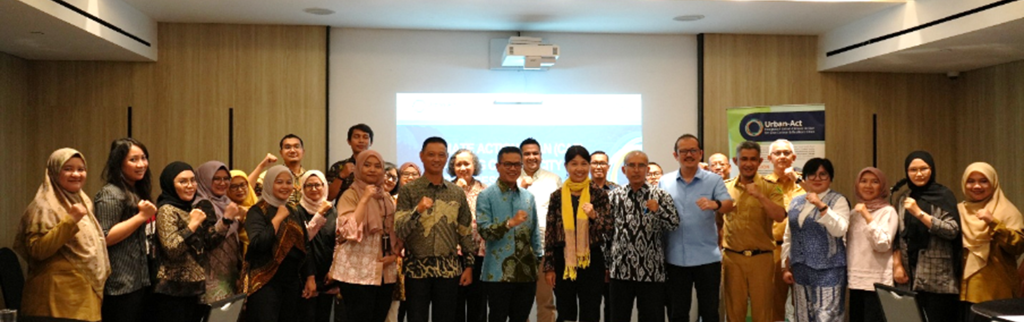
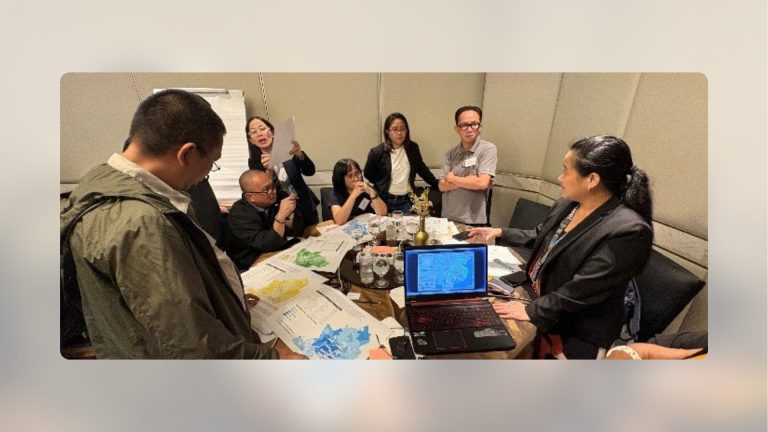
UCLG ASPAC also organised a Climate Action Plan (CAP) Coaching Clinic and City Pairing Session on February 9, 2026, in Jakarta to strengthen institutional capacity, enhance peer learning, and support cities in translating climate commitments into implementable actions, particularly in the priority sectors of urban mobility and solid waste management. The event engaged local governments from 16 cities and regencies in Indonesia, along with participation from the project’s consortium partners and technical experts.
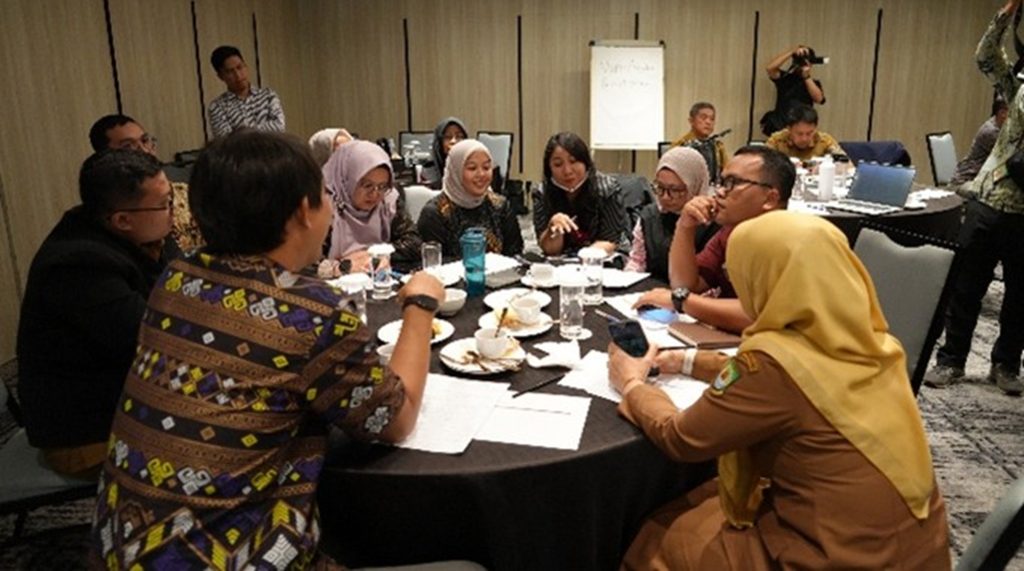
In the urban mobility group, Medan highlighted its operational and expanding electric BRT system while seeking strategies to increase ridership amid mixed-traffic lanes and a strong preference for motorcycles. Padang reported high peak-hour BRT occupancy supported by competitive fares and outlined plans to introduce feeder services.
Bandung discussed the transition of transport subsidies to local budgets, expressed interest in financing schemes and Regional State-Owned Enterprise (Badan Usaha Milik Daerah/BUMD) models, and shared aspirations to join the Greater Bandung MRT plan, alongside concepts such as LRT, park-and-ride facilities, and carpooling.
Bogor shared progress on the BisKita TransPakuan initiative under Local Government-Owned Enterprise (Perusahaan Umum Daerah/Perumda) management, electric vehicle trials, and tram development in collaboration with PT INKA. Surakarta emphasised its Buy The Service scheme for Batik Solo Trans, while Semarang outlined its TransSemarang services, pilot dedicated BRT lanes, and incentive programmes, including discounted fares, free rides for elderly passengers, and mandatory public transport use for civil servants every Wednesday.
The City Pairing session that followed further encouraged cities to explore structured collaboration pathways at domestic, regional, and international levels, strengthening peer learning as a core element of the Urban-Act approach.
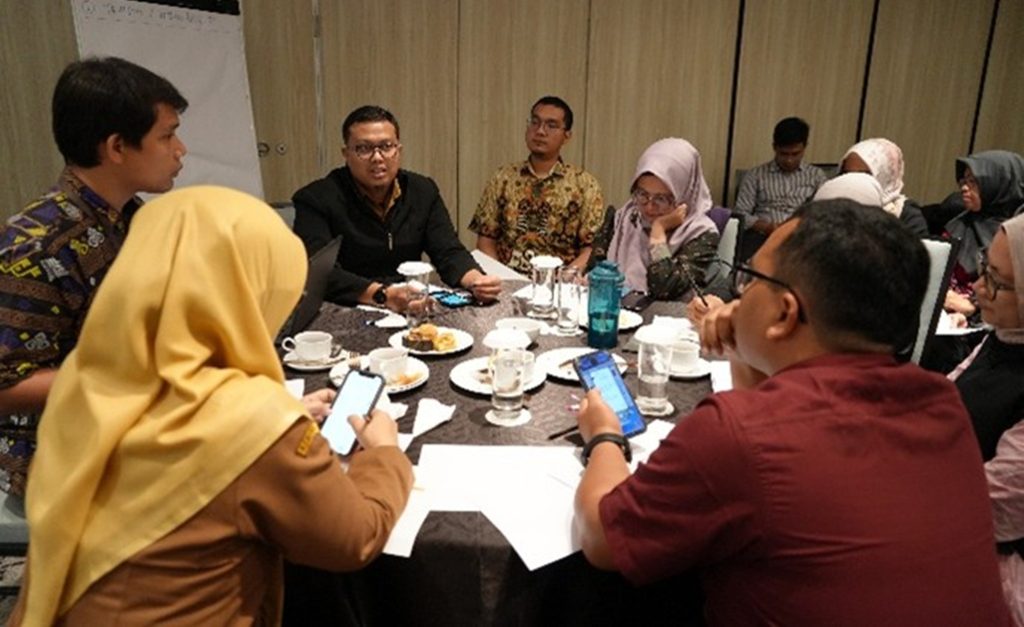
In the solid waste group, Malang Regency presented its IRRC (Integrated Resource Recovery Centre) – a project initiated by UCLG ASPAC and UNESCAP in cooperation with the central government, as a practical example of circular waste management, where organic waste and livestock manure are processed into compost and biogas-based electricity, reducing landfill pressure while generating added value. The regency also outlined its plan to establish a Regional Public Service Agency (Badan Layanan Umum Daerah/BLUD), a governance model that provides greater financial and managerial flexibility to government units. Under the BLUD scheme, revenue generated from waste services can be directly reinvested into improving waste management operations (based on a fairness principle) rather than being treated as general local revenue (Pendapatan Asli Daerah/PAD).
Other cities expressed strong interest in learning more about both the BLUD governance mechanism and the technical solutions applied in Malang’s IRRC. The cities of Padang, Medan, and Depok, as well as Banyumas Regency, considered the model relevant for strengthening their own waste management systems. Padang is planning to develop a Reduce–Reuse–Recycle Waste Processing Site (Tempat Pengolahan Sampah Reduce-Reuse-Recycle/TPS3R), a community-based waste processing facility that focuses on sorting, composting, and recycling at the neighbourhood level to reduce the amount of waste sent to landfill.
Banyumas Regency also shared its experience in institutionalising waste management practices through local policies and regulatory frameworks, ensuring sustained regional commitment and long-term sustainability beyond project-based initiatives.
Participants also conducted site visits to climate-related projects to observe practical implementation, including the “Saka Alir” Water Recycling Unit (WRU) at Tebet Eco Park, a grant initiative from UCLG ASPAC to the Provincial Government of Jakarta, and the Dukuh Atas Transit-Oriented Development (TOD) area, Jakarta’s model of integrated urban mobility.
UCLG ASPAC highly appreciates the commitment of all stakeholders to ensuring the successful implementation of climate resilience at the local level. It will continue to support cities and local governments in strengthening climate resilience, fostering lasting impacts beyond the project’s timeframe.