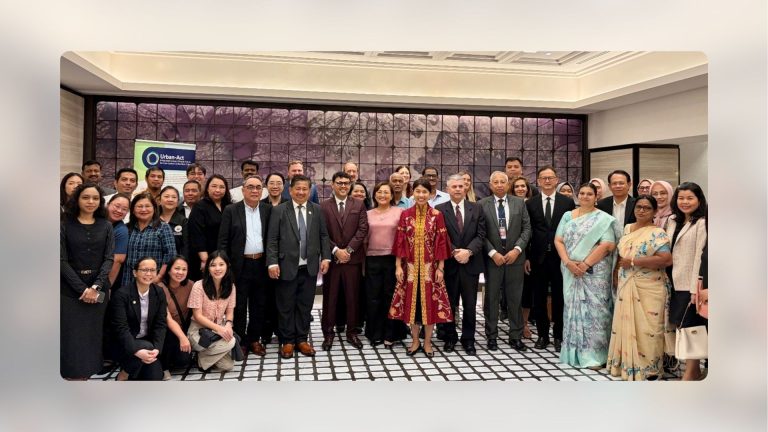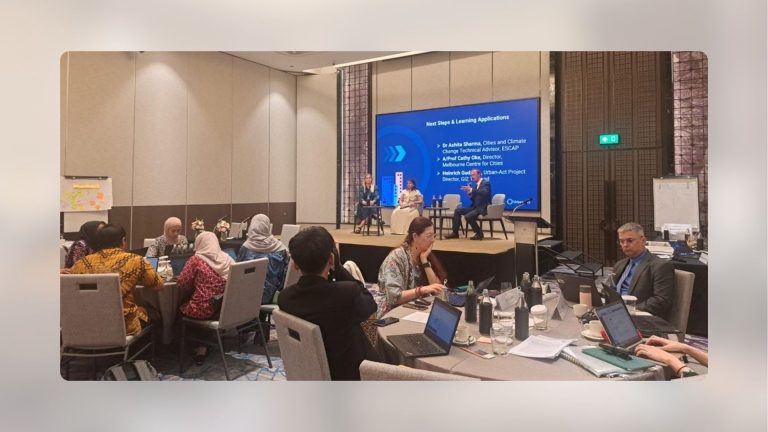




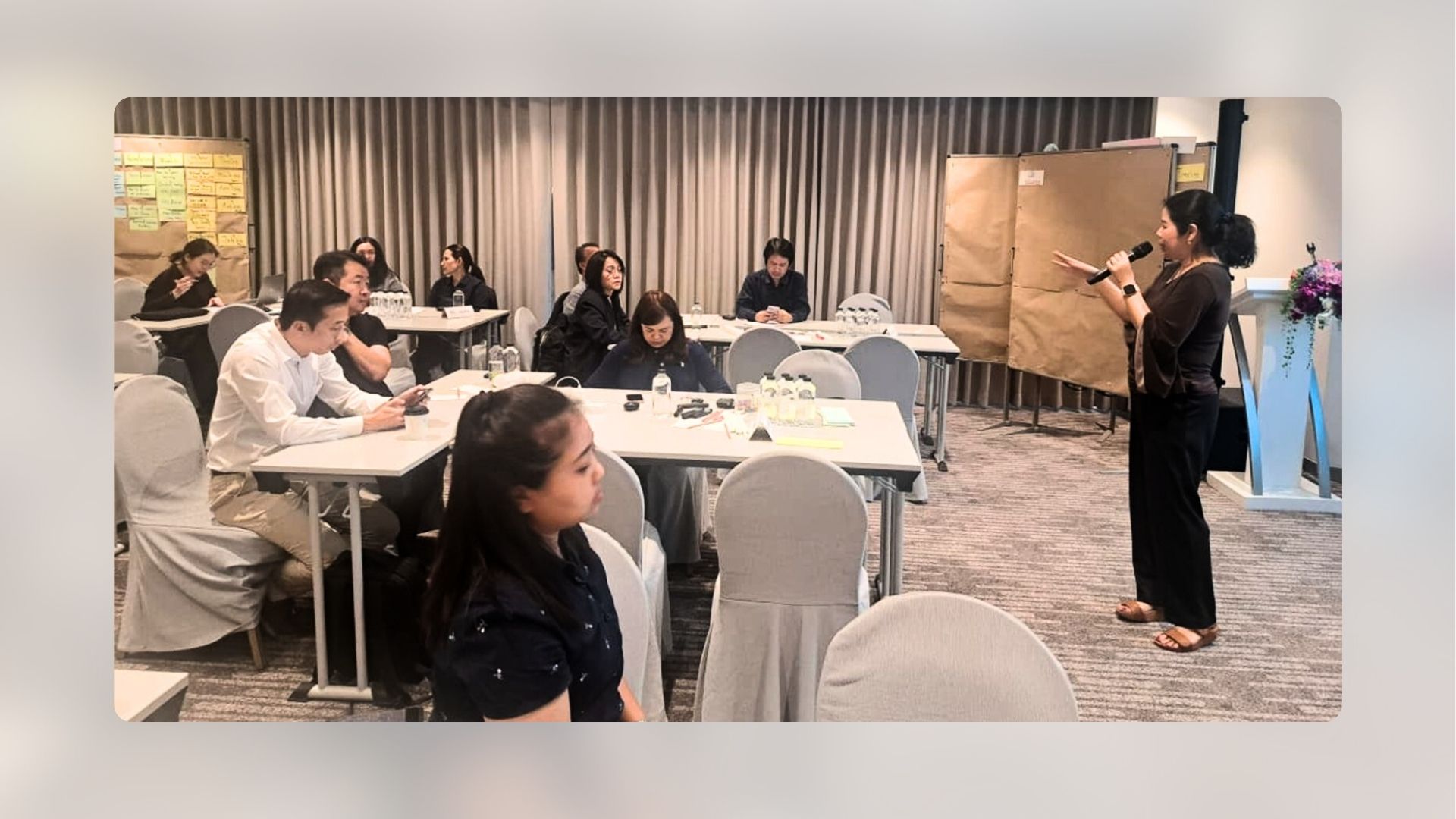
January 29-30, 2026 | UCLG ASPAC, in cooperation with GIZ under the Urban-Act project, co-organised the City Pairing Planning Workshop in Bangkok, Thailand. The workshop brought together representatives from Urban Act pilot cities in Thailand (Chiang Mai, Khon Kaen, Vichit-Phuket) and other city (Hat Yai, Nakhon Si Thammarat) to define priority cooperation areas, strengthen technical capacity, and develop concrete activity plans aligned with the Urban Act priorities.
Thematic Areas for Cooperation
Through thematic working group discussions, participating cities identified three key areas for city pairing:
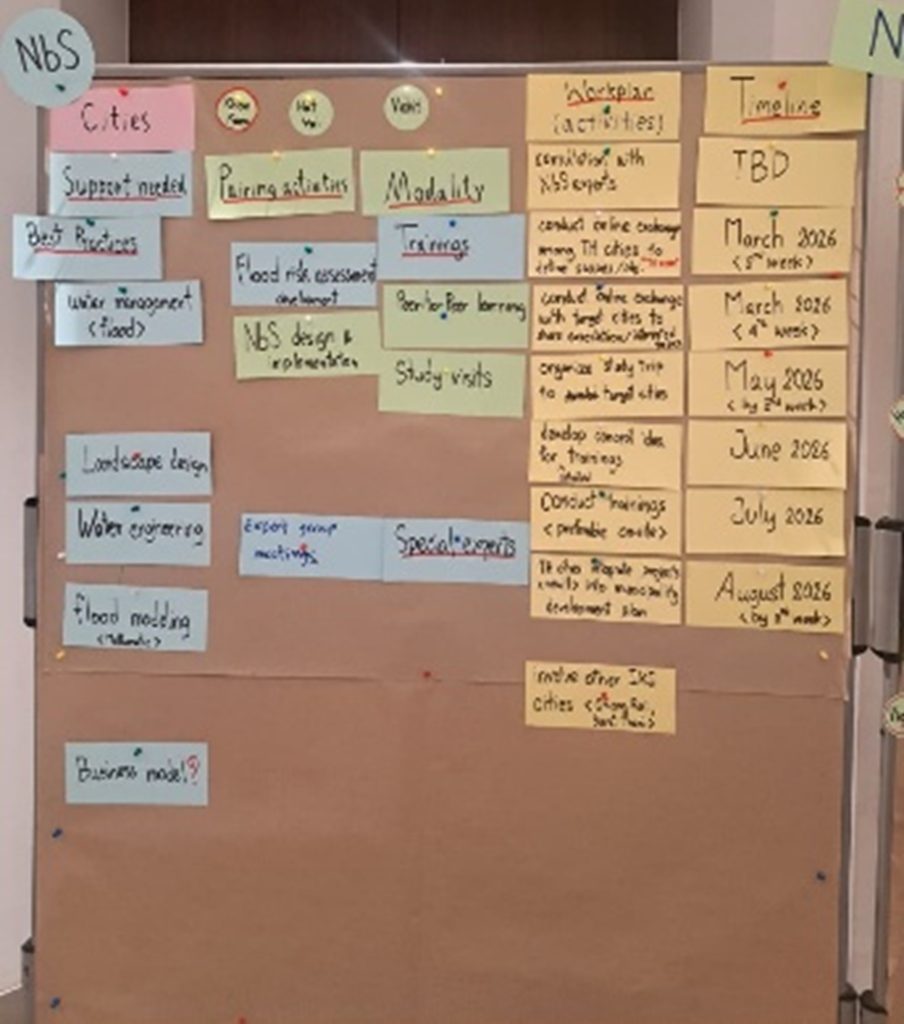
Nature-based Solutions (NbS) for Urban Flood Management
Cities: Khon Kaen, Hat Yai, and Wichit District (Phuket Province)
Potential Partner Cities: Penang (Malaysia), Seoul (Korea), Chiang Rai (Thailand)
Cities prioritised the integration of Nature-based Solutions (NbS) into flood management strategies, including sponge city development, water retention systems, and multi-functional green public spaces. Participants identified technical knowledge gaps in flood modelling, landscape design, and governance frameworks, alongside limited financial resources and institutional instruments.
Key priority:
- Improving flood risk reduction and water retention capacity
- Expanding inclusive and multi-functional green spaces
- Integrating NbS into municipal climate adaptation strategies
Planned cooperation modalities include:
- Peer-to-peer exchanges
- Online expert consultations (March–April 2026)
- Study visits (May 2026)
- On-site trainings (June–July 2026)
- Integration into municipal plans (August 2026)
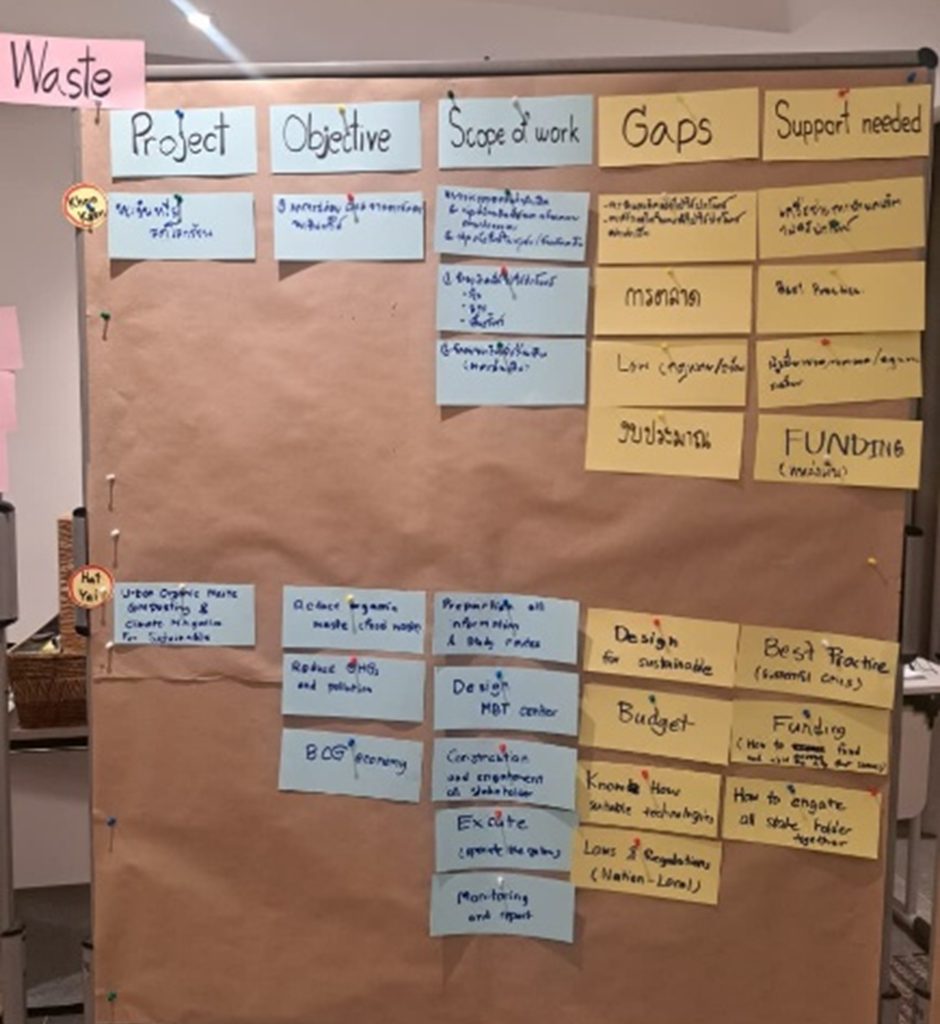
Waste Management and Circular Economy
Cities: Khon Kaen, Hat Yai, and Nakhon Si Thammarat
Potential Partner Cities: Phitsanulok (Thailand), Malang (Indonesia), Shizuoka (Japan), and Jeju (Republic of Korea)
The waste stream discussions focused on reducing organic waste, promoting composting systems, and supporting bio-circular-green (BCG) economic approaches.
Key Priority:
- Reducing food and organic waste
- Lowering greenhouse gas emissions
- Strengthening community engagement
- Developing sustainable business and financing models
Planned activities include, including:
- Online coordination meetings (March–April 2026)
- Study visits and technical workshop (May 2026)
- Final training workshop in Thailand (July 2026)
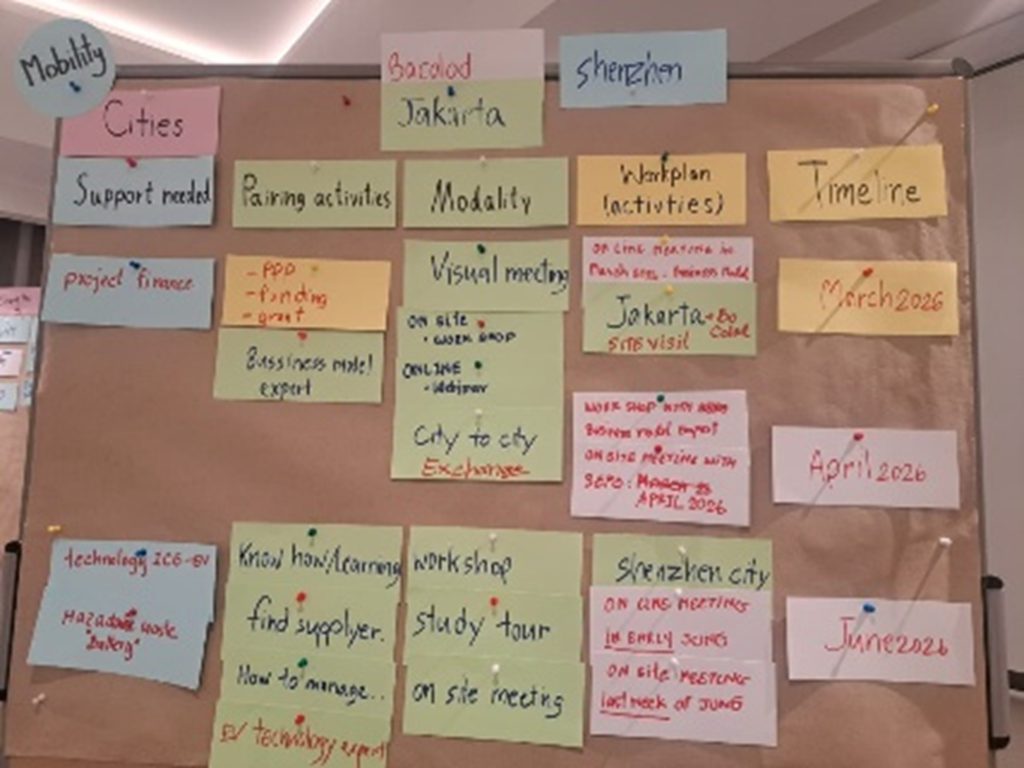
Sustainable Urban Mobility
City: Chiang Mai
Potential Partner Cities: Jakarta, Surakarta (Indonesia), Bacolod (Philippines), Malacca (Malaysia, and Shenzhen (China)
The mobility discussions centred on integrated transport systems, electric vehicle (EV) bus deployment, charging infrastructure, and smart mobility management.
Priority:
- Reducing emissions from the transport sector (transforming EV bus, feeders)
- Strengthening institutional coordination
- Developing viable business and financing models
- Improving accessibility and user-friendly mobility systems
Planned activities include:
- Online meetings on project finance and risk assessment (March 2026)
- Site visits to Indonesia (March–April 2026)
- Dialogue on budget and risk management (April 2026)
- Technology exchange to Shenzhen focusing on EV systems (June 2026)
From Dialogue to Implementation
Day two of the workshop was dedicated to detailed activity planning and cost estimation, ensuring that each thematic stream moves forward with clear timelines, defined roles, and financial projections. The workshop demonstrated a strong commitment from Thai local governments to:
- Institutionalise climate-sensitive urban development
- Strengthen technical and financial readiness
- Promote peer learning across the Asia-Pacific
- Align local action with global climate priorities
The city pairing planning workshop has reaffirmed the strategic role of UCLG ASPAC in facilitating structured, demand-driven city pairing. By combining technical expertise, peer learning, and practical financing discussions, the initiative moves beyond conceptual dialogue toward actionable implementation. As the activities roll out throughout 2026, participating cities are expected to develop bankable project concepts, enhance institutional coordination, and accelerate measurable climate action at the local level. Through this collaborative platform, UCLG ASPAC and its partners of Urban Act will continue to strengthen resilient, low-carbon, and inclusive urban development pathways across the Asia-Pacific region.