Across Southeast Asia, cities are grappling with the same pressing question: how to manage growing volumes of waste without overwhelming landfills, polluting waterways, or increasing emissions. Rapid urbanisation, changing consumption patterns, and limited disposal space have made solid waste management one of the region’s most urgent development challenges.
In this context, Banyumas Regency is drawing regional attention.
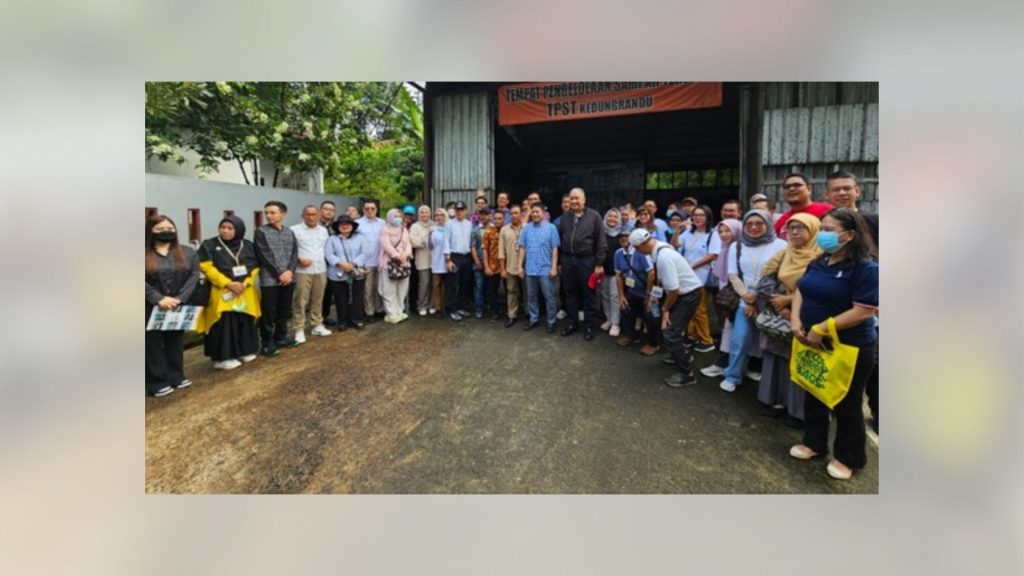
On 23 May 2025, representatives from 10 pilot cities under the Climate Resilient and Inclusive Cities (CRIC) initiative visited Banyumas as part of the Climate Resilience and Innovation Forum (CRIF) 2025, organised by UCLG ASPAC. The visit was not merely a study tour. It was an opportunity for Southeast Asian local governments to reflect on how decentralised, community-based systems can respond to shared environmental pressures.
A Regional Problem with Local Roots
Southeast Asia remains one of the world’s most vulnerable regions to plastic leakage and landfill dependency. In many cities, waste collection systems struggle to keep pace with growth, and informal burning remains common, particularly in peri-urban and rural areas.
Banyumas offers an alternative narrative. Rather than focusing solely on end-of-pipe solutions, the regency has built an integrated system that begins at household level and extends to industrial reuse.
Residents are encouraged to separate waste at source using digital applications such as Jeknyong for organic waste and Salinmas for inorganic materials. Households also contribute approximately IDR 30,000 per month to Kelompok Swadaya Masyarakat (KSM), community-based groups responsible for collection and local management.
For many Southeast Asian cities where municipal budgets are stretched, this model demonstrates how shared responsibility between government and citizens can reduce financial and operational burdens.
Integrating Community and Technology
Collected waste is processed at TPST3R Kedungrandu, which handles between 64 and 100 tons per day. Through a combination of mechanical conveyors and manual sorting, high-value recyclables such as plastics and paper are recovered and sold. Organic waste is converted into compost, biomass, or maggot feed, while non-recyclable plastics are transformed into Refuse-Derived Fuel (RDF) for cement factories in Cilacap.
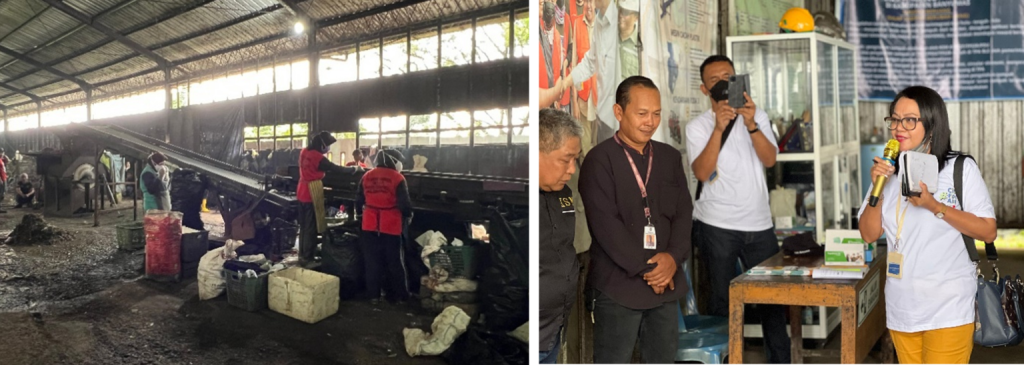
This layered approach reflects an important lesson for Southeast Asia. Waste systems must be flexible enough to handle mixed realities, where not all waste arrives perfectly sorted. At the same time, they must create clear pathways for materials to re-enter productive use.
A Zero-Landfill Ambition in Practice
Built in 2021, the Banyumas TPA BLE, an Environment and Education-based Integrated Waste Management facility, reinforces the regency’s zero-landfill vision. Beyond processing waste, the site functions as an environmental education centre, welcoming students and communities to understand circular economy practices firsthand.
In a region where environmental awareness levels vary widely, embedding education within infrastructure provides long-term dividends. Behavioural change becomes part of the system, not an afterthought.
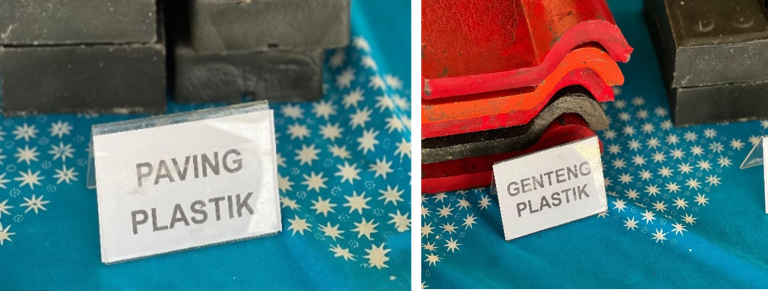
Non-organic waste at BLE is repurposed into products such as plastic roof tiles and paving blocks, demonstrating how local industries can benefit from circular value chains. For Southeast Asian cities seeking to strengthen local economies while reducing emissions, this approach aligns climate goals with economic resilience.
Incentives that Shape Behaviour
Banyumas has also introduced a performance-based retribution fee to discourage landfill disposal. Unprocessed waste is charged IDR 100,000 per ton, while processed waste without end use is charged IDR 50,000 per ton. This policy nudges community groups to maximise recycling and recovery.
Currently, the regency generates around 550 tons of waste daily, with approximately 80 percent managed through the integrated system. The remaining 20 percent, especially in rural areas, is still burned, signalling that challenges persist.
For Southeast Asia, this reflects a broader regional truth. Even the most innovative systems require time, investment, and sustained awareness-building to achieve full coverage.
From Regency to Regional Reference
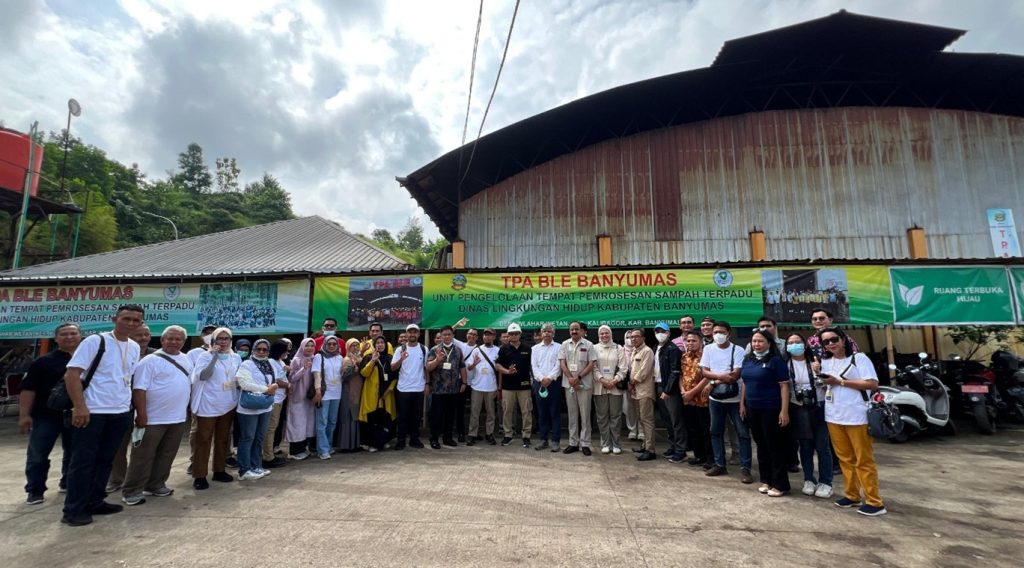
The presence of Vice Mayor Ananda of Banjarmasin and Banyumas Environmental Agency Head Widodo Sugiri during the visit underscored the importance of political leadership. Across Southeast Asia, strong local leadership often determines whether pilot projects remain isolated experiments or evolve into scalable models.
In Banyumas, a regency in Indonesia is showing that solutions to Southeast Asia’s waste crisis may begin not in massive megaprojects, but in neighbourhoods where citizens sort their waste and take shared responsibility for their environment.