RISE Kuala Lumpur: A Lesson in Building a Circular Urban Waste System
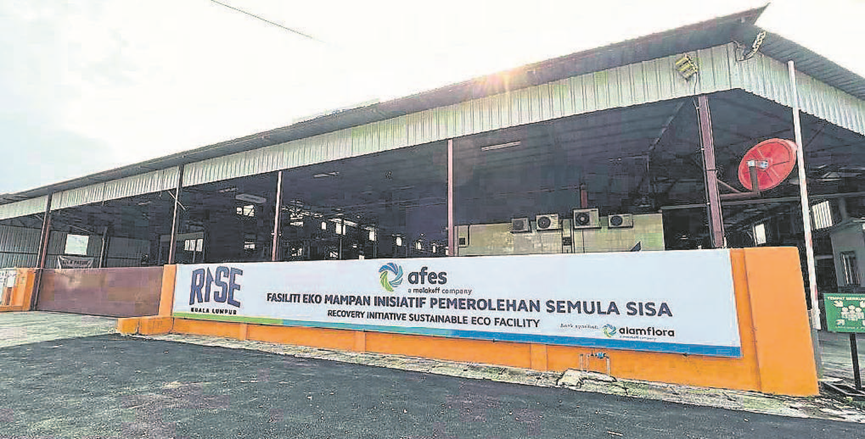
In Batu Caves, on the outskirts of Kuala Lumpur, a waste facility is quietly challenging how cities deal with rubbish. The Recovery Initiative Sustainable Eco-Facility, better known as RISE, offers a practical glimpse of what a circular economy can look like in a fast-growing Southeast Asian city.
Developed by Alam Flora Environmental Solutions, a subsidiary of Malakoff Corporation Berhad, RISE was created in response to mounting urban pressures. Malaysia’s cities are producing more waste each year, landfills are filling up, and recycling rates remain lower than national ambitions. The government has set a target to reach a 40 per cent recycling rate by 2025 and carbon neutrality by 2050. RISE stands as one of the efforts designed to help turn those commitments into reality.
Since its establishment, RISE has demonstrated that sustainable waste management requires more than technology. It requires systems thinking, community participation, and market integration.
Lesson 1: Policy Targets Must Be Backed by Physical Capacity
Malaysia’s ambition to increase recycling rates cannot succeed without infrastructure that can actually process materials. RISE currently handles up to 50 tonnes of dry, source-separated waste per day and plans to expand to 65 tonnes. Its semi-automated sorting system, combining optical technology and manual quality control, ensures that recyclable materials meet industry standards.
Lesson 2: Source Separation Is the Foundation of Efficiency
RISE only accepts waste that has been separated at source. This requirement significantly improves material purity and reduces contamination. It also shifts responsibility upstream, encouraging households and businesses to take part in the recycling chain.
For cities aiming to improve recycling performance, the experience of RISE shows that behavioural change is not optional. Efficient recovery begins before waste reaches the facility
Lesson 3: Circularity Depends on Market Linkages
After sorting, materials are baled or shredded and sent directly to recycling manufacturers. This shorter supply chain strengthens the economic viability of recycling and reduces material leakage.
In many urban systems, recycling fails because there is no stable end market. RISE highlights the importance of building direct connections with off-takers so that recovered materials truly re-enter production cycles
Lesson 4: Education Strengthens Infrastructure
One of the distinguishing features of RISE is its Recycling Discovery Hub, which opens the facility to students, communities, businesses, and policymakers. Workshops and public engagement programmes are held regularly to raise awareness about waste separation and sustainable living.
The facility reinforces an important insight. Infrastructure alone cannot transform urban waste systems. Public understanding and participation are equally critical components.
To widen engagement, RISE has also established 10 buy-back centres and two additional Material Recovery Facilities across urban Malaysia. By offering financial incentives for recyclable materials, the programme makes participation both environmentally and economically meaningful.
Lesson 5: Incremental Growth Builds Long-Term Impact
RISE processed 5,324 tonnes of waste in 2022. This increased to 6,109 tonnes in 2023 and reached 7,013 tonnes in early 2024. While these figures represent only a portion of the city’s total waste generation, the steady rise reflects growing operational maturity and public participation.
According to the United Nations Economic and Social Commission for Asia and the Pacific, Kuala Lumpur generates approximately 161,000 tonnes of plastic waste annually. Facilities such as RISE cannot solve the entire problem alone, but they demonstrate how structured intervention can reduce pressure on landfills and prevent environmen.tal leakage
Lesson 6: Collaboration Is as Important as Technology
Sorting complex waste streams, especially various plastic types, requires close coordination with recycling industry partners. RISE’s model shows that advanced equipment must be supported by reliable partnerships, clear quality standards, and consistent demand from recyclers.
The broader takeaway from RISE is that sustainable urban waste management rests on three pillars: infrastructure, behaviour, and market alignment. When these elements function together, waste shifts from being a burden to becoming a resource.
For cities across Southeast Asia seeking practical models, RISE provides a grounded example. It shows that circular economy principles are not abstract concepts. With the right systems and partnerships, they can be implemented in ways that deliver measurable environmental and social benefits.